Future Maui Development? Kahului Council Candidates Hold Opposing Views
Oct 16, 2026 | 6:01 am ET
Description
Photo courtesy of Honolulu Civil Beat
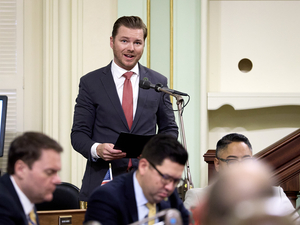
Kauanoe Batangan and Carol Lee Kamekona are both running to represent Kahului on the Maui County Council because they hope to improve the quality of life for future generations. But they have different ideas on how that should be accomplished — particularly when it comes to development.
Batangan, who was appointed to fill the seat after the death of former council member Tasha Kama, said county officials should prioritize approving new developments in certain areas, improve government transparency and identify ways to build up the economy while preserving local culture.
“I want my kids, my grandkids and my great-grandkids to be able to live here, and for it to still be recognizable as Maui,” he said, leaning back in his chair at Koho Bar and Grill at the Queen Ka'ahumanu Center. “It's obviously going to have to change, but what are the things that cannot be compromised, and what are the things that need to change in order for us to allow for our future generations to be able to be here? Those are hard questions.”
Kamekona, a 22-year U.S. Navy veteran and longtime community organizer, said her focus would be on introducing policies intended to lower the cost of housing, revitalize the local economy and advocate for the homeless community and other vulnerable residents.
“No matter how many times our community comes and testifies, whether providing oral or written, it always falls on deaf ears,” she said, sitting outside of Fork & Salad in Kahului.
Batangan finished first in August’s primary election, with 42% of the vote. He has been endorsed by more than a dozen community and labor groups, including prominent unions such as the Hawaiʻi Government Employees Association, the Hawaiʻi Regional Council of Carpenters, Hawai‘i State AFL-CIO, International Longshore and Warehouse Union Local 142 and the State of Hawaiʻi Organization of Police Officers. He served as the executive director of the Maui Metropolitan Planning Organization and as deputy director of the Maui Department of Transportation as part of Mayor Richard Bissen's administration, and he was council member Yuki Lei Sugimura’s executive assistant from 2018 to 2019.
Kamekona, who lost to Kama by 9 percentage points in 2024, finished second with 32% of the vote in the August primary, and has been backed by progressive groups such as the Maui Pono Network and the Kanaka Movement. She works for council member Shane Sinenci, who represents East Maui, and previously worked for the Transportation Security Administration at the airport in Kahului.
The Nov. 3 general election will be the second time the two candidates have competed for the Kahului seat. Last year, council members questioned Batangan and Kamekona — as well as Maui Filipino Chamber of Commerce Director Virgilio “Leo” Agcolicol — as part of their process to determine who should fill the vacant seat left by Kama.
In the days before her death, the late council member had requested that council members consider choosing Batangan to serve the remaining year left on her term. Many residents who testified during the process said voters chose Kama and trusted her to choose her successor, while others said it would be more democratic to select Kamekona because she received thousands of votes as the runner-up in the previous election.
After council members were unable to reach a majority vote in favor of a single candidate, Bissen appointed Batangan in December.
Cost Of Living
While both candidates agreed that Maui’s rising cost of living is among the most urgent issues facing the county, only Batangan emphasized new residential development as a major part of the solution.
“I've been very supportive of development within our urban growth boundaries,” he said, adding that he hoped to reduce some of the bureaucratic red tape that frequently delays housing projects. “When I'm a little bit more critical is when people want to have a project that would require expansion of the urban growth boundaries.”
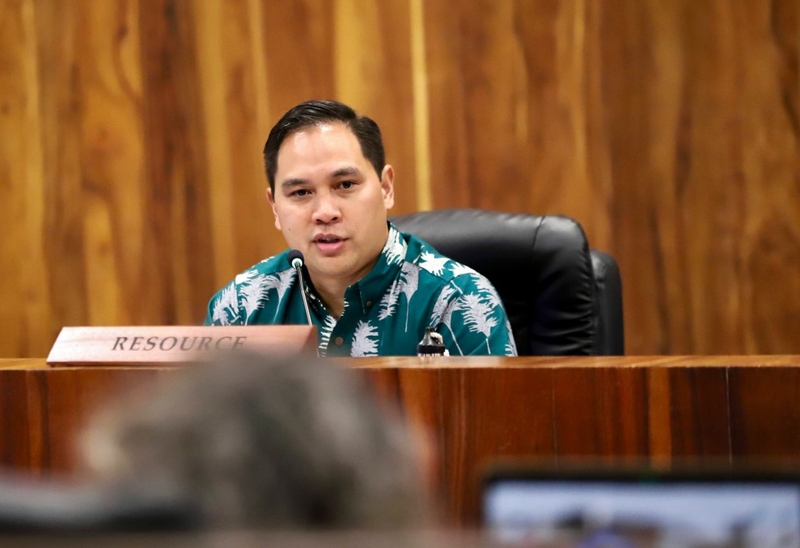
Batangan said that he understood why people are often apprehensive about new development, but he tries to be thoughtful about every project application that goes before the council and is guided by the question, “What kind of growth can we reasonably allow for while also maintaining the character of the community?”
“I want Maui Nui to remain the place we all know and love, but to become a place where we can actually afford to stay,” he said. “The vision is to create a resilient and vibrant Maui Nui, and I'm focusing on preserving our unique culture, diversifying our economy, investing in our people, and stewarding our land.”
Kamekona said she was against approving any new luxury developments, and argued that there are too many unanswered questions about whether the island has enough water to support further growth and how to ensure new construction does not disturb iwi kūpuna or other cultural resources. She said the focus should be on making existing units more accessible.
“I would want an automatic stop on all development right now because all the development that is being approved is not for our people,” she said, pointing to already approved luxury developments like the Honua‘ula project — also known as Wailea 670. “We need housing for our people. We need to allow them to stay here in their own homeland. Why do they have to be priced out? Why do they have to move out of state, off island, so that somebody else can come here, work remotely, and afford to live in a mansion?”
As a council member, Kamekona said she would prioritize policies and programs intended to make existing units more affordable and accessible to local families.
“We need to take care of our people, and that's my utmost priority: to try and think of ways to either provide subsidies, assistance, or even incentives to developers if need be,” she said, “to bring the prices down."
She added that she would look for ways to rezone certain vacant buildings in Central Maui to increase the number of beds available to the island’s homeless population.
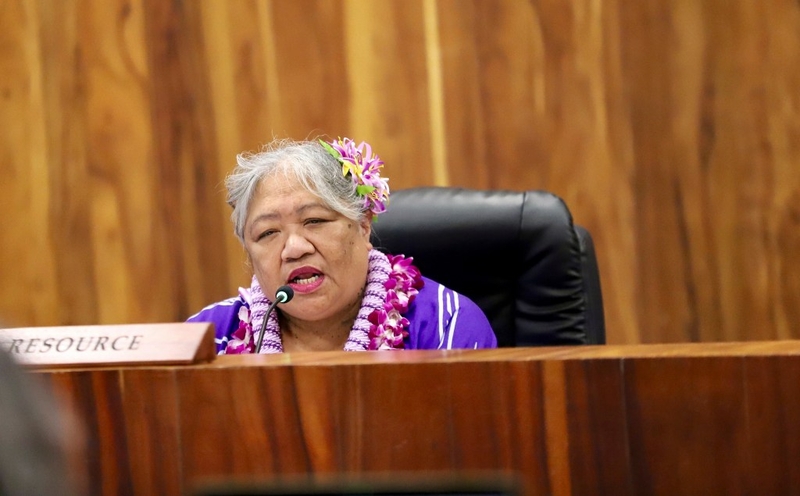
“Prior to the Lahaina fire in 2023, we only had two shelters — one in central, one on west side. We don't have the west side anymore,” she said. “I would like to see us repurpose empty warehouses and storefronts that could be utilized for shelters, because the infrastructure is already there. We don't have to worry about electricity, water, any of that stuff.”
Both candidates said they intend to address affordability issues by promoting economic diversification projects, and they each sketched out their visions of a revitalized Kahului — which is widely seen as both the commercial center of the island and a place where the signs of economic hardship are most visible.
Batangan described his plan to revitalize the Ka'ahumanu corridor and other parts of the region by making thoughtful changes to the Central Maui Community Plan and taking advantage of some existing funding associated with a transit-oriented development study. He also hoped to establish free trade zones and to encourage the redevelopment of underutilized commercial spaces to create a safer, more walkable community.
“My philosophy is that we should be fostering the conditions to spur social and economic development here in Maui County,” he said. “If we align federal, state and county resources to allow for the type of development that we want to see, where we want to see it, I think we can really spur some change.”
Kamekona has long hoped to transform the abundant vacant space at Maui Marketplace into a place where local families can spend their free time, work and contribute to the local economy, but she has accepted that the location is not available for the uses she had in mind. However, she hasn’t given up on finding a new space where her vision could be realized.
“I have been looking at providing an indoor venue for ʻohana with keiki — or not — to have a bowling alley, an arcade, pool hall, darts, with a small snack bar that does like hamburgers and hot dogs, but also the ability to bring customers into the food court and other establishments in that area,” she said. “That was my vision.”
Campaign Cash
Batangan acknowledged that his campaign has received significant financial support from political action committees and super PACs, including those representing the interests of developers and resort owners. He said that he has always been transparent about that.
"I feel like I would owe them or any donor the same thing that I would owe council member Kama, who first endorsed me for this seat, and Mayor Bissen, who appointed me to this seat," he said. "That's my best effort and my best judgment. And I think I've proven through my time on the council, that I'm willing to be independent on those matters."
He added, "Most of my donations have been small dollar because I am accepting public financing. So, what I ask of my friends and family has been $100 or less, so that it can get matched."
Kamekona said she was proud that her campaign "is grassroots and is only community driven."
"It's not funded by super PACS or dark money or whatever it is you want to call it," she said, adding that that was in stark contrast to her opponent's campaign.
Batangan had about 10 times as much campaign cash on hand as of Sept. 26, the most recent filing date.
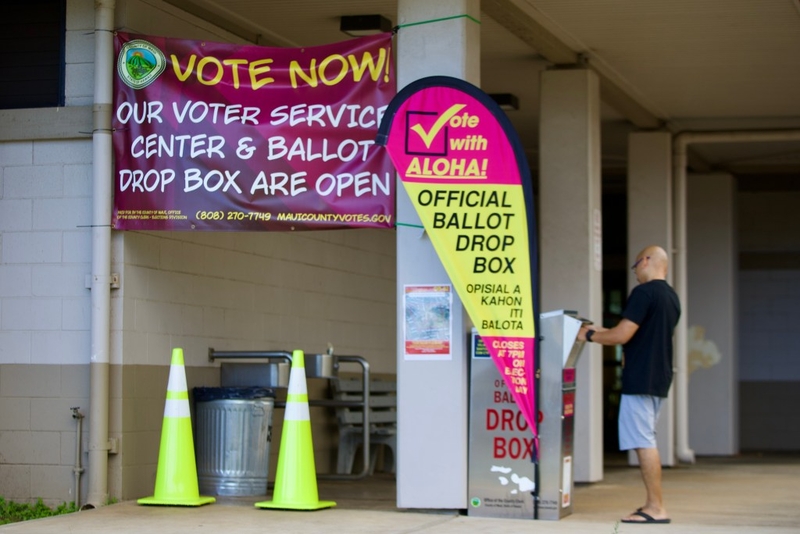
Mail-in ballots are expected to reach voters this week.
Honolulu, HI