Honolulu Council: Former Member Faces Opponent Who Embraces Conspiracies
Oct 16, 2026 | 6:01 am ET
Description
Photo courtesy of Honolulu Civil Beat
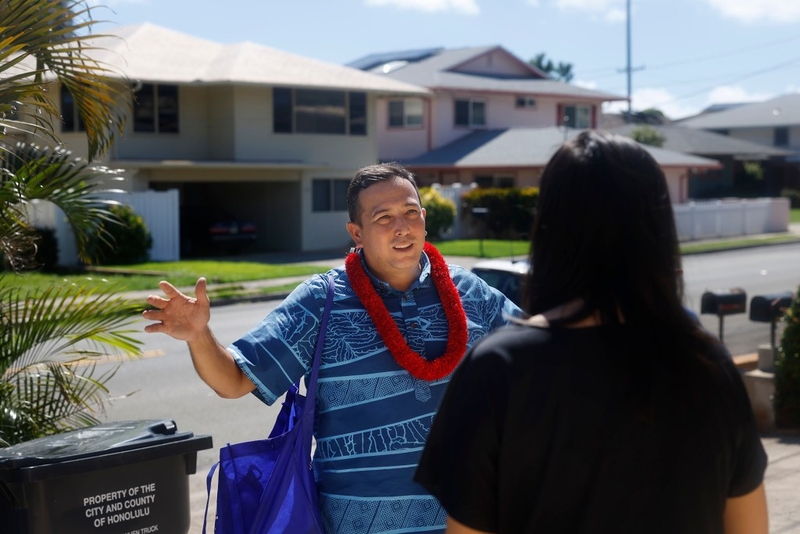
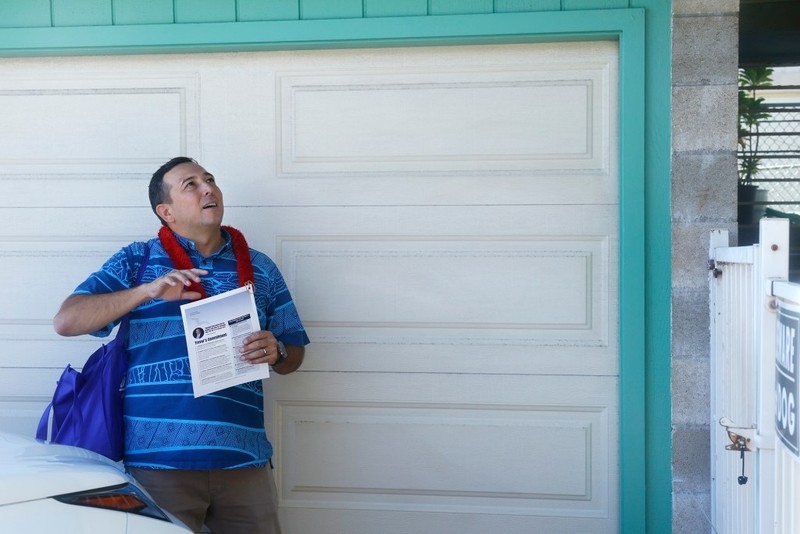
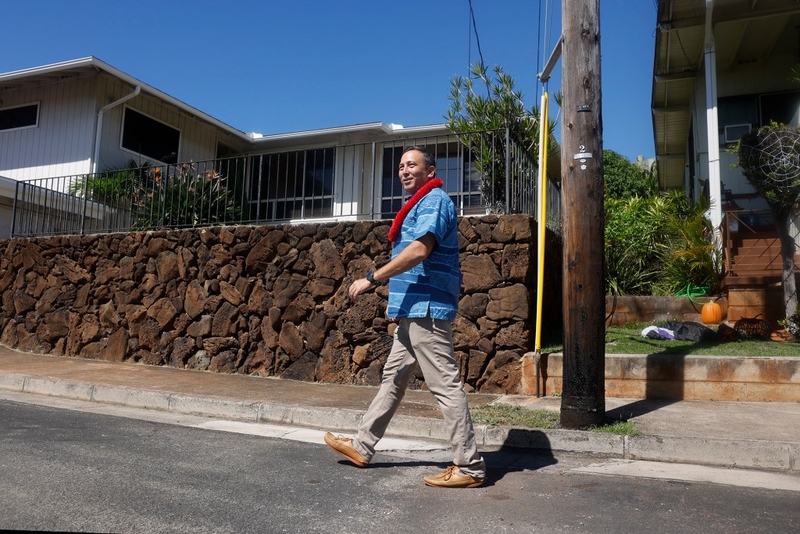
Former Honolulu council member Trevor Ozawa says door knocking doesn’t make him nervous anymore.
As he campaigns for his old seat, a nonpartisan position representing residents from Waikīkī to Hawaiʻi Kai, he’s sticking with inoffensive talking points such as improving parks and fixing uneven sidewalks. In his bids for connection, he’s quick to comment on residents’ pets as well as the plants they have in their yards.
“You have a 30-second elevator pitch?” University of Hawaiʻi law student Parker Kilkenny asked when he knocked on her door Wednesday morning.
“Born and raised in this district,” he said. “I was the council member in 2015 and 2019. I’m running to take care of the basic things in this district that need taking care of to increase our quality of life.”
He continued for more than a minute about wanting to fix infrastructure, expedite building permits, spur activity around rail stations and be more active in community events in which he’s already involved, thanks to his two young daughters.
“I also have a dog like you,” he said, “so.”
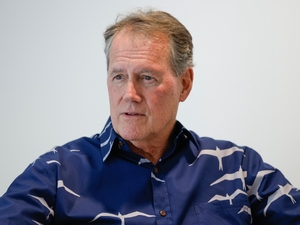
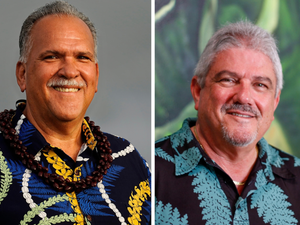
In the race to replace Council Chair Tommy Waters, who the Hawaiʻi Supreme Court declared ineligible for reelection due to term limits, Ozawa and his opponent Tara Malia Gregory present the voters of East Honolulu with starkly different choices.
Ozawa is a former council member and an attorney who practices real estate law. Gregory is a conservative first-time candidate who works for the multilevel marketing company Herbalife and embraces conspiracy theories. She believes President Donald Trump won the 2020 election, for instance, and thinks it's possible the Lahaina wildfire was set intentionally by local politicians.
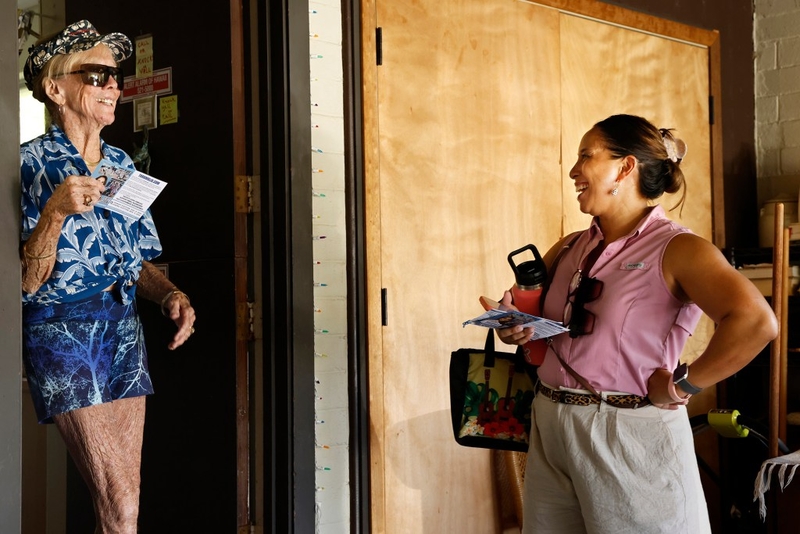
Neither candidate is a policy wonk. Gregory speaks about Oʻahu’s challenges in a manner that’s abstract and even sometimes spiritual. Ozawa takes the opposite approach, grounding himself in hyperlocal everyday issues such as sprucing up park restrooms and speeding up the city’s notoriously slow permitting system.
“I’m going to every single bathroom in this district,” he said during a recent evening of sign-waving, which he said will help him know how to improve each of them once in office.
Some detractors have bitter memories from his first term on the City Council 10 years ago. An internal city investigation concluded that Ozawa acted unprofessionally and disrespectfully toward a female staffer who was campaigning for his opponent, Hawaiʻi News Now reported in 2019.
Episodes like this gave him a reputation for being prickly, which he indirectly acknowledged during this year’s campaign by saying he’s grown since last being in office.
“I’m a much better communicator now than I was,” he said in a late May interview. “I’m less reactive.”
Despite this reputation, Ozawa still has plenty of friendly supporters, if a steady stream of honks and shakas thrown his direction during a recent signwaving session is any indication.
‘I’m Talking About Real Stuff’
Ozawa first ran for the council in 2014, a race which he narrowly won. Before that, he grew up in Hawaiʻi Kai, went to the University of Southern California for his bachelor’s degree and then attended law school at Suffolk University in Boston, where he met fellow Hawaiʻi politician Sen. Stanley Chang.
His love of golf, he said, has translated into a focus on well-maintained landscapes and made him hyperaware of when city parks fall below that standard.
During his first term on the council, Ozawa passed bills to create a structure for car-share systems such as Drive Hui and to mandate diaper changing stations in new bathrooms. He also sparred with then-Mayor Kirk Caldwell over how to pay for the city rail system’s rising construction costs and the mayor’s efforts to charge residents for bulky trash pickup, which Ozawa opposed.
Since then, Caldwell has been replaced by Mayor Rick Blangiardi, a former football coach and television news executive. That gives Ozawa a clean slate with the executive branch.
The two men may get along well. In an interview, Ozawa spoke Blangiardi’s language when he expressed support for the mayor’s controversial mission to make pandas the zoo’s flagship exhibit.
“It’s like when you get top pick in the draft for the NFL,” Ozawa said about the pandas.
Ozawa avoids taking a firm stance on other controversial questions, however. Does he support an empty homes tax? How about the use of license plate reader cameras? What’s his opinion on this year’s proposed constitutional amendment to use property tax increases within a certain geographic region to build infrastructure in that region?
To all three of these thorny questions, his answer is the same: He would like to look into them more.
“There’s some serious questions about privacy,” he said about proposals to increase Oʻahu’s supply of license plate readers, “but I mean, I’d like to know more, you know? If it helps save lives, that’s important.”
Ozawa prefers sticking to his talking points regarding uncontroversial improvements in the island’s physical environment. When Kilkenny, the law student, told Ozawa that one of her concerns is how hot Kaimukī gets with its dearth of shade, he responded by plugging a resolution he passed eight years ago that urges the city parks department to plant more trees.
“It’s a good thing that you talked about that,” Ozawa told her.
Harvey Chibana, another neighbor, told Ozawa that he was concerned about homelessness on Oʻahu. But Chibana doubted the city could do much since some of the root causes of homelessness stem from federal or even global dynamics. Ozawa, however, came prepared with a relevant local talking point.
“Our parks are for everybody,” he told Chibana.
Approaching Petrie Community Park, Ozawa said he was interested in checking out the bathroom to see what could need fixing in there. As it turned out, however, the situation was worse than expected: The bathroom was boarded up and cordoned off with caution tape as three portable restrooms sat next to it as substitutes.
This was a clear example of the problem, Ozawa said. Homes sell for over a million dollars and yet residents can’t even expect basic functional infrastructure. That’s why he is focused on the small stuff.
“It’s not some pie-in-the-sky idea,” he said, looking at the bathroom. “I’m talking about real stuff.”
Embrace Of Conspiracy Theories
Gregory has an uphill battle when it comes to name recognition and getting out the vote.
Growing up in Los Angeles, Gregory said, she would travel to Oʻahu to visit her grandmother in Mililani. She’s had an eclectic career that included running middle distance track events at Vanderbilt University, working in show business in Hollywood and getting involved with the multi-level marketing nutrition company Herbalife.
The Federal Trade Commission won a $200 million lawsuit against Herbalife after accusing it of deceiving consumers, although on the company’s Frequently Asked Questions page, it denies being a pyramid scheme.
Gregory said she’s aware of Herbalife’s reputation, but that bad actors exist in any big organization, and that Herbalife’s products have had genuine health benefits for her loved ones. She also said it has been profitable for her.
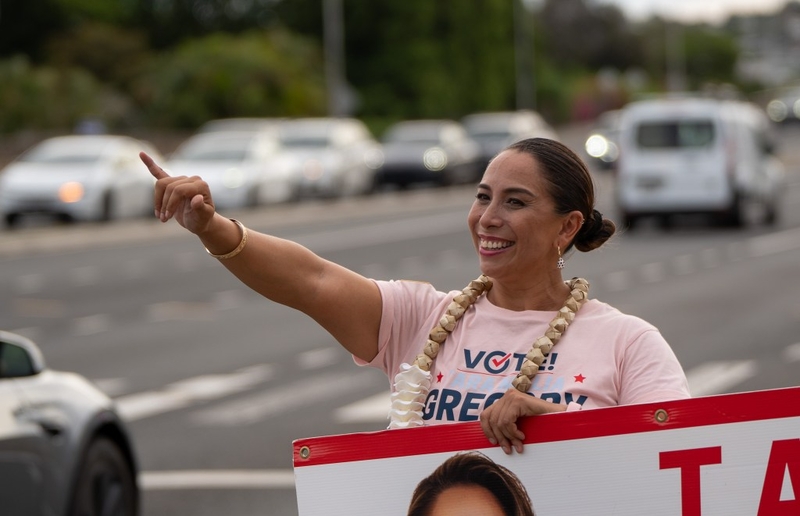
She was working her Herbalife business and living in Texas when Lahaina burned, she said, inspiring her to move to Hawaiʻi and get involved civically with the state Republican Party. She was one of three names pitched by the party to replace Rep. Gene Ward, who died last year while in office. However, Gregory said she became disillusioned with the party’s internal bickering and is no longer affiliated with it.
Living in Hawaiʻi now, she said she teaches fitness classes that focus on balance and posture – mostly to kūpuna – at Hawaiʻi Kai Towne Center.
Fewer than 20 people showed up to each of two recent talk story events she hosted at the ʻĀina Haina public library, where she spoke about subjects such as resilience against natural disasters as well as housing and homelessness.
The small group ended up being an ideal venue for her. Speaking at the front of a room with a projector light in her face, Gregory leaned into her fitness coach background, motivating her audience to – ironically – stop relying on government while simultaneously asking them to bestow her with its power.
“Resilience is not going to come from government,” she told them.
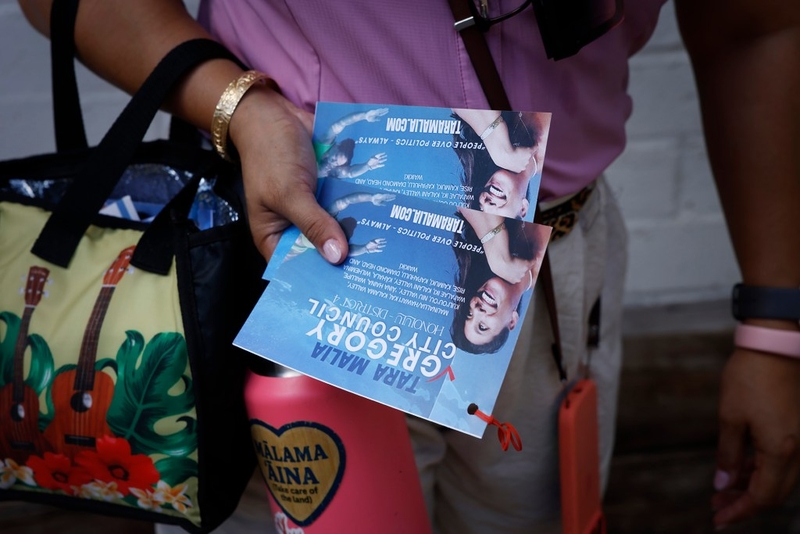
Gregory is popular on Instagram. She has almost 50,000 followers, far more than Ozawa, who has less than 4,000. But that didn’t necessarily translate to ballots cast during the August primary election: Gregory received 4,225 to Ozawa’s 12,279.
Part of Gregory’s virtual fame comes from her advocacy at state Elections Commission meetings where she has criticized Hawaiʻi’s mail-in ballot structure and called for a return to the old system of single-day, in-person elections.
She hesitates to spell out her exact gripes with mail-in ballots while campaigning, instead emphasizing how fun and civically fulfilling it can be to vote in person. At one of her talk story events, however, she referenced guest speaker Kaleo Nakoa’s race against Waters four years ago and pointed out that the results differed when looking at people’s voting methods.
“He actually beat Tommy Waters at the elementary schools. He actually beat Tommy Waters when people brought in their ballots. But he ended up losing in the mail-ins,” she told her small group of supporters. “I’m not going to draw any conclusions from that, other than I’m just going to tell you that that’s what happened.”
Asked about this a few days later, she expressed skepticism about the result’s authenticity.
“Are we supposed to assume people that vote in person vote for certain people, and then people that mail-in vote for other people?” she said.
It has been widely proven that Democrats are more likely than Republicans to vote by mail. In the runup to the 2020 general election, Republican President Donald Trump falsely told the country that mail-in ballots were ripe for voter fraud, leading to his lie that he won the 2020 election.
Gregory believes that Trump won in 2020.
“There weren’t people going to Biden rallies,” she said.
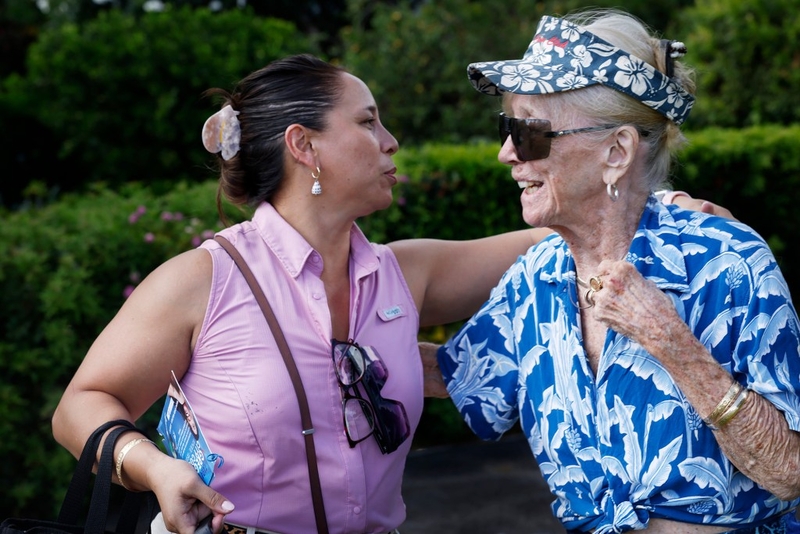
She’s become somewhat disillusioned by the president, however. Recently, Trump told his supporters to vote early by mail, a reversal from his previous heavy criticism of mail-in voting.
“He keeps flip-flopping on all kinds of stuff,” Gregory said, adding that she’s still concerned about ballot security when it comes to mail-in voting, “so I’m just kind of used to it at this point.”
Gregory said she did not receive a vaccine during the pandemic, claiming they cause “massive amounts of harm,” which is false. She said she used the parasite treatment drug Ivermectin when she contracted Covid-19 in January 2020 during a period of her life when she taught media literacy to middle schoolers. Ivermectin is not approved by the U.S. Food and Drug Administration for Covid-19 treatment, but Gregory said she was able to obtain it by virtue of living in Texas at the time.
“There’s tons of horses out there,” she said.
It was normal for Gregory to contract the flu for a couple days each January, she said – she also does not get flu vaccines – so she didn’t think much of the symptoms at first. But eventually, she said, she would be sick for weeks, then recover, then relapse into sickness again.
“It was pretty bad. I had it for about a month and a half,” she said of the virus. “My parents thought I was nuts.”
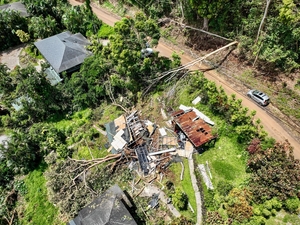
Gregory’s oft-told origin story of getting into politics is that she decided to move to Hawaiʻi following the 2023 Maui wildfires, which destroyed properties upcountry in addition to razing Lahaina and killing over 100 people.
Less said, however, is that she entertains the false conspiracy theory that Gov. Josh Green and Maui Mayor Rick Bissen purposefully burned down Lahaina with a direct energy weapon to create a “15-minute city,” which is an urban planning concept that conspiracy theorists have seized on.
“It’s definitely a possibility,” she said, “and it’s a plausibility. Now, whether it did happen or not, I don’t have evidence evidence – there’s other people that do – but I don’t have clear evidence other than seeing the research other people have done.”
Gregory said she’s aware that critics call this a conspiracy theory. But, she said, “there’s a lot of conspiracy theories that are coming true.”
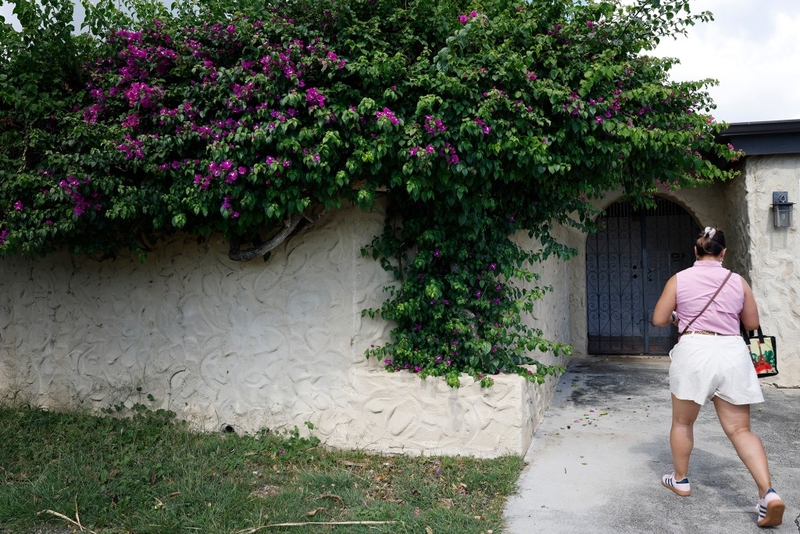
These aspects of Gregory's belief system stayed mostly hidden as she spent a recent afternoon door knocking. Residents met her warmly and told her about their concerns regarding power outages, poor sidewalk maintenance and rising rents.
“One of the reasons why it’s like that is there’s money sitting somewhere,” Gregory said to a resident who shared her concern about the high cost of living, “but they keep taxing us, right?”
Her solution is to audit everything.
“No, really – everything,” Gregory said at a recent talk story event. “We need Parks and Rec audited. We need [the Department of Planning and Permitting] audited. We need to know what’s going on with the city – why things are stalled, why things are paid for but not done. These things matter.”
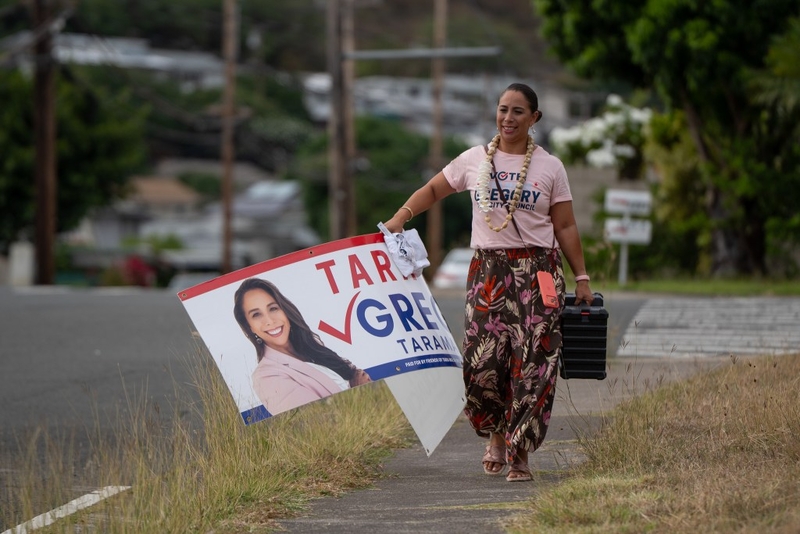
Gregory especially targets the city’s rail system Skyline for being billions of dollars over budget despite having limited practical use so far.
She supports Waters’ proposal to tax empty homes at a higher rate in order to discourage investor demand, and said she would have supported that proposal’s final version, which died this year but would have given a pass to Oʻahu residents who own second homes. She opposes the state ballot question to give counties a new way to finance infrastructure, and she opposes license plate reader cameras such as Flock because she doesn’t think the added surveillance is worth it.
On homelessness, she supports sending people back to the mainland if they have family there. She feels the city needs to do a better job enforcing laws against “repeat offenders” who commit violent crimes rather than just those who camp on the sidewalk.
“Residents deserve safety first,” she said.
Wide Gulf In Campaign Donations
Ozawa has a heavy fundraising lead on Gregory. His most recent filing report, which was due Oct. 1, shows that real estate interests such as executives from Kobayashi Group and developer Stanford Carr donated $2,000 each to Ozawa’s campaign.
He also received support from familiar faces around Honolulu Hale, including $2,000 from council member Matt Weyer and $500 from former city managing director Mike Formby.
Oddly, a local political action committee affiliated with the former campaign treasurer for the rapper Ye – better known as Kanye West – supported Ozawa by spending almost $15,000 on radio spots for him, though Ozawa said he doesn’t know the people affiliated with this effort and had no part in it.
Altogether, Ozawa’s campaign boasts a cash balance of over $100,000.
This dwarfs Gregory’s haul, which she reported in her most recent filing as being just over $8,000. Her supporters were individuals who generally gave a few hundred dollars each, though Mike Sacharski, retired founder of Pacific Enterprise Capital International, donated $3,000 to Gregory’s campaign.
At one of her recent talk story events, she told the group she was lowering her $40,000 contribution goal down to $25,000.
UH political scientist Colin Moore said Gregory still doesn’t have much recognition in the district, even among Republican voters. More than 11,000 people voted for candidates other than Ozawa and Gregory during the primary and are therefore theoretically up for grabs. Waters got twice as many votes as Gregory in the primary, but he was ultimately disqualified.
Moore said it’s unlikely Gregory will pick those votes up for herself.
“I think she’ll get the votes of people who are particularly opposed to Ozawa,” he said. “But it’s not as if all of the Tommy Waters votes are going to her. Most of those votes are Democratic votes, and they’re going to go with a known quantity – Ozawa – who is a centrist by Hawaiʻi standards.”
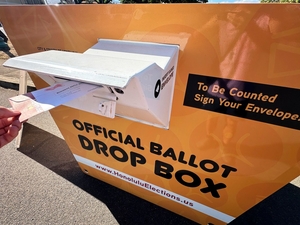
Ballots are scheduled to be delivered to voters by Friday, and the polls close Nov. 3. The city is opening voter service centers at Kapolei Hale and Honolulu Hale for people who want to vote in person, as well as pop-up centers in Kāneʻohe and Wahiawā with more limited days.
Honolulu, HI