Suspicious letter to Mississippi Secretary of State Watson intercepted
Oct 15, 2026 | 1:50 pm ET
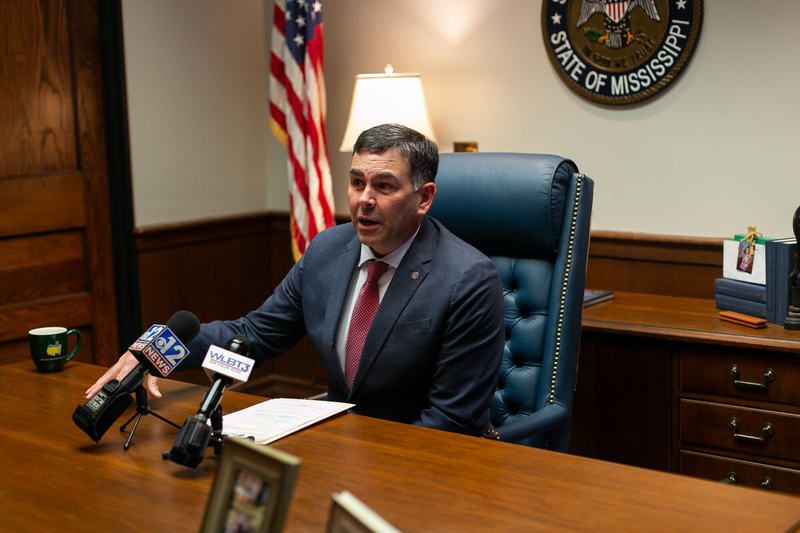
Description
Photo courtesy of Mississippi Today
Audio articles are automated for accessibility. Humans wrote and edited the story; however, this audio has not been reviewed for accuracy and may contain errors. Read more about how we use AI to increase access to our reporting.
The U.S. Postal Service and Homeland Security intercepted a letter sent to Mississippi Secretary of State Michael Watson’s office, as federal authorities warn of letters with suspicious substances being sent to congressional and election offices across the country.
Watson spokeswoman Liz Jonson said in a statement on Thursday, “Based on the events in other states, we were notified to expect a suspicious letter, but it was intercepted by USPS and HSI before it got to our office.”
Jonson said the letter was turned over to the FBI, and later reported that authorities told Watson’s office the substance in it was tested and determined to be nonhazardous.
The Associated Press obtained a message from the U.S. Senate sergeant at arms warning that law enforcement officials were seeking to intercept letters, and reported that federal authorities were urging congressional and election offices nationwide to treat the letters as “potentially hazardous.”
The AP reported that mailed packages containing a powdery substance led to evacuation this week of election offices in Louisiana and Oklahoma, and the Ohio secretary of state said a package intended for his office was intercepted.
The news comes just weeks before midterm Election Day, and is similar to a threat in 2024, when election offices in six states received mailings with a white powder. Some of those mailings contained traces of the powerful opioid fentanyl.
The Associated Press contributed to this report.
Update 10/15/2026: Watson’s office has reported that after testing, authorities confirmed the substance in the letter was nonhazardous.
Correction 10/15/2026: This story has been updated with the correct spelling of Liz Jonson’s name.
Jackson, MS