SC Arts Commission’s interim director steps down, following 2 board members’ resignations
Oct 15, 2026 | 5:14 pm ET
Description
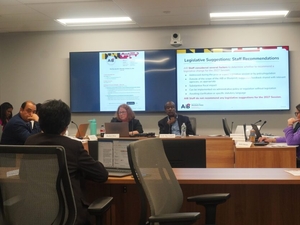
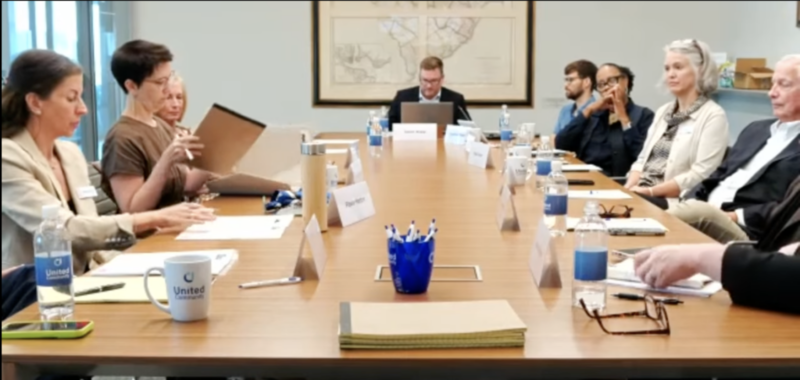
The South Carolina Arts Commission meets Thursday, Oct. 15, 2026, after two board members resigned and the interim director stepped down. (Screenshot of Arts Commission livestream)
COLUMBIA — The interim director of the state Arts Commission stepped down Thursday, following the resignations of two board members in the weeks after a controversial decision not to fund two LGBTQ+ organizations.
Ashley Brown, who has been interim director since August, will stay with the commission, returning to her role as a deputy director, commissioners said Thursday. Board chair Flavia Harton and commissioner Rip Parks resigned effective Friday, according to letters they sent to the governor, who appoints the entire board.
None of the three mentioned the recent funding vote as the reason for their decision.
SC Arts Commission refuses grant funding to 2 LGBTQ+ organizations
Harton, who joined the board in 2022, told the commission she needed more time to focus on her full-time job. Parks, who was among those opposing the grants, wrote in his letter to the governor he didn’t feel he could meet the “all-consuming time demands that I anticipate in the foreseeable future.”
Brown did not give a reason for her decision to step down, which commissioners announced during a Thursday, all-virtual meeting. The commission unanimously chose Ce Scott-Fitts, the agency’s interim senior deputy director, to take her place.
Brown “has done a great job,” Harton said. “She and I have gone through a lot of challenges during this time and a lot of learning experiences, and I have truly enjoyed working with Ashley.”
Harton, of Greenville, did not vote on the grants for the Greenville Gay Men’s Chorus and Spartanburg’s Proud Mary Theatre Company. As board chair, she votes only in the event of a tie, which was not the case in the 5-3 vote taken Oct. 1 to reject their applications.
Parks, who is from Easley, was one of two commissioners to write emails to commission leadership opposing funding for the organizations. He was among the five voting not to give the Gay Men’s Chorus $13,000 and the theater company nearly $4,000.
“While these organizations have every right to promote their agendas privately, it is not the role of a state funded agency to promote them,” Parks wrote in a June 12 email made public in an open records request.
The commission’s funding for LGBTQ+ artists and groups has become a target for the Legislature’s most conservative members in recent years. During budget debates, members of the House’s ultra-conservative Freedom Caucus often ask to slice the commission’s funding, describing some of its grant-funded projects as inappropriate or overly political.
What the governor said
Gov. Henry McMaster likely won’t have time to appoint replacements on the board before he leaves office at the end of the year, he told reporters earlier this week. A new governor, elected in November, will take over in January, potentially shaking up any of McMaster’s appointees.
Although McMaster could select interim members, permanent appointments require a vote in the Senate, and senators aren’t expected to return to the Statehouse until the next legislative session begins in January.
Members on the state’s dozens of citizen governing boards are often tough to keep because the work takes so much time, McMaster said. The Arts Commission’s board is unpaid.
“It’s very hard to get people to serve for free and give all their time to these various commissions, but we have to have them because we just can’t hire that many people,” McMaster said.
That’s especially true when decisions become controversial, he added. The risk of potential lawsuits or bad publicity for the members or their businesses might turn people away from wanting to serve on boards, he said.
In this case, the decision not to fund the two LGBTQ+ organizations drew pushback from the state’s American Civil Liberties Union, which sent a letter to the board saying the decision might violate the First Amendment and open the commission up to lawsuits.
McMaster said he didn’t know whether that directly led board members to resign, adding he hadn’t spoken with either of the resigning commissioners as of Tuesday.
“I wish they’d stayed, because they were good people,” McMaster said.
Funding for ‘ideology’
Questions over what the board should or shouldn’t put money toward arose again Thursday as commissioners talked about grants for artists early in their careers.
This time, concern came not from artists’ sexual identity but whether their work might violate a resolution the board passed in August banning grant funding for work promoting any sort of ideology.
When awarding funds, the resolution requires evaluators to “disfavor any projects that promote any ideology without distinction as to the content or nature of the promoted ideology,” without defining what that might look like.
Board members did not give a reason for the resolution before passing it, though it states that “in recent years controversies have arisen across the United States regarding public funding of endeavors that promote ideologies.”
Some lawmakers call SC Arts Commission funding a ‘waste.’ Supporters say it’s essential.
Jace Woodrum, director of the state ACLU, called the resolution vague and a way of “attempting to silence ideas” board members disagree with.
“All art conveys ideas — and if an arts commission doesn’t support art about ideas, it doesn’t support art at all,” Woodrum said in a statement soon after the resolution passed.
Parks called one artist’s work up for consideration Thursday “pure political ideology,” without elaborating on what part of it he felt was too political.
“I don’t see the artistic merit,” Parks said of the work.
The artist, Shakira Olivera-Bautista, graduated from Furman University in 2025 and specializes in oil painting, though she also dabbles in mixed media, photography and other forms of illustration, according to her website.
“My artistic practice is rooted in the identity, heritage, and emotional landscape of the Latinx community,” Olivera-Bautista’s website reads. She did not respond to a call requesting comment.
The Arts Commission declined to release the samples of her work the board saw before voting. Spokesperson Jason Rapp said the commission doesn’t make applications public unless the artist has been awarded and accepted a grant.
The commission unanimously declined to award Olivera-Bautista the $1,800 grant.
Columbia