Positions on election hand-counting split candidates in South Dakota’s secretary of state race
Oct 14, 2026 | 5:05 pm ET
Description
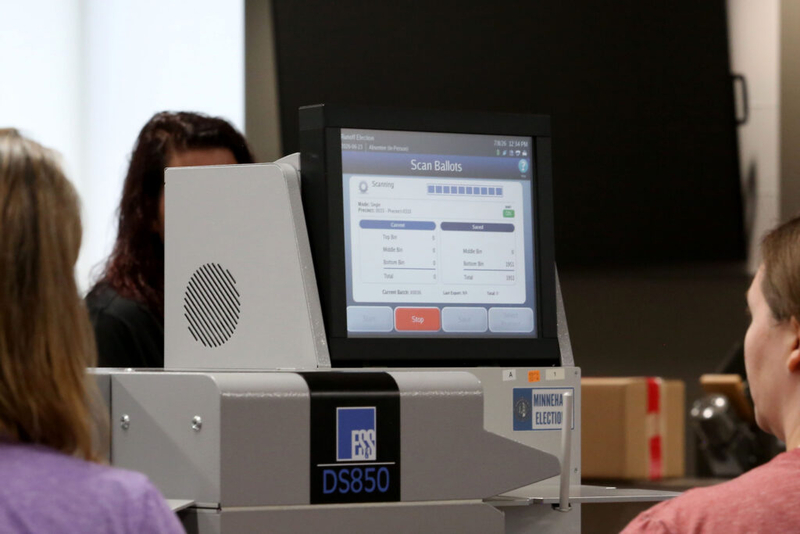
A vote tabulation machine scans ballots during the 2026 Sioux Falls mayoral recount on July 8 in downtown Sioux Falls. (Photo by Makenzie Huber/South Dakota Searchlight)
South Dakota voters are selecting a new person to oversee elections in the state, with a choice between a candidate who has supported hand-counting and the elimination of vote tabulation machines, or candidates who say they want to support an election system that’s working well.
Republican Heather Baxter, Democrat Terrence Davis and Libertarian Tamara Lesnar are the nominees for secretary of state, an office that not only oversees elections but also manages campaign finance reporting, business filings, lobbyist registrations and other administrative functions.
The current officeholder, Monae Johnson, was elected in 2022 and sought another term but lost her bid for the Republican nomination at the party’s state convention during the summer. Baxter defeated Johnson with 59% of the party delegates’ votes, and Johnson has since endorsed Davis.
The election is Nov. 3, advance voting is underway, and the voter registration deadline is Monday.
Heather Baxter
Baxter, of Rapid City, has been serving as a state representative for the past two years but lost a primary race on June 2 and has since focused on the secretary of state race.
She is a small-business owner from a well-known family in the Black Hills, where her late grandfather Korczak Ziolkowski started the Crazy Horse mountain carving. Her business experience has included running a tanning facility, women’s day spa and fitness center. She currently works as a strength and flexibility coach for elderly people, offering services at home or in assisted living centers.
Baxter’s campaign website says she supports “improved hand-counting” methods. She co-sponsored state legislation to prohibit the use of automatic tabulating machines to count votes.
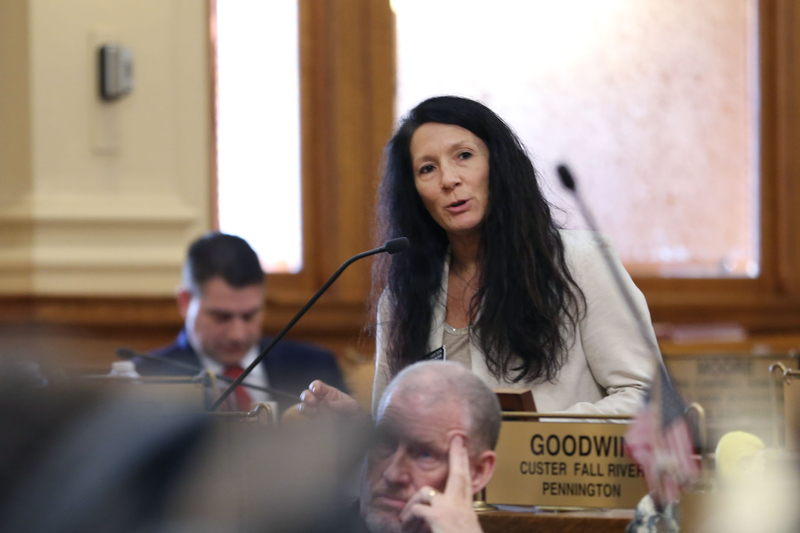
Baxter told South Dakota Searchlight she supported that bill because some counties use outdated software and laptops that don’t meet federal election standards; therefore, “we shouldn’t be using these tabulators.”
“And that’s why I was willing to support that,” she said. “If we’re not compliant, let’s get rid of them.”
But if elected, Baxter said she would take a different approach. She said that if she found county auditors using outdated software, for example, she would have “a sit-down conversation” with them.
Baxter said she likes hand-counting because “you can see the voter intent.” She gave an example of a voter scribbling out a first choice and circling an intended one, and a hand-counter spotting the issue “where a machine didn’t read that.”
Those sorts of positions helped Baxter defeat Johnson at the Republican convention. Activists who had previously supported Johnson had become frustrated that Johnson did not implement some of their preferred changes, including a move away from electronic tabulation. Some of those same people testified in favor of the 2025 bill to ban tabulation machines.
Baxter told Searchlight she would focus on ensuring counties comply with state and federal requirements while giving county auditors greater local control over their elections.
“The biggest misconception is that I’m going to go in and just completely get rid of these machines when I don’t even have that in my wheelhouse of what I’m allowed to do,” Baxter said.
She said the Legislature, rather than the secretary of state alone, would have to implement such a change.
Baxter said she wants to meet with auditors to identify inconsistencies in how counties are instructed to administer elections, and to hear from business owners about how the secretary of state’s office could work better.
“Transparency and accountability are not a burden. They’re the job,” Baxter said.
Terrence Davis
Davis, of Sioux Falls, is a former South Dakota and Tennessee state trooper who is pursuing a doctoral degree in law and policy. He worked as an intake specialist with East River Legal Services prior to the campaign. He was born in Peoria, Illinois, and said he experienced homelessness and grew up in a low-income environment.
Davis is a Democrat arguing that the secretary of state should be treated as an administrative job, not a vehicle for partisan politics. He said that’s what Baxter is doing.
“South Dakotans like boring politics,” he said. “They just want the system to work the way it’s designed to work and to find solutions if there’s an issue.”
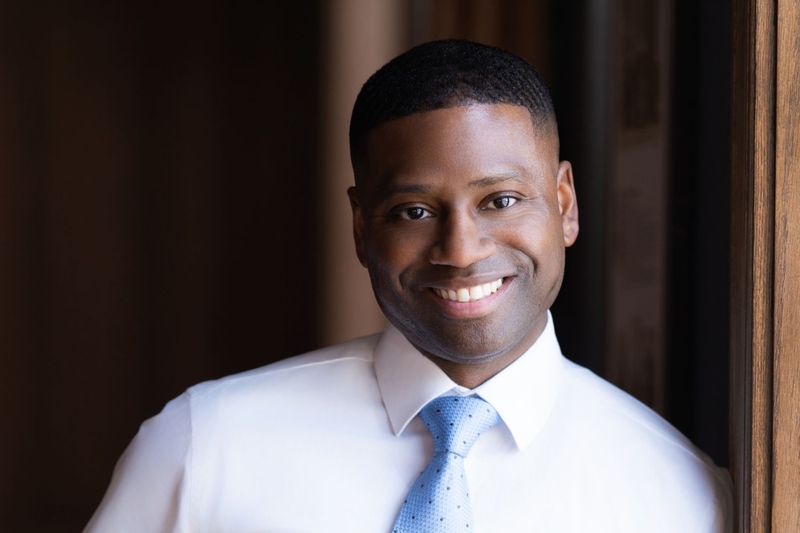
Davis said his first priority would be rebuilding trust in the office through more timely responses to county auditors, members of the public and the media. He also wants to improve the secretary of state’s website and strengthen relationships with county auditors.
Davis said his clearest policy disagreement with Baxter is over her support for hand-counting and her criticism of electronic tabulation. He favors using technology alongside human oversight.
“With that being said, it doesn’t mean we cannot improve, but I think it should be a very gradual, measured approach,” Davis said.
Davis said Baxter has been pivoting away from her anti-election-machine stance, which he said is ultimately motivated by “the whole situation surrounding the 2020 election,” referring to President Donald Trump’s false claim that the election was fraudulent.
Davis is pitching himself to voters who might normally vote Republican. He pointed to his past as a registered Republican and described himself as someone who sits in the middle on many issues.
“Look beyond ‘Democrat,’ and look at a person for the skill set, for what they want to offer all South Dakotans,” Davis said.
Tamara Lesnar
Lesnar, of Grenville, is a former compliance officer at the Chicago Mercantile Exchange, where she was responsible for holding traders accountable for violations. She now runs a small business selling collectibles.
Lesnar is running on the Libertarian ticket, rejecting what she called a power struggle between the state’s two major parties that leaves voters behind.
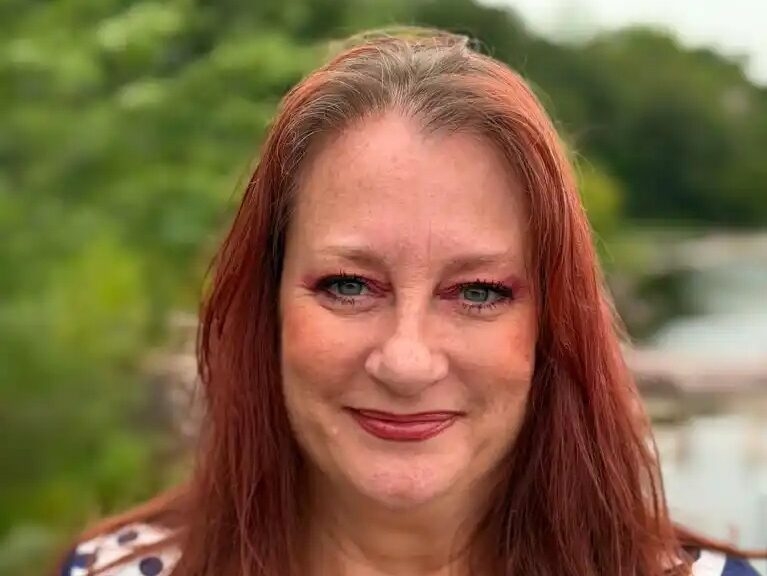
She is not new to South Dakota politics. Lesnar ran unsuccessfully for the U.S. Senate as the Libertarian candidate in 2022 and for the South Dakota House in 2024.
Lesnar’s campaign website highlights priorities including protecting voting rights, reducing government burdens on businesses and making state government more responsive.
Lesnar also said she supports continuing to use voting tabulation machines. She sees no compelling reason to eliminate them, she said, and widespread hand-counting would require more labor than local election offices can provide.
Lesnar has ideas to use technology in new ways. She proposed databases that would allow residents to anonymously indicate their preferences on issues before state lawmakers vote.
“I’m more about direct democracy,” she said.

Pierre, SD