‘It’s time to make us essential,’ EMS responders tell NJ lawmakers
Oct 08, 2026 | 4:40 pm ET
Description
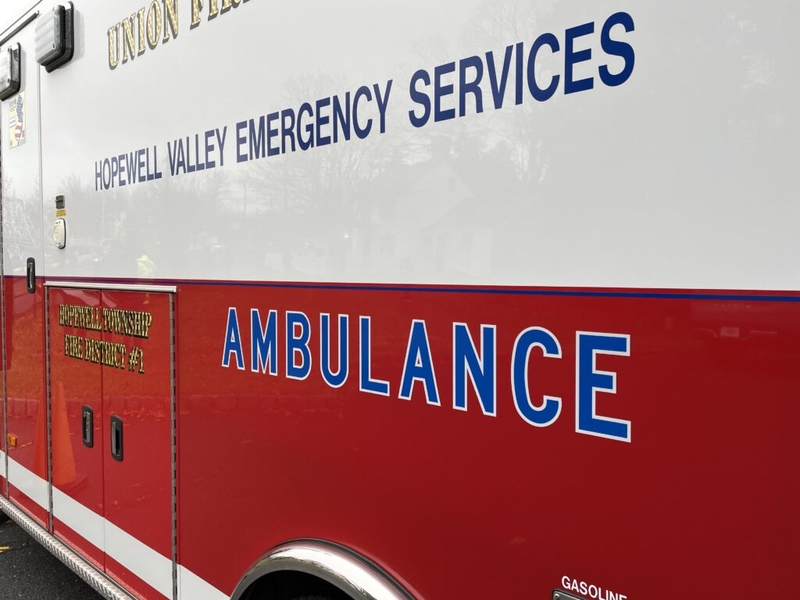
EMS leaders urged lawmakers to pass a bill that would make their work an essential service in New Jersey, like fire and police, and called for other changes during a legislative hearing Thursday. The Senate committee took no votes, but leaders promised action. (Photo by New Jersey Monitor)
Emergency responders urged state officials at a legislative hearing Thursday to make basic lifesaving ambulance service an essential requirement under state law, create a statewide plan for responders, expand funding, and make it easier for people to volunteer.
The Senate Legislative Oversight Committee took testimony in the Trenton Statehouse from nearly a dozen people, almost all of whom encouraged lawmakers to act on legislation to require local communities to provide certain emergency medical services, a bill that had initial votes by committees in both the Senate and Assembly in May. Some said the bill needs amendments to ensure volunteer squads would satisfy the requirement.
Witnesses also called for the state to adopt a statewide EMS plan, lift the $125,000 annual cap on local tax contributions for ambulance squads, and make other changes. The committee did not vote on any of the measures Thursday.
Sen. Andrew Zwicker (D-Middlesex) pledged to tweak and advance some bills and introduce others to address planning, training, funding, oversight, data collection, and more.
“In the end, we want to capture everything needed for providing that first response when someone is in critical, critical need,” Zwicker said.
Advocates for change say New Jersey’s emergency response system is increasingly fragile, a patchwork of volunteer and paid squads — associated with hospitals, fire departments, and private companies — that face growing challenges involving vehicle crashes, opioids, natural disasters, and more. While volunteerism has been declining for some time, the trend accelerated in recent years, witnesses said.
Jennifer McCarthy, a vice president and board member of the statewide EMS Task Force, a nonprofit that coordinates large-scale responses, said modernizing these services is “paramount” to protecting patients, public health, and emergency response in general. Currently, there is no law requiring communities to have emergency response providers in place.
“It’s 2026. It’s time to make us essential,” McCarthy said.
Such a change would make for more consistent responses, improve outcomes, and boost volunteer participation, she added.
McCarthy also urged lawmakers to adopt a second bill that would have the state study the current landscape and create a statewide plan that considers regional coordination of emergency response.
“We need to reverse-design the system, where volunteers and career personnel can work together to meet the needs of the public,” McCarthy said.
The EMS Task Force depends on a mix of paid and volunteer staff from 60 local agencies, although nearly one-third retire each year, she said.
Ari Meisel, executive director of Princeton First Aid and Rescue Squad, said people continue to want to volunteer, but the state’s process of training, credentialing, and onboarding them is far too slow. Lawmakers should “make the on-ramp faster,” Meisel said.
“Every week of delay is a week we lose a good person,” he said.
Sen. Robert Singer (R-Ocean) described the benefits Lakewood and surrounding communities have seen from the local volunteer Hatzalah service, an organization based in some Jewish neighborhoods that responds to emergencies for people of all backgrounds and faiths. The group currently has a waiver that enables higher-ranking responders to have cars stocked with medical equipment so they can travel directly to the site of the emergency, he said, reducing delays.
Singer said he would introduce legislation to allow other communities to have a similar structure with high-ranking responders.
“Here’s something that works well and is on a waiver, but should become permanent if any other squad wants to use it,” he said.
Corry Van Elsland, with Paramedics for the Advancement of New Jersey Emergency Medical Services, a nonprofit that represents paid paramedics, questioned the continued reliance on volunteers, given the growing complexity and requirements of emergency response.
He underscored the call for a statewide study and plan to better determine response times and outcomes across all 21 counties, but said the future will require more professional staff.
“Are we preserving a system because it works, or because it’s a system we’ve always known?” Van Elsland said, adding that “gratitude in the past can’t substitute planning for the future.”

Trenton, NJ