Enrollment up 0.7% at Kansas public universities, totals slip at community and technical colleges
Sep 30, 2026 | 4:14 pm ET
Description
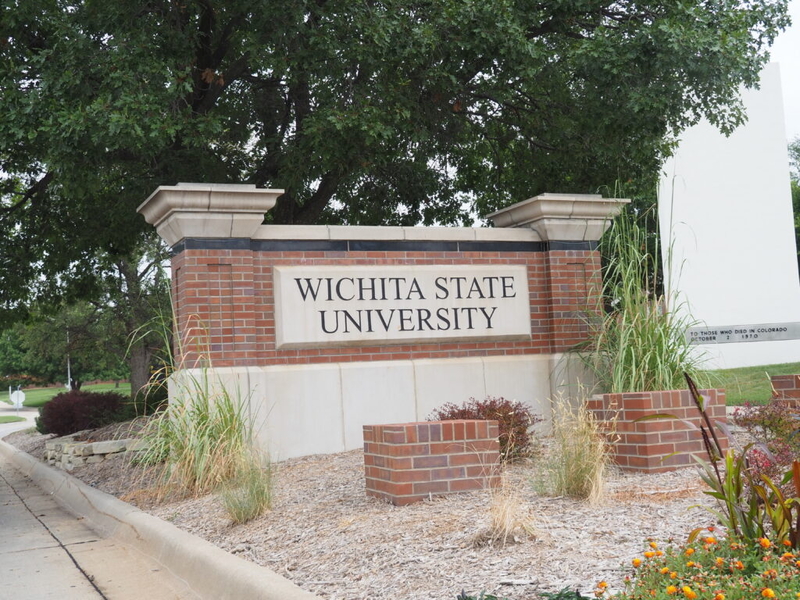
Wichita State University suffers the largest enrollment decline — a reduction of 2.5% — among six state universities supervised by the Kansas Board of Regents. Overall, state university enrollment increased 0.7%, while community colleges lost 1.9% and technical colleges enrolled 6.8% fewer students. (Photo by Tim Carpenter/Kansas Reflector)
TOPEKA — A modest enrollment reduction of 0.8% this fall among 32 higher education institutions coordinated by the Kansas Board of Regents obscured more significant declines at five technical colleges, a dozen community colleges and two universities.
The six public universities commonly associated with the state Board of Regents reported a 0.7% increase in headcount, while technical colleges shrank 6.8% and community colleges tumbled 1.9%. Washburn University, a municipal university and its technical college in Topeka, scrambled its enrollment statistics through an administrative adjustment but documented 0.6% growth.
Overall, the regents system enrolled 177,768 students, 1,356 fewer than one year ago. The higher education system chronicled enrollment growth in 2023, 2024 and 2025. The fall 2026 enrollment was 6.5% greater than five years ago amid the COVID-19 pandemic, but 2.7% less than a decade ago.
“After three years of growth, our system is experiencing flat enrollment this fall, with uneven results across sectors and institutions,” said Alysia Johnston, chair of the Board of Regents.
Here are 2026 enrollments at six state universities and the change from 2025: Emporia State University, 5,110, up 6%; Fort Hays State University, 13,359, up 4%; Kansas State University, 20,789, up 0.3%; Pittsburg State University, 5,766, down 0.6%; University of Kansas, 27,352, up 0.5%; and Wichita State University, 18,003, down 2.5%.
The K-State veterinary school’s enrollment didn’t increase from 494 students, and the KU Medical School expanded 3.9% to 4,112 students.
Competition for traditional college-age students has intensified in Kansas and across the United States because of declining birth rates and rising costs.
ESU, FHSU and PSU enrollment fell over the past five years — most significantly by 9% at ESU. In the past decade, ESU shed 13.2% of its students, FHSU dropped 8.9%, K-State fell 10.8% and PSU lost 18.8%. WSU says enrollment grew 24.4% greater over this 10-year period, a trend powered by aggressive recruitment of international students. KU’s enrollment is up over the decade by 9.9%.
“We’re proud that students continue to see the value of a KU education and that more of them are staying on track to earn their degrees,” said KU chancellor Doug Girod.
Girod said combined enrollment of KU’s main campus in Lawrence, a satellite campus in Johnson County and the medical center in Wyandotte County expanded this fall by 295 students to a record 31,464. The 4,834-student freshman class at KU was the fourth largest in university history, he said, despite a 4.1% decline from new freshman enrollment in 2025.
Enrollment at K-State on campuses in Manhattan, Salina and Olathe reached 21,283 this fall. That represented the highest total since 2020.
“These steady enrollment numbers are proof of the success we’ve had in articulating the value of a K-State degree and the long-term rate of return it has for those who choose to become Wildcats,” said Jesse Perez Mendez, the provost at K-State.
Wichita State enrolled 455 fewer students this fall in wake of the stunning $16.2% decline in graduate student enrollment. WSU’s international student enrollment in graduate school crashed 23.9%.
“This year’s enrollment reflects both the opportunities and challenges facing higher education,” said Richard Muma, the president of WSU.
Overall enrollment at Kansas’ technical colleges fell 6.8% to 11,412 this fall. The shift ranged from a reduction of 29% at Flint Hills Technical College to a drop of 0.8% at Wichita State’s technical college. The state’s technical school enrollment — driven in the past by the Legislature’s investment in tuition subsidies — remained 20% higher than five years ago and 47% greater than 10 years ago.
Kansas enrollment at 19 community colleges eroded this fall by 1.9% to 63,605 students — a loss of 1,246. While Highland Community College reported growth of 12.3%, Pratt Community College plummeted 12.9%. More than half of enrollment shifts at community colleges were plus or minus 5%.
In 2026, the Kansas Legislature made changes to a program allowing high school students to enroll in subsidizing career and technical courses offered at community and technical colleges. The new rules limited enrollment to high school juniors and seniors and restricted college-credit to those students with a minimum 2.0 grade-point average. The alterations were expected to drive down student enrollment.
Topeka, KS