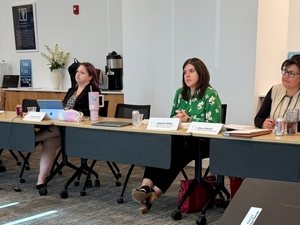
Selling Arizona trust land won’t guarantee more housing, land chief tells lawmakers
Sep 29, 2026 | 8:50 pm ET
Description
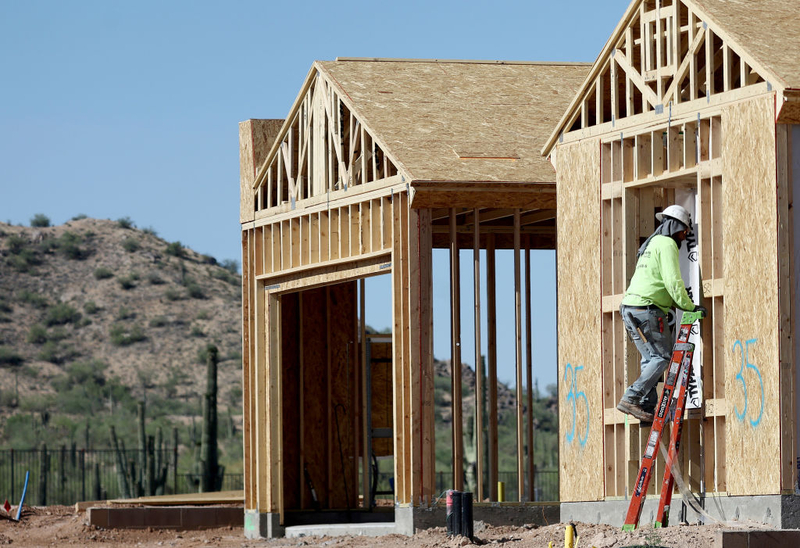
A worker helps construct a new home at a master-planned residential community near undeveloped Sonoran Desert on June 8, 2023, in Buckeye. (Photo by Mario Tama/Getty Images)
Republicans want to sell off more of Arizona’s trust land to alleviate the housing shortage, but the head of the state Land Department says doing so doesn’t guarantee more houses would be built.
“It’s not just if we sold all this land, all this housing would be built, because there are so many other factors that go into that,” said Robyn Sahid, the commissioner of the Arizona State Land Department.
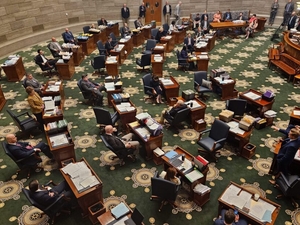
Sahid told lawmakers during a legislative committee hearing about the agency’s work that much of Arizona’s trust land isn’t ready for residential development because it lacks basic infrastructure like water and electrical access. And, she added, some of the trust land parcels haven’t yet been zoned for residential use, making it impossible to sell them to housing developers.
Arizona’s housing market has in recent years struggled to keep up with demand. Three years ago, the state was short more than 200,000 homes. While that gap has since shrunk, it remains high: A 2026 report from the conservative Common Sense Institute found that the state had a housing deficit of 110,837 units in 2025. And that number is expected to increase this year.
The Grand Canyon State is far from the only one grappling with a housing crisis. Many states in the West, including Arizona, California, Nevada and Utah, are ranked among the worst states for affordable housing. In a bid to address that last year, congressional Republicans pushed to auction off up to 3.3 million acres of public land to build more housing in 11 Western states, including Arizona. That plan, which sparked intraparty opposition, soon fell apart.
But the idea persists at the statewide level.
Rep. Gail Griffin, R-Hereford, who co-chaired Tuesday’s committee hearing, justified her stance that Arizona should sell off more land by highlighting a 2025 Common Sense Institute estimate that doing so could create 200,000 housing units across more than 270,000 acres of unleased trust land located near urban areas.
Republicans pressed Sahid over the department’s emphasis leasing trust land for the production of solar energy. In fiscal year 2026, the department sold off 307 acres of state land for residential use and leased 6,704 acres for solar use. That difference has been a point of contention between Republicans and Gov. Katie Hobbs’ administration, and was part of the impetus behind Tuesday’s hearing.
“During a housing shortage, the Department auctioned nearly 22 times the number of acres of State Trust Land for utility-scale solar development than for new home construction,” Griffin said in a news release published after the hearing ended.
Arizona has about 9 million acres of trust land given to it by the federal government when it became a state more than a century ago. The purpose of the land trust was to benefit public entities, like schools. Much of it is leased for grazing livestock or commercial development, including solar and wind farms.
While Republican lawmakers are advocating for more of that land to be sold to build homes, the vast majority of Arizona voters disagree.
An August public opinion survey found that 82% of Arizonans across the political spectrum oppose selling trust land to private housing developers. Even among Republican voters, a 52% majority are against using state trust land to alleviate the state’s housing shortage. Instead, 39% of Arizonans said they would prefer more government-funded grants to help people afford housing, and 26% said they would support changing local zoning laws to make it easier to build more homes.
On Tuesday, the focus was on chastising the State Land Department for approving solar leases while failing to sell off land for residential use at the same rate.
Rep. Tim Dunn, R-Yuma, grilled Sahid on the department practice of designating some portions of state land as solar only leases. Such land, which is zoned for commercial use, should be equally open to other vendors, Dunn argued, like ranchers with grazing cattle or developers who want to build data centers. The Trump administration’s Bureau of Land Management is reportedly considering a plan to place 12 data centers on public land in Arizona, Idaho, Nevada, Oregon, Utah and Wyoming.
Sahid explained that much of the trust land being leased to solar companies isn’t ready to support other commercial ventures.
“There could not be roadways, wastewater (or) access to water. These are areas that are a little more outlying that might not support a full commercial development, which is why we lease for solar,” she said. “We see it as an interim use of the land until it’s ready for development and the local jurisdictions can support a different use of that land.”
And, she added, the rates that grazing lessees pay are different than those solar companies do. The department examines each lease or sale for the best possible profit to the state. Arizona not only receives a land rental fee from leases to solar companies, but also earns royalties from the energy produced.
Sen. David Gowan, a Republican who represents Sierra Vista, was especially critical of a 1,000-acre solar project planned in his district, which has a lease term of 30 years. That land, he said, would be better used to build more housing for residents of Fort Huachuca, which is set to welcome a new U.S. Space Force squadron. Gowan waved away Sahid’s explanation that the land was unfit for residential use because of a lack of infrastructure, saying that the local government was willing to invest to make that a nonissue.
“We always talk about not having enough housing in the state, yet we’re going to take a plot of land that’s perfect for housing, right next to our city, out for 30 years,” Gowan said. “I assume we could have infrastructure there within 30 years and the growth pattern of what that Fort’s going to do, it’s mind-boggling — it’s frustrating to my community.”
Sahid replied that the solar farm has yet to be finalized because the local jurisdiction still needs to approve its zoning rights. She added that leases, unlike sales for residential use, are made to ensure that the state has the best return possible for the state land trust, which helps fund public education. She also noted that selling the land after the lease term is up is still an option, and often the creation of new infrastructure means that the sale will earn more at that time than it would have earlier.
“We want to maximize the value of the land,” she said.
Over that 30-year period, Sahid said the department estimates it will earn $8.6 million in revenue for the state.
Democrats on the panel sought to counter the criticism from across the aisle. Rep. Sarah Liguori, D-Phoenix, said it was the wrong approach to focus on individual sales, and emphasized that the State Land Department is entrusted with the fiduciary responsibility to look at each case objectively, with an eye for what is best for Arizona as a whole.
Sen. Mitzi Epstein, D-Tempe, added that the Land Department serves a necessary oversight role to ensure that housing is built in a sustainable way. Developers, she noted, are more concerned with building and selling units rather than assessing whether the surrounding community can meet the increased demand on local resources.
“When purchasers come to the Land Department, generally they’ve only got their profit motive in mind,” she said. “They’re not considering: ‘Is there water, is there enough electricity for that community, is there money for other infrastructure needed for the community?’ All of that matters, and that’s why we have governments there to try to find that balance.”
But Gowan was unconvinced, and said that lawmakers know best what their districts need and were elected to regulate government agencies that are failing to meet their constituents’ demands.
“We are elected to govern the government,” he said. “I think we know the issues in our district, and we know where there’s water needs and where there’s electricity. The good Lord gives us the water, which is a great thing.”
Gowan said that the state has too much public land in its possession. He pointed out that, in 114 years, the state has only sold about 10% of the trust land it was granted — about 1 million acres of what it was originally provided in 1912 — and said the state should work to offload much more to benefit the state land trust.
“We need to relinquish those lands to get the dollars into the fund, so we can help our trustees get those dollars,” he said.
Phoenix, AZ