Minneapolis council advances proposal to mandate human drivers in robotaxis
Sep 29, 2026 | 8:36 pm ET
Description
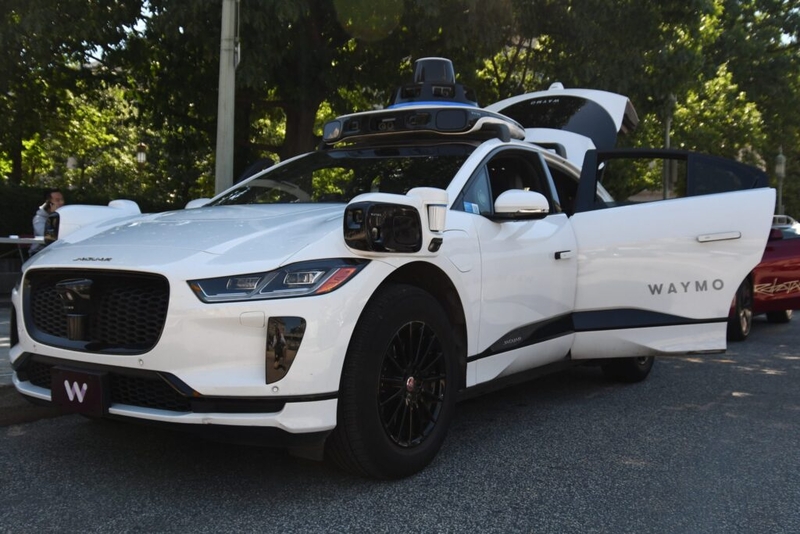
An autonomous vehicle operated by Waymo is displayed outside the Pennsylvania Capitol in Harrisburg on June 24, 2026. (Photo by Peter Hall/Pennsylvania Capital-Star)
The Minneapolis City Council voted 7-4 to advance a proposal on Tuesday to require human “safety monitors” earning minimum pay rates in the drivers’ seats of autonomous robotaxis like Alphabet’s Waymo and Amazon’s Zoox.
The proposal aims to protect the jobs of the state’s roughly 10,000 rideshare drivers, the majority of whom are Black and immigrant men, according to a 2024 state study.
Its authors say the proposal is part of a larger fight against Big Tech rolling into cities in regulatory gray areas — as Uber and Lyft did a decade ago — and the widespread job losses many fear from artificial intelligence, from Uber drivers to coders to lawyers.
“(Tech companies) do displace. They do exploit. And without measures like what we’re taking up today, we will experience the collateral and negative impacts of technological advances,” said City Council Member Robin Wonsley, the chief author of the ordinance.
Minneapolis Mayor Jacob Frey is expected to veto the measure if it passes a final City Council vote, and it’s unlikely the 13-member council will be able to muster the nine votes necessary to override him.
A spokeswoman for the mayor said he considers it a “back-door ban, and a bait for the state to come in and preempt us.”
That’s what happened the last time the Minneapolis City Council took on Big Tech rideshare companies. In 2024, the council overrode a mayoral veto to pass minimum pay rates for Uber and Lyft drivers despite threats by the companies to cut service in the city. The Legislature then stripped cities of the power to enact minimum driver rates as part of a deal that raised driver pay while keeping Uber and Lyft operating in the state.
The robotaxi ordinance, even if passed, wouldn’t take effect until October 2027, which Wonsley said gives the Legislature more time to consider statewide regulations.
Supporters of autonomous vehicles say it simply doesn’t make sense to require a human to sit behind the wheel of a car that drives itself, pointing to cities that already have autonomous taxis such as San Francisco, Austin and Atlanta.
Waymo, which opposes the proposal, began testing its technology in Minnesota last fall. The company says it currently provides more than 500,000 fully autonomous rides every week in 15 major U.S. cities, none of which require human monitors.
Reducing accidents caused by distracted, sleepy, impaired and careless drivers is perhaps the greatest promise of robotaxi companies, though experts caution the safety risks of autonomous vehicles are not fully understood. Nor have the vehicles been widely tested across difficult driving conditions on icy city streets and congested highways.
Safety goes beyond car accidents. Proponents note that autonomous vehicles eliminate the risk of sexual assault and abuse. Uber, for instance, received more than 400,000 reports of sexual assault and misconduct over a five-year period from 2017 to 2022, according to court records reported by the New York Times. Uber said about 75% of reports were for “less serious” conduct, such as flirting or comments on appearance.
Alec Smith told the council he worries about his daughter’s safety because she has severe physical disabilities and cognitive impairments, and needs to be driven to medical appointments.
“There’s no reason to require some of the most vulnerable among us to be driven around by total strangers, and it really hurts their independence,” Smith said.
Drivers and their advocates say they abhor misconduct, and they note driverless cars present their own safety risks. Robotaxis have shown a propensity to get stranded and block emergency vehicles, as hundreds did last December when a blackout in San Francisco knocked out traffic signals.
Plus, drivers do more than turn the wheel and press the gas: They can help elderly riders with their bags and luggage, troubleshoot navigation during construction and inclement weather, and respond to emergencies and accidents.
They’re also local taxpayers and consumers, who spend their wages here in Minnesota.
“I think we impact the city, and for us not to be working, that would impact the city,” Mardice Washington, an Uber and Lyft driver, told the council.
Some disabled people say Uber and Lyft drivers don’t always live up to that ideal of community service, however. Jennifer Dunnam, president of the National Federation of the Blind of Minnesota, said people who use service dogs have to budget in extra time for trips to account for drivers canceling on them.
Ultimately, the decision to give consumers more choices or protect jobs became the dividing line for members.
“Job loss or options … It’s a no-brainer,” said Council Member Jamal Osman, a co-author of the ordinance.
Council Member Pearll Warren went the other way, using the kind of colorful — and in this case, flavorful — argument that’s become a trademark during her short time on the council.
“Just because I don’t like peanut butter and jelly sandwiches doesn’t mean that I’m going to put an ordinance out there that says no one should eat peanut butter and jelly sandwiches,” Warren said. “There’s way mo’ ways than the way that you got.”
Voting in favor of the ordinance were Council Members Wonsley, Osman, Aisha Chughtai, Jason Chavez, Elliott Payne, Aurin Chowdhury and Soren Stevenson. Voting against were Council Members Warren, LaTrisha Vetaw, Linea Palmisano and Michael Rainville. Council Member Elizabeth Shaffer, who voiced opposition to the ordinance, was absent for the vote as was Council Member Jamison Whiting.

Saint Paul, MN