Here’s how Oregonians want the state to address its transportation budget crisis
Sep 29, 2026 | 7:25 pm ET
Description
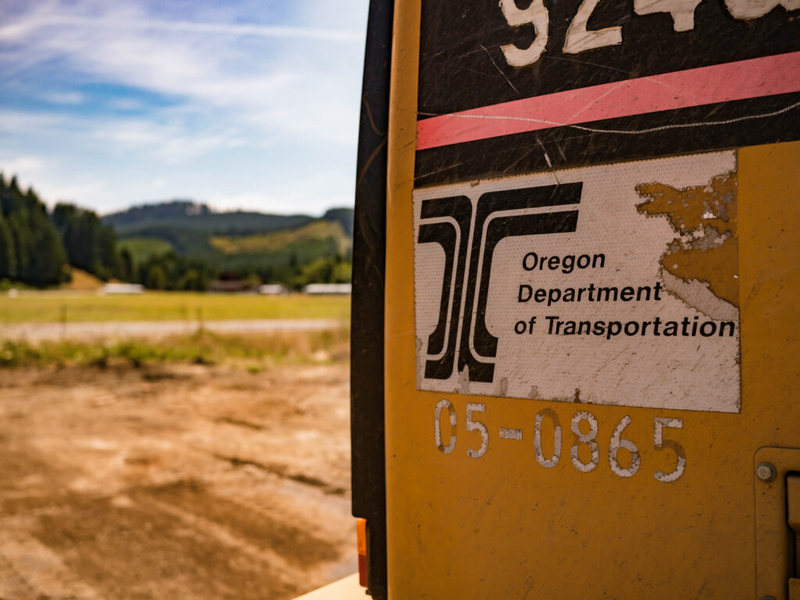
Oregonians ranked maintaining and preserving highways and bridges and improving safety as their top priority in a new survey. (Photo by Oregon Department of Transportation)
Oregonians ranked maintaining and preserving highways and bridges and improving safety as the top priorities they think the Oregon Department of Transportation should focus on as it looks to resolve a $200 million budget gap in the 2027-29 budget cycle.
Between August and September, the group Gov. Tina Kotek tasked with vetting solutions to the state’s transportation budget crisis surveyed Oregonians about what they think the state’s spending priorities should be. The Oregon Capital Chronicle obtained a copy of the survey responses, as well as an analysis of the responses compiled by Department of Transportation staff.
About 8,650 Oregonians from all counties except Wheeler County responded to the survey. More than 60% of respondents live in the Portland metro area, according to the survey analysis. In 2024, nearly half of Oregon’s population lived in the Portland metro area, according to a state economic analysis.
Survey comments express frustration with spending, emphasize public transit
The first question in the survey asked respondents to rank six transportation priorities:
- Improving safety
- Reliable public transit
- Easier to bike and walk
- Better traffic flow
- Maintaining the system, such as fixing potholes, clearing debris and snow
- Preserving key assets, such as bridges and roads needing replacement
Maintaining the transportation system was ranked as the top priority in the survey, followed by preserving key assets, improving safety, making it easier to bike and walk, reliable public transit and better traffic flow.
Nearly 4,600 people included comments in their answers to this question, including hundreds who expressed their frustration with cuts to TriMet, Portland’s public transportation system. Many of them said they rely on public transportation because they cannot afford a car or because of health issues.
The department did not include commenters’ names in its records release, or any other identifying information aside from each respondent’s zip code.
“I’m an avid public transportation user because my life was altered by a driver hitting me while I was cycling in the bike lane during the day,” a person wrote. “Making the roads safer for all, especially pedestrians and cyclists, is important. Public transit is the greenest and most viable option, especially when coupled with reliability and safety.”
Nearly 40 comments said they want the state to focus on increasing wildlife crossings, which wasn’t listed as a priority option in the survey.
Other comments expressed frustration with the department’s financial efficiency, asking that it creates more cost-effective ways to complete projects.
“No new taxes,” a person wrote. “There are too many taxes in Oregon. Reduce expenses first. Increase efficiency,” another person wrote.
I am answering with the entire state in mind. If I were only thinking of Multnomah County, my answer would be different.
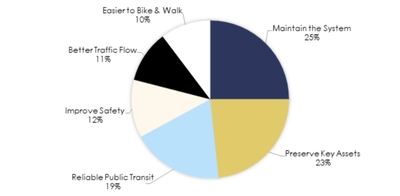
The second question in the survey asked Oregonians how they would allocate transportation funding, asking them to put the percentage of funding they think each priority category should receive. The survey analysis shows respondents said the transportation agency should focus its funding on maintaining its infrastructure, followed by focusing on preserving assets and public transit.
The third question asked respondents about what type of transportation service reductions would impact them the most. The answers mirrored responses to the first question, saying not maintaining the system, preserving key assets and improving safety would impact them the most.
The last question was an optional and open-ended question, asking Oregonians what a well-managed transportation system looks like to them.
Of the more than 6,800 responses to this question, an analysis conducted by Oregon Department of Transportation staff found that 20% of responses want a transportation system that offers different transit options that works for people of all income levels and communities.
“A successful transportation system gives people the freedom to choose what transportation mode they wish to use by equally investing in making them all safe and reliable,” one respondent wrote.
Another 19% of responses called for more reliable public transit options, while 17% of responses said the transportation agency should focus on budgeting and delivering projects.
The remaining responses asked the agency to focus on maintaining roads and bridges, improving traffic flow and eliminating perceived wasteful spending.
“Stop pushing ridiculously expensive freeway expansion projects that do nothing at all to address safety, congestion, connectivity or reliability in our transportation system…” a person wrote. “Develop and maintain a transportation system that provides options people can afford, rather than mandate car ownership.”
Kotek’s workgroup will hear the results of the findings at its next meeting on Oct. 9. The group has until the end of the year to present its transportation funding recommendations to the governor.
Salem, OR