Double digit increases in Rhode Island commercial health insurance premiums coming in 2027
Sep 29, 2026 | 2:28 pm ET
Description
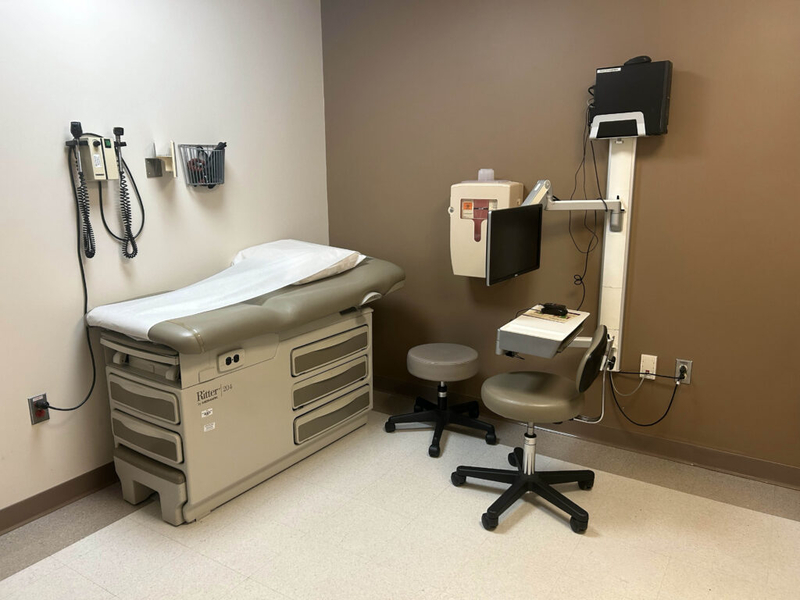
A fifth floor exam room in Rhode Island Hospital's Ambulatory Patient Center. (Photo by Janine L. Weisman/Rhode Island Current)
Monthly health insurance costs are set to rise by double-digit percentages for the second consecutive year, though the sticker shock won’t be quite as sharp as last year.
Commercial insurance rates for 2027, unveiled by Rhode Island Health Insurance Commissioner Cory King on Tuesday, are also lower than what insurers wanted, with King’s office cutting more than $86 million from what companies requested as part of the annual rate review process.
Little comfort to the combined total of 169,000 Rhode Islanders — roughly one-third of the state’s population — whose premiums will increase by 2.9% to 15.8%, depending on insurance plan and provider.
“Rising health care costs continue to present a financial burden and barrier to care for too many Rhode Islanders,” King said in a statement. “The Office of the Health Insurance Commissioner is committed to working in collaboration with all stakeholders to make health care more affordable.”
The smallest increase, 2.9%, is for the 36,685 small business employees whose employer buys plans from Blue Cross Blue Shield of Rhode Island. The largest, 15.8%, is for the 34,555 state health exchange participants who purchase plans from Neighborhood Health Plan of Rhode Island.
The push and pull between insurance companies grappling with their own rising expenses and Rhode Islanders already struggling to make ends meet has grown increasingly difficult for King’s office to navigate. Pricey prescription drugs and pressure to increase provider reimbursement rates to soothe staffing shortages have driven up insurers’ expenses. The precipitous drop in participation in the state health exchange in January, after enhanced federal discounts expired, also created riskier — and costlier — participant pools for insurers to cover.
Neighborhood and Blue Cross — the two commercial insurers that provide coverage to people who buy insurance through the state marketplace — sought premium increases of 24.9% and 9.8%, respectively, for their combined 50,000 state health exchange participants.
King’s decision calls for more tempered increases: 15.8% for Neighborhood’s marketplace plan participants, and 4.9% for those with Blue Cross.
Gail Leach Carvelli, a spokesperson for Neighborhood, defended the insurer’s original rate request, which aimed to support state regulatory requirements directing more health care spending to primary care.
“That funding was not included in OHIC’s approved rates, and therefore, without fiscally sensible rates, Neighborhood will face a significant challenge to increase health care spending in support of primary care,” Carvelli said in an emailed statement.
Rich Salit, a spokesperson for Blue Cross, said the approved rates don’t take into account the “extremely high” costs for healthcare.
“At a time when the healthcare system in Rhode Island remains extremely fragile, adequate rates are important to maintaining market stability and ensuring health plans’ ability to effectively serve members and pay providers,” Salit said in an emailed response.
But, Salit said the insurer “remains committed” to working with regulators, providers, employers and partners to address the sources for the high costs.
Attorney General Peter Neronha, whose office urged King to reject the marketplace plan hikes altogether, blasted the insurers for “inaction” leading to unaffordable consumer costs.
“Rhode Islanders deserve better than a system that consistently requires consumers to shoulder the financial burden of policy shortcomings while insurers enjoy their ever-increasing profits,” Neronha said in a statement Tuesday. “Rhode Islanders deserve innovative strategies to provide accessible, affordable, and high-quality care for all, and the only way to achieve this is through bold, collaborative reform of our health care system.”
The state health insurance commissioner is required by law to guard the solvency of insurance companies, which in turn affects payments to hospitals and health care providers. But the commissioner also cannot legally approve a requested rate hike that is not in the public’s interest.
With these competing mandates in mind, King’s office capped the administrative portion of insurers’ proposed rate increases at the rate of inflation. Last year, King vetoed any increases tied to administrative costs.
Also helping bring down insurers’ costs — and in turn, premiums for their plan participants — the termination of a state health assessment fee originally tucked into the fiscal 2026 budget.
Lawmakers agreed to nix the $4 per-person monthly premium charge, which began in January, amid concerns that it violated federal rules under the One Big Beautiful Bill Act.
King’s review also cut away from cost increases for employees of large and small businesses who pay for insurance through their workplaces.
The 40,744 small business plan participants will see monthly costs rise by 3.8% on average, versus the 8.7% average increase sought by Blue Cross, Neighborhood and United Healthcare.
For the 68,548 large business plan participants, rates will rise by 9.5% on average rather than the requested 15.5%. Insurers who cover large business plans include BlueCross, UnitedHealth, Harvard Pilgrim, Aetna and Cigna.
The Office of the Health Insurance Commissioner only reviews rates for fully insured plans, or those in which the insurer assumes financial risk for medical costs. That means the office does not inspect rates for the approximately 65% of Rhode Islanders with self-funded insurance — employer-sponsored plans in which the business, not the insurer, pays workers’ health care claims directly.
Regulators in neighboring states have approved similar rate hikes for individual and small group market plans. In Massachusetts, the merged market increase was 10.8%, while Connecticut authorized an average 11.3% hike for individual plans and 14% for the small group market, according to King’s office. Comparisons for large business plans were not available since many states do not review plans sold to large employers.
- 3:20 pmUpdated to include a response from Neighborhood Health Plan of Rhode Island.
- 3:10 pmUpdated to include a response from Blue Cross Blue Shield of Rhode Island.

Providence, RI