The tipping point is close. Get ready for Medicare for All.
Sep 29, 2026 | 5:30 am ET
Description
Medicare for All is the obvious choice to America's healthcare woes, says former Rep. John Yarmuth.(Photo by Getty Images)
A decade or so ago I was talking with the CEO of a Fortune 500 company. The conversation turned to healthcare, and I was in a snarky mood.
“How do you like being in the health insurance business?” I asked, clearly looking for an argument over federal healthcare policy, because I had consistently supported single payer health insurance during my congressional service.
His answer surprised me, because it was unexpectedly candid. “It’s the worst thing we have to deal with,” he said, as closely as I can remember. I followed up with another question, now very curious. “So what do you think the answer is?”
This answer I remember exactly. “I think the government should provide a basic level of coverage, and then individuals can supplement it to fit their individual situation,” he said.
Now I had him. “So, like Medicare for everyone?” I posed.
He smiled and said, “I guess that’s what it would be.”
“Why don’t you say that publicly?” I asked, and while I don’t remember exactly how he answered, it was obvious that he was afraid of the reaction of his peers.
I predict that’s about to change, possibly as soon as next year. According to a recent New York Times report, health insurance premiums are about to rise by historic percentages next year.
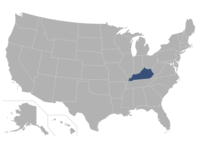
In Kentucky, proposed rate increases for 2027 range from 16.9 percent for Anthem to 21.2 percent for Molina.
While we’ve heard about potential cost hikes for individual policies, the Times article reported that group health insurance premiums are set to rise by double digits, and the added costs will be shared by the employers and employees, with some employees’ out-of-pocket costs going up by $2000 a year or more, as they did in 2026.
Obviously the costs of health insurance are becoming unsustainable for both businesses and individuals. More relevantly, no one, and I mean no one, has a better idea for dealing with this crisis than Medicare for All. In fact, no one has any viable alternative period.
Remember during Donald Trump’s first term? For most of those four years we were promised a brilliant new healthcare plan just about every two weeks. It never came. Speaker Mike Johnson has promised the same thing during his soon-to-be-over Republican majority. Maybe he’s still working on it, but it hasn’t materialized.
While I was serving I constantly challenged my GOP colleagues — who notoriously repeatedly vowed to “repeal and replace” the Affordable Care Act — to come up with an alternative that wasn’t a single payer plan. They never could because, as I constantly posited to them, there were always only two options: go back to the pre-Obamacare world with huge numbers of uninsured (and bankrupt and dying) Americans, or Medicare for All. One would think that after so many years of Republican control of the House and/or Senate, Obamacare critics would have come up with something. They have offered nothing.
Most of the opposition to Medicare for All (I use Medicare for All and single payer interchangeably) can be inferred from the millions of people who say “keep the government away from my Medicare.” They think that the government will ruin something that the government is doing really well for them. For example, Medicare has an administrative cost of roughly 3%, while private insurers’ is about 20%. And those who are afraid they won’t get to choose their doctors don’t realize that virtually every doctor has to take Medicare patients or they won’t have any.
Already this year, millions of Americans have lost their health insurance because Republicans eliminated the federal subsidies that made it possible for them to afford coverage. Millions more will decide to be uninsured for financial reasons as premiums rise by 15-20% next year. We are reaching a tipping point at which the entire country — individuals and employers — will have to face the reality that has been around for some time. There is no option for our citizens other than a federally operated insurance system that covers everyone, has the power to control costs, and will eliminate the huge expenses that we all bear for the parts of the system that don’t make anyone healthier, including insurance company profits.
The United States is the only industrialized nation that does not have a government-organized health insurance system, and that’s clearly not because we’re smarter than all the others.
Expect to hear more and more about this during the 2028 presidential and congressional election campaign. The time has come.
Frankfort