Protecting our water means prioritizing local voices
Sep 29, 2026 | 5:30 am ET
Description
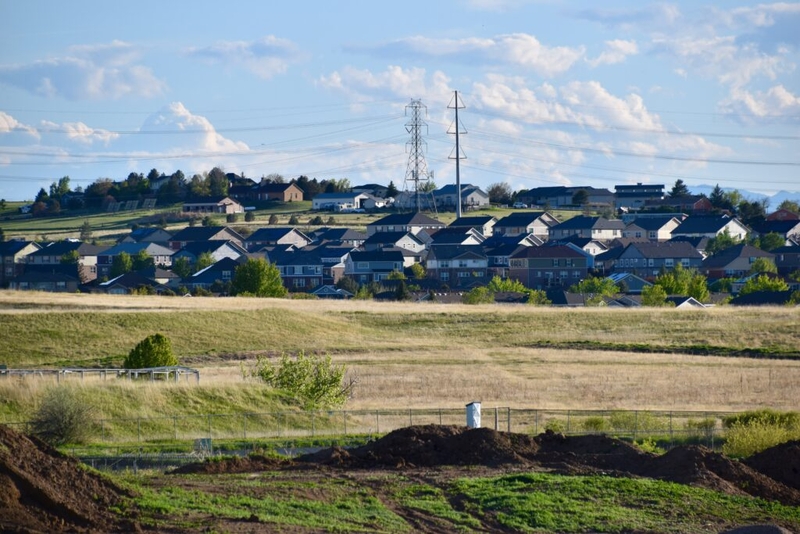
A subdivision is seen in Arapahoe County near the Aurora Reservoir. (Photo by Chase Woodruff/Colorado Newsline)
For us locals, Aurora Reservoir is a point of pride, home to some of the cleanest tap water in the nation. Now, it’s become emblematic of a broader struggle shaping the future of the American West.
When we formed Save The Aurora Reservoir in 2022 to push back against a sprawling oil and gas proposal near our homes, we were fighting for our own backyard. But we were also fighting for all Coloradans to have a voice whenever oil and gas announces their plans, plans that will have an effect on our air, water and soil.
We have proven that community power is real. By mobilizing hundreds of residents and generating nearly a thousand public comments, we successfully forced a stay in 2025 on a plan to drill 32 wells near the reservoir. We proved that when a community unites, we can hold operators accountable — if the government listens.
But the battle is shifting terrain. While STAR formed to give locals a voice in state-level oil and gas permitting, we now face the additional challenge of federal lease sales on public lands surrounding our community.
Recent federal oil and gas parcels on our public lands around Aurora Reservoir have attracted high-dollar interest from oil and gas corporations, despite the fact that our community of 80,000 southeast Aurora residents, including 2,800 people directly affiliated with STAR, will be negatively affected by development of these federal leases.
Federal oil and gas leasing operates under a different set of rules than state permitting — rules increasingly dictated from Washington to serve corporate interests while silencing local concerns. In 2025, Congress made it free for the oil and gas industry to nominate any parcel on more than 200 million acres of public land for oil and gas drilling. A recent storymap published by the Center for Western Priorities and Rocky Mountain Wild illustrates how this opened a Pandora’s box, placing treasured public assets — from Aurora Reservoir to Vega State Park in Colorado, and Carlsbad Caverns National Park in New Mexico, among others — on the auction block.
To make matters worse, the Trump administration recently proposed changes to the oil and gas lease sale system that would cut public input opportunities on proposed lease sales from 90 to a mere 10 days. For working families, that is a woefully insufficient period to weigh in on a proposal that could alter our community’s future.
The human cost of ignoring local input is not theoretical. With Colorado currently under a Phase 3 drought emergency, additional industrial extraction directly threatens our drinking water reserves. The Denver metro area and northern Front Range are already struggling with “severe” non-attainment of federal ozone standards. Adding more well pads — where 150 wells are already planned within five miles of our neighborhoods — compounds these risks, especially for the 13 schools within the impact zone. Children, who are more susceptible to respiratory distress, are being forced to accept health risks as a byproduct of a system that views their neighborhoods as “premium” acreage for extraction.
We have a broken system that requires a fix. Fortunately, that solution has been introduced. On July 23, Rep. Joe Neguse of Colorado and Sen. Ben Ray Luján of New Mexico introduced the Local Input Act, legislation that addresses exactly this dynamic.
The Local Input Act doesn’t ban oil and gas development; it restores balance. It would return to the Bureau of Land Management the clear authority to listen to communities and defer leasing parcels when legitimate, documented concerns — like water security, public health or ozone pollution — are raised. Currently, the BLM is often powerless to act on the very issues that matter most to the people living on the ground. The Local Input Act ensures that efficiency does not come at the cost of excluding the public.
The Local Input Act has a common-sense, bipartisan intent. It reflects the principle that policies crafted in Washington to manage our national public lands should not ignore those of us who live closest to them.
Denver, CO