Head Start opens a door for millions of young Michiganders. Don’t close it.
Sep 25, 2026 | 2:00 pm ET
Description
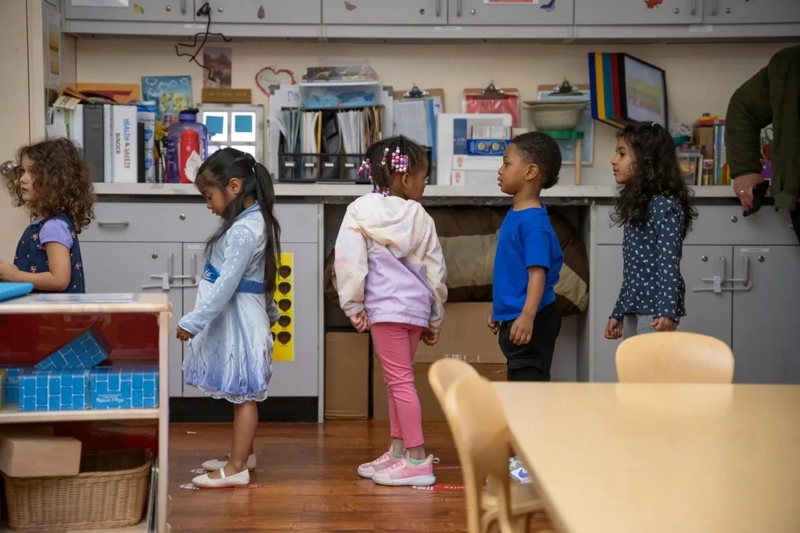
Preschool children line up to go outside at the Ralph Hawley Head Start Center in Emeryville, Calif., in December. The Trump administration has proposed major changes to the Head Start program. (Photo by Florence Middleton for CalMatters)
In 1969, when I was just four years old, my parents enrolled me in Head Start at Annunciation Catholic Church on Detroit’s East Side. The teachers there fed me lunch, cared for me, and sparked a love of learning that catapulted me into kindergarten and well beyond. And because that free, federally-funded program existed, my mother and father could both go to work, knowing their youngest child was in good hands.
My time in Head Start left an immeasurable impact on my life. It fostered curiosity. It taught me valuable life skills. And it prepared me for so many of the challenges and opportunities that lay ahead. Now, I’m proud to be a military veteran and leader of a nationally recognized research center.
I wouldn’t have had access to this formative education without Head Start. And I’m far from alone. In Michigan, Head Start serves more than 26,000 children every year at nearly 600 program sites. The state receives more than $416 million in federal investments that fund local jobs and comprehensive services — such as home visits and disability accommodations — in communities across the state, from Detroit to the Upper Peninsula.
But now, the White House is aiming to dismantle this marquee anti-poverty program. The Administration claims it is working to return the program “back to its roots” by “removing” bureaucracy and saving the taxpayer a couple of bucks, all in the name of purportedly opening “Head Start to hundreds of thousands more children.”
If this sounds too good to be true, you are correct.
What the White House is proposing is nothing short of a wolf in sheep’s clothing, a proposal that would remove mandates that regulate staff-to-child ratios, take away support from children who are not English speakers, and eliminate certain wage and benefit requirements for Head Start staff. In short, the White House has no interest in “improving” Head Start. Instead, it seeks to dilute its impact through funding cuts or by abandoning its core functions.
That’s a colossal mistake. For over 60 years, Head Start has nurtured young learners and supported parents and caregivers in urban, suburban, and rural communities. Through our research at the Center for the Study of Social Policy, we’ve spoken to parents who have highlighted how important Head Start is to their families, as it not only teaches children their ABCs but also builds their socio-emotional skills to better prepare them for kindergarten – and life.
Here’s what parents told our researchers: they value how Head Start supports children’s developmental needs through developmental screenings and inclusive learning services, which is particularly critical in areas where other child care programs often turn children with disabilities away. One mother, whose son had a speech delay, told us “they had all the services that [were] needed” and that “I wish he would’ve started earlier.” Parents also appreciate the small class sizes, nutritious meals, home visits, and other core features that make Head Start so important.
Meanwhile, thousands of Michiganders—teachers, home visitors, and child care providers—work at Head Start locations across the state. Local businesses benefit from increased food purchases, and schools benefit when young minds are better prepared to start kindergarten. Head Start also connects parents to community resources and brings people together, helping build community connections.
Experts and Michigan leaders have had plenty to say about the White House’s approach to Head Start in recent days. Ruth Friedman, one of the authors of the bipartisan 2007 Head Start reauthorization, warns that deregulating Head Start would gut the program’s “science-backed standards” and keep the youngest learners from obtaining the instruction they need to “arrive at kindergarten ready to succeed.”
MaDonna Princer, executive director of Kent County Head Start, recently told the Free Press that she worries the White House is “spinning” its intentions without putting “more actual dollars into programs’ hands.” And, speaking to WLNS, Tricia Grifka, a Michigan Head Start Association board member, said any attempt to tackle Head Start bureaucracy should not come at the expense of “children’s safety and well-being and learning.”
There is nothing inherently wrong with examining government regulations, including those of Head Start. But what is being proposed as an opportunity to “expand” Head Start would lead many families already served by the program, especially those in rural areas, to scramble to find alternative childcare, bear additional costs, and ultimately lose or reduce work in an already challenging economy.
We should strive to serve more children, and those children deserve to benefit from the best of Head Start, not a program asked to do more with less.
There is no doubt that there are leaders across the country who share that connection to Head Start with me. More importantly, countless future leaders are sitting in a Head Start classroom right now, or could be in one in the future. I will be fighting for Head Start for them. I hope you’ll join me.
Whether you are a parent, a community member who cares about early-childhood education, or a business owner who partners with Head Start to serve kids in your community, you have until October 6, 2026, to submit comments to the Federal Register and protect one of the most important investments we make for young children, the Head Start program.
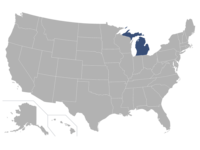
Lansing, MI