Environmental groups double down on calls to halt Army’s lead azide detonation
Nov 22, 2026 | 5:41 pm ET

Description
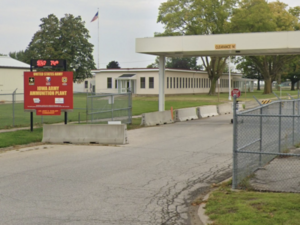
Lead azide is set to be detonated at the Iowa Aarmy Ammunition Plant in Middletown, Ia. (Photo courtesy of Lori McFate/Iowa Army Ammunition Plant)
The U.S. Justice Department on Sunday urged a federal appeals court to lift the administrative stay on a permit that would allow the Army to detonate 9,700 pounds of a lead-based explosive in southeast Iowa.
The DOJ arguments came the same day that environmental groups in the court case filed affidavits from scientists and officials who argued against the Army’s reasons to go ahead with the detonation, which the government said would occur on Nov. 24.
While the lawsuit and stay ordered by the U.S. Court of Appeals for the 8th Circuit focus on an emergency permit issued by the U.S. Environmental Protection Agency, the DOJ informed the court late Saturday that the Army intends to invoke an exclusion to the law allowing it to detonate without the permit.
The DOJ’s Sunday filing opposing the environmental groups’ motion on the permit emphasized that a controlled detonation of the lead azide was “necessary now to respond to the immediate threat of an uncontrolled explosion at” the Iowa Army Ammunition Plant in Middletown.
“EPA’s regulations allow the Army’s planned action without the need for a permit, and the Army intends to act on November 24, 2026,” the filing said.
A public affairs contact with the U.S. Army did not respond immediately Sunday to a request for confirmation of the new detonation date.
The lead azide, located at the Iowa Army Ammunition Plant in Middletown, was originally set for detonation on Nov. 20, then was pushed back to Nov. 23 amid concern from the public and the lawsuit.
As of Sunday afternoon, the Army had not posted updated models for the new detonation date, nor announced an official schedule since the original postponement was announced.
A Sunday news release from the Iowa Environmental Council, Sierra Club Iowa Chapter and Earthjustice – the environmental groups suing over the EPA petition – criticized the lack of public information as the Army intends to move forward.
“The Army has clearly mishandled this situation, and Iowans and residents in our neighboring states deserve a full review of all of the missteps that led us to this point,” Sierra Club Iowa Chapter Legal Chair Wally Taylor said in the release. “However, if detonation is now the only option, it is imperative that everyone impacted has access to the full range of testing, mitigation, and remediation resources.”
What outside scientists said
In its filing Saturday night, the DOJ said the Army intends to detonate regardless of the court stay because of the “immediate risk” that the degraded lead azide “will explode” when temperatures drop in the next several days.
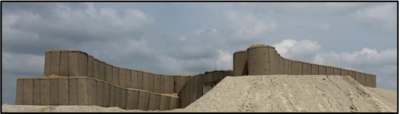
A declaration from an Army munitions expert informed the court that changes in temperature can further destabilize the lead azide by causing more crystallization.
One of the scientists who filed affidavits supporting the environmental groups’ requests to halt the detonation, challenged this point, arguing the barrels were insulated from drastic temperature changes by the earthen structures the Army had put up around the material.
Mark Thomas, an environmental health science researcher who formerly worked for the U.S. Environmental Protection Agency, argued in his affidavit that the anticipated drop in temperature, which the Army has cited as a reason to go ahead with the detonation, “would not translate into an immediate or comparable change in temperature inside the earth covered magazines where the material is stored.”
Another scientist, Ranajit Sahu, a “combustion and heat transfer expert” and consultant, said he “cannot rule out the potential formation and release of a wider range of combustion toxics” in addition to the lead, when the lead azide is detonated.
“Given the lack of detail provided to the public, it is clear that the potential for release of such dangerous chemicals and their impacts have not been fully assessed in planning for this detonation,” Sahu said in his filing.
He also emphasized that the option to chemically neutralize the lead azide was “hastily rejected” by EPA and the Army. In a filing late Saturday, DOJ said even removing the lids of the barrels to administer a chemical for treatment posed too great a risk for spontaneous detonation.
Concerns in Iowa City
Iowa City City Manager Geoff Fruin also submitted a declaration stating residents have voiced concerns to the city, which sits about 62 miles northwest of Middletown, about air quality, residual lead and the potential for short and long-term health impacts.
The city has received no formal notification of the detonation beyond a Nov. 20 email letting Fruin know about the deployment of an EPA team to gather a pre-detonation surface water sample, as the city sits within a 100-mile radius of the detonation zone, he said.
The Iowa City Water Treatment Plant produces around 6 million gallons of drinking water daily, Fruin stated, with a raw water source in the Iowa River and distributions across the city, University Heights and other nearby areas. The city is concerned about impacts to the river, as well as those to the “several thousand children aged six and under” and around 12,850 people ages 65 and up living in the area.
“Iowa City has been discussing possible protocols to address impacts from the detonation; however, it is difficult due to the lack of notice and information that has been provided,” Fruin said in his declaration. “The City of Iowa City supports the Iowa Environmental Council and Iowa Sierra Club in taking legal action to ensure that the lead azide is disposed of safely, with adequate and accurate information provided to allow the public to prepare, with adequate follow-up and support for any post-detonation impacts, and with a minimum of harm to the environment and population.”
Some residents in Middletown have said they’d rather the Army go ahead with the detonation than risk an unplanned detonation, according to reporting.
A separate Sunday filing from the DOJ, on behalf of the EPA, which is named in the lawsuit, opposed the environmental groups’ request to add the testimonies to the record, stating they were made after the EPA’s permit decision and sit “plainly outside the record for judicial review.”
DOJ urges court to end the administrative stay
The DOJ responded in opposition to the environmental groups’ request to pause and reevaluate an emergency permit issued by EPA allowing the Army to intentionally detonate the degraded explosives.
The DOJ argues environmental groups didn’t fully demonstrate that a stay would “serve the public interest” nor their likelihood for success in the motion.
In the initial filing, environmental groups acknowledged the risk involved in leaving the lead azide at the IAAAP untreated, though they argued about the EPA’s determination that detonation was the best course of action. DOJ pointed to this in its most recent filing.
“Petitioners do not challenge that determination. Instead, they ask this Court to second-guess the agencies’ technical judgments about the specific permit terms needed to protect human health and the environment during a controlled detonation,” DOJ said.
DOJ emphasized that a controlled detonation, as determined by EPA and the Army, is the best method to avert “a more damaging uncontrolled explosion.”
“Petitioners cannot show that the public will not be harmed if the Permit is stayed,” the DOJ said.
In a news conference Friday, Taylor, with the Sierra Club Iowa Chapter, said it was a “lame excuse,” considering the material had been sitting in the Middletown plant for decades.
Much of the public concern centers around the release of lead particles into the air with the detonation, as lead is toxic to humans and animals.
The DOJ brief said the environmental groups fault EPA for “authorizing any release of lead dust.”
“But no option prevents every release here; the only choice is between a release the Army can manage and one it cannot,” DOJ said.
The government argues the EPA permit was “reasonable” and that the environmental groups are “not likely to prevail” in their request for a stay of the permit. The DOJ urges the court to lift the administrative stay and deny environmental groups’ motion.
“The Army has delayed detonation by three days now,” the filing said. “But every day of delay increases the risk of an uncontrolled explosion that will cause far greater public health and environmental harm than the planned, controlled detonation initiated under the protective terms of the Permit.”
Des Moines, IA