New Mexico Election 2026: Constitutional Amendment 4
Sep 25, 2026 | 12:00 pm ET
Description
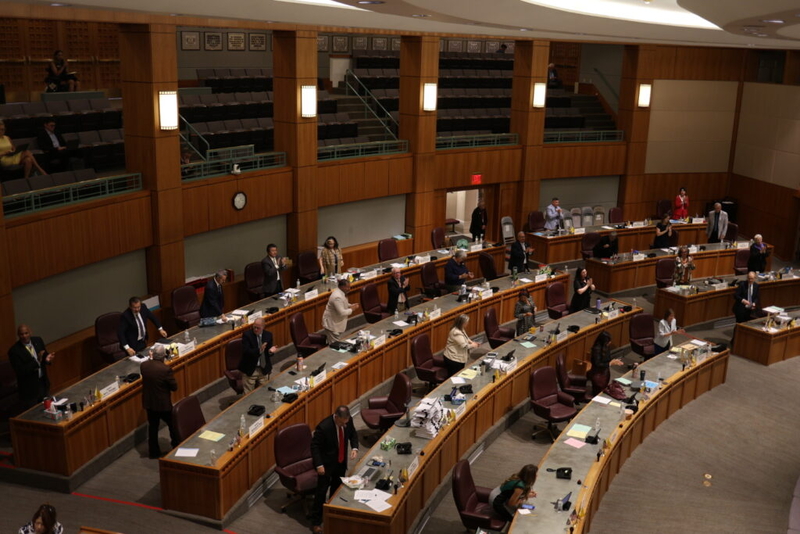
The New Mexico general election ballot features Constitutional Amendment 4, which gives voters the choice about whether lawmakers can receive salaries. (Patrick Lohmann/Source NM)
While the top of the Nov. 3 ballot will bring new leadership to New Mexico, one of the constitutional amendments at the end of the ballot could transform the state Legislature by granting lawmakers salaries for the first time in the state’s history.
Constitutional Amendment 4 asks voters whether they are for or against allowing New Mexico lawmakers to receive compensation equal to the state’s median household income, which is currently $67,800, according to U.S. Census figures. For 112 state lawmakers, the annual cost to taxpayers will be about $7.6 million.

New Mexico remains the only Legislature in the country that does not pay its lawmakers salaries, though they do receive per diem payments for costs associated with the annual legislative session and committee meetings in the interim. Lawmakers are also eligible to receive pensions after leaving office.
The question’s arrival on the November ballot marks the final step in a years-long effort. The Legislature at the session earlier this year voted largely along party lines to approve House Joint Resolution 5, which puts the question of legislative salaries before voters.
If voters approve the measure, lawmakers would first receive salaries in 2029.
Pro-salary advocates have said that paying lawmakers is necessary to attract high-quality candidates who might otherwise forgo running for office because they can’t afford it.
Sylvia Ulloa, executive director of New Mexico CAFe, a southern New Mexico social justice organization that is part of a coalition pushing for Constitutional Amendment 4, told Source NM on Thursday she regularly encounters people who would make great lawmakers but opt out due to financial considerations.
“I’m thinking about a single mom with a disabled child in our Gadsden school district,” she said. “There is no way that she could ever serve in the Legislature, but what valuable life experience she could bring if she could actually do that.”
Ulloa, along with other organizations in the pro-salary coalition called Vote For Change, said paying lawmakers salaries could make lawmakers less beholden to well-financed lobbyists offering expensive meals or other perks.
The coalition also sees paying salaries as a key step in a broader “modernization” push at the Legislature, along with reforms such as hiring paid district legislative aides, which state lawmakers began doing in 2024, and extending the legislative session beyond 30 days or 60 days.
A pro-con guide from the Legislative Council Service for this year’s constitutional amendments also notes that one argument in favor of the amendment is that it may strengthen the legislative branch in relation to the judicial and executive branches.
The Vote For Change coalition has raised approximately $2 million as part of its campaign to convince voters to approve legislative salaries, according to recent filings. That includes a $1.2 million donation from Western Futures Fund, a Wyoming-based nonprofit that seeks to “promote responsible leadership in the Western United States,” according to the group’s website.
A recent Albuquerque Journal poll released earlier this month found 39% of likely New Mexico voters plan to vote “yes” on Amendment 4, with 21% planning to vote “no.” Another 34% are undecided, and 6% said it “depends.”
The amendment also has critics. Paul Gessing, president of the conservative Rio Grande Foundation, said he is not opposed to salaries in theory, but said the one being offered to New Mexico lawmakers is too high and risks creating the wrong incentives.
NM Legislature approves resolution for lawmaker pay, sending question to voters on November ballot
“I’ve just not seen any case made from anybody supporting us that we’re going to get a better-performing Legislature. We could see an expanded pool, if you will, of people who might serve and maybe there’s some benefit to that,” Gessing said. “But I think there’s also potential for people who get into it for more purely financial reasons at this point, and just kind of wait their time out to lock in the pension, and then ride off into the sunset after that.”
Gessing will debate New Mexico Forward Party Chair Bob Perls on the topic next month.
According to the National Conference of State Legislatures, a proposed New Mexico salary of $67,800 is higher than the national average salary for lawmakers in 2025 of $44,320. Lawmakers in New Mexico’s neighboring states of Texas, Colorado and Arizona also receive salaries of significantly less than New Mexico lawmakers would receive.
The guide from the Legislative Council Service argues that offering sitting lawmakers salaries may put them at an unfair advantage over challengers who unlike incumbents have to forgo salaries to campaign and fundraise for office. It also raises the matter of the proposed New Mexico salaries being higher than those in other states.
Ulloa said tying the salary to median income ensures lawmakers earn the typical salaries of average New Mexicans, including experiencing a pay cut should that median income decrease.
“That kind of built-in safeguard is something that New Mexicans really understand,” she said. “It can’t be swayed by political winds in any given legislature. It is tied in law and defined what that salary will be.”
Santa Fe, NM