Ala Wai ‘Pirate Ship’ Is Pau But Public Is Stuck With The Bill
Sep 24, 2026 | 6:01 am ET
Description
Photo courtesy of Honolulu Civil Beat
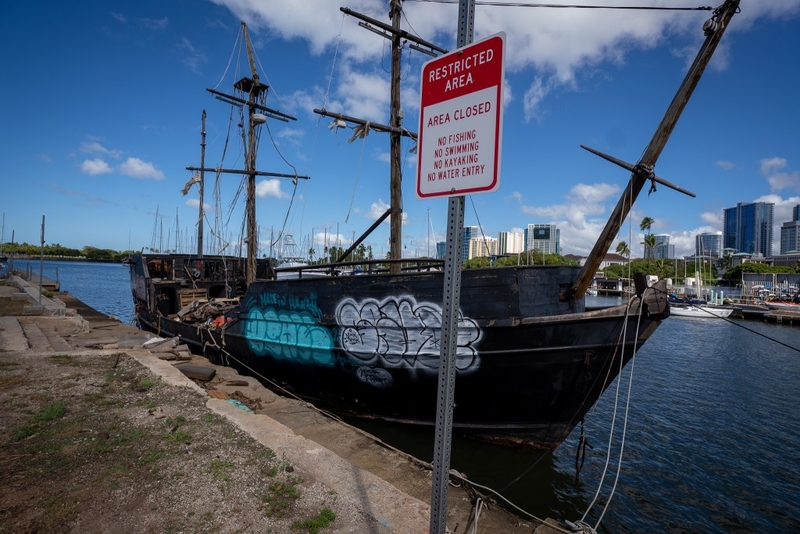
A 72-foot ship illegally moored in the Ala Wai boat harbor has met its fate not in Davy Jones’ locker, but crushed and dumped in the Waiʻanae landfill after it was impounded by the state last month at taxpayers’ expense.
The former salmon boat, converted to a pirate-themed party boat in its last years, is the latest in a list of an estimated 375 wrecks and ghost ships that have been grounded, sunk or abandoned in state waters since 2002.
The Department of Land and Natural Resources said it will try to recover the costs from the legal owners, as the law allows, according to spokesman Andrew Laurence. But it’s more likely that taxpayers, including other boat owners, will be the ones picking up the as-yet-unknown tab for scrapping the vessel.
Since 2020, DLNR has spent $1.3 million to impound, haul out and destroy boats abandoned at slips or moorings just in the state’s public boat harbors.
Between 2002 and 2019, the department estimates it paid $2.2 million to remove or salvage 91 vessels more broadly in Hawaiʻi waters. Abandoned boats have cost millions more since.
Yet a state audit released in February found that DLNR has a poor track record of recouping such costs and no clear sense of how the price tag for recovery is impacting the special fund.
“The collection of the costs (DLNR) incurred were – and continue to be – limited, almost non-existent,” the auditor found.
And there has been little progress improving cost recovery from boat owners since the audit. Instead, with seven severe weather events this year, the Division of Boating and Ocean Recreation has prioritized public safety, Administrator Meghan Statts said in a statement.
In response to the audit, Statts said the department is looking into contracting for a collections company to recover expenses, a process that requires working with the Department of the Attorney General.
Previously, DLNR relied on the AG’s office to assist with collections. But the audit found the office no longer has the capacity. At the Department of the Attorney General, spokeswoman Toni Schwartz said she couldn’t comment on whether the AG had been speaking with DLNR about improving enforcement actions.
Other states including Washington and Florida have implemented schemes that allow boat owners to voluntarily hand over vessels nearing the end of their lives. Those programs have not only saved taxpayer money but reduced the release of toxic solvents, oils and fuel into waterways and marine ecosystems.
From Salmon Boat To Fuel Leak
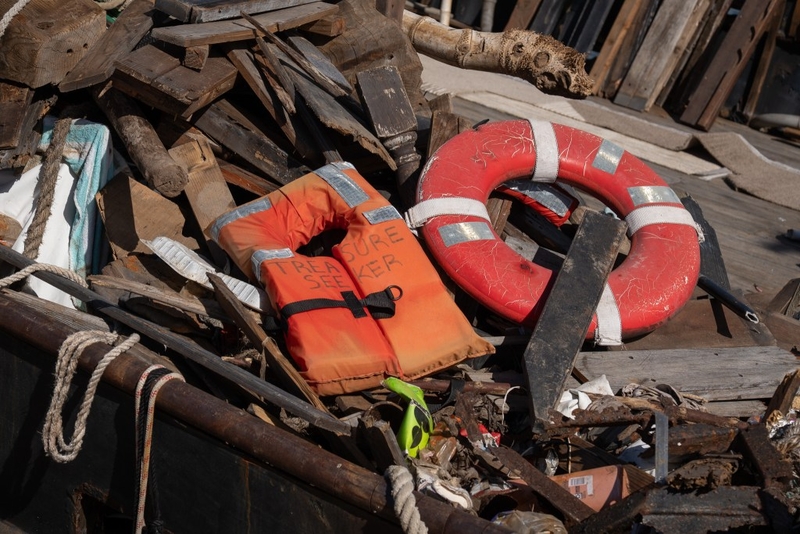
The near-derelict Treasure Seeker first hit the news as the source of a diesel fuel leak on May 17 and 18 that left a pink film on the surface of the water in the Ala Wai Small Boat Harbor.
The U.S. Coast Guard designated the spill a federal cleanup and called in its environmental specialists, Pacific Environmental Corporation. The contractor used 23 bags of sorbent pads to mop up the fuel, according to a Coast Guard press release.
There were no reports of wildlife or environmental damage.
For months, the vessel was tied up to a street sign on the sea wall in front of the Prince Waikīki Hotel. Social media posts show homeless people camping in the hulk, which DLNR reported still had some fuel onboard.
After it was deemed a hazard to navigation, state contractor Henry Marine Services towed it on Aug. 27.
The final cost of that operation hasn’t been calculated, but other cases of abandoned boats have shown that the numbers can quickly escalate. The typical grounded vessel costs between $12,000 and $50,000, Bruce Swartz, the boating division’s district manager, told the state auditor.
In some cases, the bill can run much higher.
The Chapparal, a converted military vessel that broke free of its mooring near Kīhei during a Kona low in January 2024, ran aground off Sugar Beach. The Coast Guard responded and removed fuel about a week later.
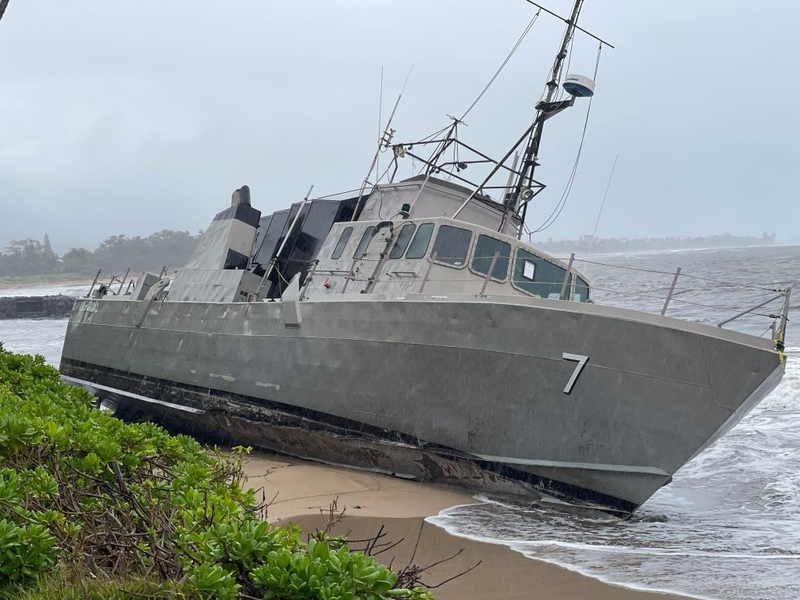
The salvage cost for the boating division was $842,000 and the boat owner, Justin Moore, never reimbursed the state. He was also the owner of another vessel that had to be salvaged at a cost of $97,000. He never repaid that either, Environment Hawaiʻi reported in July.
Another boat, The Princess Moana, sprang a leak and sank in the Ala Wai boat harbor in 2022 and was finally salvaged in the summer of 2025 at a cost of over $350,000 to the boating division.
These incidents are supposed to be tracked in a register of grounded and sunken vessels, but that spreadsheet does not include amounts the boat owner owes or whether anything was repaid. The February audit described the cost recovery as an “honor system.”
The state has to front the expense of removing grounded or abandoned vessels in 70% of the cases and unrecovered costs form a “significant part of lost revenue,” Swartz told the auditors.
Good Luck With That
The swampy ownership trail of the Treasure Seeker will likely make it even more difficult for DLNR to get its hand on any loot, even if it tries.
The former salmon boat had been renovated and relaunched in 2013 as a pirate-themed party boat.
For the past six years or so, the booze cruiser was owned by Demetrius “DJ” Smith, who runs several boating operations out of Ala Wai and Kewalo Basin, including “Pink Sails” Waikīkī sunset tours.
The Treasure Seeker had fallen out of use in the last several years and Smith said in an interview he was on the verge of scrapping the vessel himself at a cost of $30,000. But then a man Smith identified as Delano Wilson expressed an interest in buying it.
Smith said he had transferred the bill of sale for the Treasure Seeker to Wilson for $1 on or around May 1 –– less than three weeks before the spill.
He said he showed the paperwork to a Coast Guard inspector but could not provide Civil Beat with a copy and transfers are not public record. A Hawaiʻi phone number for Delano Wilson is no longer in service.
DLNR said to its knowledge either Smith or Wilson was the last registered owner of the Treasure Seeker.
It’s the responsibility of the new owner to file the ownership paperwork with the boating division, but Wilson never did, Smith said. On the night of the spill he said he told the harbor master and Coast Guard what he knew about the vessel.
Wilson had put tires on the outside of the hull to act as fenders, Smith said, but the tires' rims damaged the steel hull, leading to the diesel leak.
Smith said he had nothing to do with the vessel at the time of the spill, and that DLNR had not pursued him over it.
Typically, the boating division sends a single letter of demand to the registered owner of the derelict vessel, but the auditor found those letters are usually returned unopened. The department does not follow up unless it gets a forwarding address.
Swartz himself described a single letter of demand as “not enough.”
The audit also found that another attempted fix, requiring boat owners to carry $500,000 in insurance coverage to help offset the cost of those kinds of operations, also sputtered.
House Bill 1033 passed in 2019. But Ed Underwood, then the head of the boating division, suspended the requirement in 2022 because, administrators told the auditors, local insurance companies would not provide the coverage.
Taking A More Proactive Approach
Other states with large boating and sailing communities have taken a more proactive approach to dealing with boats nearing the end of their voyaging days.
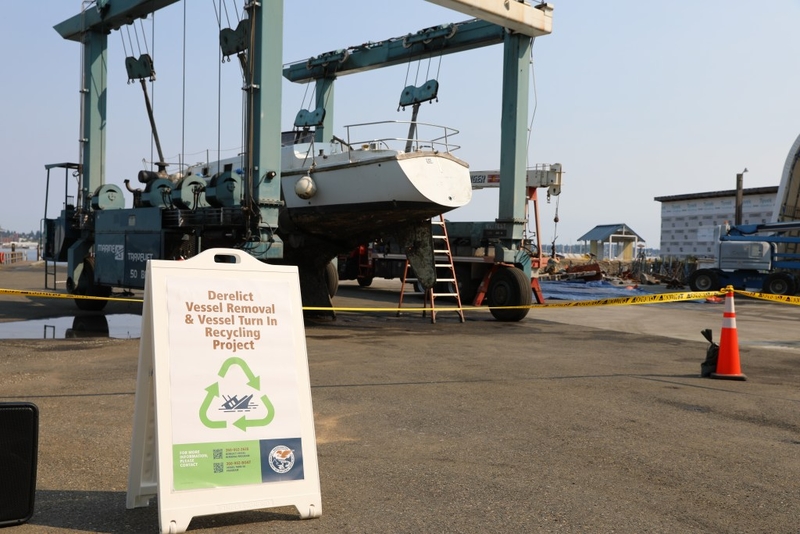
Both Florida and Washington state have created programs for owners to voluntarily turn in vessels at risk of becoming derelict.
Washington recognized that a lot of people who abandon vessels had run out of money, said Troy Wood, manager of the Derelict Vessel Removal Program for the state’s Department of Natural Resources. Since 2013, Washington state boat owners can voluntarily surrender vessels they can’t afford, or that are at risk of becoming derelict, at no cost. The vessel can’t already be grounded or abandoned to qualify.
The result has been major savings in salvage costs for the Washington department, Wood said.
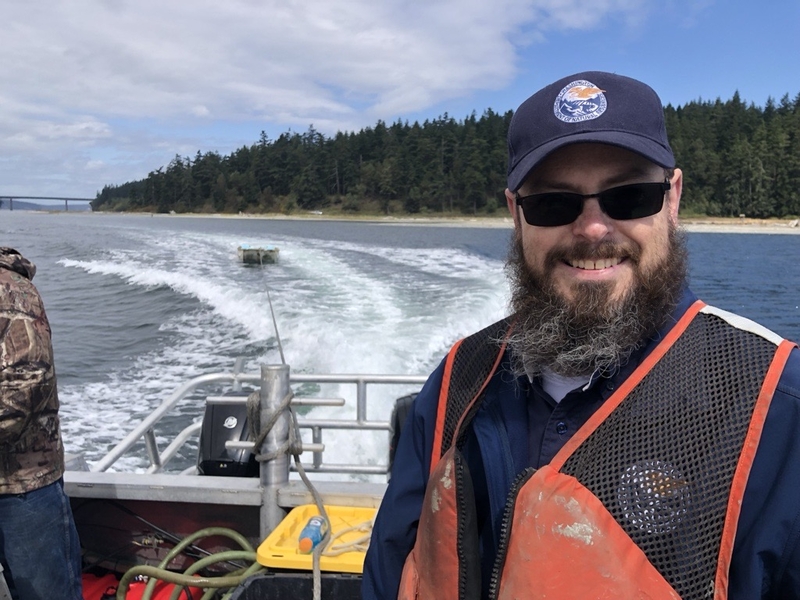
A boat that is voluntarily surrendered costs about $4,000 to handle, compared to upward of $25,000 to $30,000 for grounded vessels. The state normally has about 300 boats in its database of vessels of concern.
Additional savings can come from outreach events at marinas where department staff can retrieve several vessels at a time. That can cut the cost to as low as $1,500 per boat.
Many of the derelict boats so far were built in the 1940s and ‘50s, but the Washington program is expecting a surge of vessels from the recreational boating boom between 1960 and 1975, he said.
Since 2023, the program has processed an average of 140 vessels a year.
The voluntary program was initially funded by a $3 surcharge on each boat registration. It has since been expanded with an additional budget appropriation.
One impetus for the program was the 2008 discovery of contaminants in a local pod of orcas. The National Oceanic and Atmospheric Administration found that some of the contaminants were solvents and other chemicals from abandoned and derelict vessels, Wood said. Contaminants have also been found in salmon fry in fresh water.
Stakeholders such as the Northwest Marine Trade Association and recreational boating associations recognized the value of cleaning up waterways and have been very supportive of the voluntary program.
The department continues its program addressing abandoned vessels, in operation since 2002, and Wood said the state needs more water-borne law enforcement overall. The voluntary program also creates its own waste stream that has to be managed, particularly boats built from fiberglass or ferro-concrete.
“Some of it still ends up in the landfill,” Wood said, but the department tries to recycle as much of the deconstructed vessel as possible.
Honolulu, HI