National Elk Refuge fields questions about what feeding elk could mean for Jackson Hole’s water
Sep 23, 2026 | 7:05 pm ET

Description
Photo courtesy of WyoFile
JACKSON—As National Elk Refuge leaders laid out long-term options for managing elk and bison wintering on the edge of Jackson, a discussion Tuesday turned to the northwestern Wyoming town’s water supply.
The U.S. Fish and Wildlife Service is weighing the pros and cons of feeding elk and bison, in part to keep the animals away from town and from damaging private property. But wildlife disease experts predict that continuing to concentrate animals around alfalfa pellets in the winter could lead to more elk infected with always-lethal chronic wasting disease, smaller populations and reduced hunting opportunities.
Although there’s been long-standing discussions about what that could mean for the long-term health of the elk herd, scientific research is also probing what accumulating prions in the environment could mean for the soil, plants, water and even human health. (Chronic wasting disease has never been documented in humans, but the interspecies barrier is not considered absolute and public health officials advise against eating meat from infected animals.) Meanwhile, a new peer-reviewed study, published this summer in the journal “Environmental Science & Technology,” suggests prions that cause chronic wasting disease may pass through soil into surface waters or groundwater aquifers.
What that could mean in the future for the refuge and town of Jackson came up during questions from the public as Elk Refuge staff laid out four possible options for managing elk and bison — a decision expected to ultimately shape feeding operations, hunting opportunities and disease response. The U.S. Fish and Wildlife Service is taking public comment on a draft environmental impact statement released Aug. 28 that studies the potential impacts of updating the elk and bison plan.
“Why does the new management plan not evaluate the risk CWD poses to the town of Jackson water supply?” asked Shane Moore, a wildlife filmmaker, who grew up on his family’s ranch south of Jackson. Moore has been following state and federal management responses to the disease for decades. The always fatal disease had been detected in wildlife in 36 states in the U.S. and four provinces in Canada as of April 2025, an increase from 26 states and three provinces in 2019, according to researchers.
“Do you intend to keep feeding elk directly over the town well that is located under the south end of the refuge with CWD known to be present?” Moore asked.

Three of Jackson’s drinking water wells are located on the 24,700-acre refuge. They draw water from 200 feet underground in the Snake River Aquifer, according to a town report.
Above ground, an ailing elk was identified and euthanized April 15. Lab results later confirmed that case marked the first ever detection of the degenerative brain disease in an elk on the refuge. Refuge officials announced a second case in July.
“You would expect to find CWD prions in the soil first,” said Eric Cole, the refuge’s senior wildlife biologist, who told the audience that new research would be out soon on testing soil and water for prions. “We expect that prions will bind to soil and be less of a threat to groundwater supply. So it’s kind of a second-tier concern at this point until a firm human health risk is established.”
In parts of Wyoming where CWD infects a large percentage of mule deer, devastating populations like the Project Herd, consumption of meat from potentially infected animals is commonplace. The Wyoming Game and Fish Department encourages hunters to test their animals, but in most areas doesn’t require it.
The refuge is working with the town of Jackson to start doing some water testing, Refuge Project Leader Frank Durbian said Tuesday at the Fish and Wildlife Service’s only in-person public meeting on the draft plan. Just a handful of people attended the meeting at the Teton County Library in Jackson where stakeholders from federal, state and local agencies answered questions. The service held a Sept. 15 virtual meeting.

Researchers are investigating how chronic wasting disease moves through the environment but available testing is so far still experimental, Cole said Tuesday. “There’s no off-the-shelf assay for testing CWD, prions, in soil or water,” Cole said, adding that the refuge is working with the U.S. Geological Survey on testing.
“Based on those preliminary results, we are not detecting CWD in soil on the refuge yet,” Cole said.
Scientists wouldn’t expect to find it yet because prevalence is low since the disease has just been detected there, he said. Researchers also have been testing soil samples throughout Wyoming, including in areas with a very high prevalence of the disease, he said, adding “even in those situations, many of the samples, in a relatively small area, were negative.”
Jackson’s Ecosystem Stewardship Administrator Tanya Anderson also spoke at the meeting.
“We communicate regularly with the Elk Refuge, our neighbor to the north,” Anderson said. “We definitely want to ensure safe drinking water for everyone.”
Anderson said she has been talking with the health department and reading scientific papers.
“It is our understanding that those prions love absorbing to soil so much that they generally don’t go deeper than about a half a centimeter in the soil,” Anderson said. “That we have a groundwater supply, and not a surface water supply, should be a great relief to everyone who depends on that water supply.”
In June, Teton County Public Health Director Travis Riddell said he was exploring options to test the town’s water supply to get ahead of any potential concerns in an interview with KHOL 89.1.
“The chance that this could become an actual health threat to humans is quite low,” Riddell told KHOL. “But it’s a new and emerging problem.”
What about the elk?
The new preferred alternative for managing elk and bison marks a shift from focusing on feeding to curtail the elk herd’s size to leaning more heavily on hunting.
Cole and Brad Hovinga, the Wyoming Game and Fish Department’s Jackson regional supervisor, both stressed plans to work closely to target short-distance migrants with hunters, and using GPS-collar data to do it.
Managers split the Jackson Elk Herd into two buckets — those that migrate short distances, from areas like subdivisions along the Snake River corridor, and those that migrate long distances from summer ranges on the Bridger-Teton National Forest and Yellowstone and Grand Teton national parks. By hunting short-distance migrants more heavily, the plan aims to reduce the number of elk wintering on the refuge, which could reduce conflicts on private land, reduce disease prevalence and improve habitat, including for other wildlife like birds, the analysis suggests. The draft study also says this approach would reduce impacts to hunters, guides and outfitters.
The refuge plans to start working with Game and Fish this year to target those short-distance migrants and will adapt as necessary, Durbian said.

The proposal does not alter the Jackson Elk Herd’s overall population objective of 11,000 animals, a goal established and changed by Game and Fish. But about 7,500 elk on average winter on the refuge and the goal is to get that number down to 5,000.
“What we would like to do is change the number of elk that use the National Elk Refuge,” Hovinga said. “We can do that from, not only just harvesting elk on the refuge, but the challenge is to be able to harvest the right elk.”
The short-distance migrants can be prolific and provide less of an ideal opportunity for hunters since they tend to migrate along private lands, officials explained. Changing the distribution of elk, through hunting, could mean more elk wintering on natural forage and fewer elk coming to the refuge, he said.
The last plan failed to reduce the number of elk wintering on the Elk Refuge but did succeed in reducing the average feeding season length by 19%, Cole said. Refuge officials found through experience that starting feeding later proved difficult, but ending artificial feeding earlier in the spring worked. So all four alternatives call for shortening feeding seasons by ending about two weeks earlier on average. Shortening the overall feeding season would lower future chronic wasting disease prevalence and lead to healthier herds over the long-term, the service’s analysis suggests.
During the presentation, federal wildlife managers stressed that all alternatives result in long-term elk population declines. Continuing feeding indefinitely, however, is expected to result in the worst outcome for herd size and hunting opportunity.

In addition to continuing to feed elk, the Fish and Wildlife Service’s current preferred alternative, which officials said could change, also calls for continuing to feed bison on the northernmost portion of the refuge. Roughly 7,500 elk and 500 bison consume around 35 to 40 tons of alfalfa pellets per day. It’s not uncommon for the refuge to feed about 2,000 tons of pellets over a season, which has averaged 65 days and typically costs more than $1 million a year, Cole said. During mild winters, the refuge has not fed at all, which was the case last winter and has occurred 11 times in the refuge’s history, he said. Reducing elk on the refuge to 5,000 could reduce costs tied to labor-intensive feeding operations.
The draft analysis contemplates scenarios that would phase out feeding for elk but continue it for bison, in part, to keep bison from heading into subdivisions bordering the refuge where they could pose a problem for people. Some meeting attendees questioned Tuesday whether that would work. Cole said feeding is a learned behavior and elk could learn over time that bison aren’t about to share any alfalfa pellets with the smaller ungulates. The pellets get gobbled up quickly and don’t remain on the landscape as an attractant, he said.
The public has 45 days to review the new draft environmental impact statement and submit comments, which are due Oct. 13.
Mike Koshmrl contributed reporting.
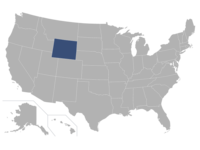
Cheyenne, WY