Public Service Commission votes to take up merger decision with new member
Sep 24, 2026 | 9:14 am ET
Description
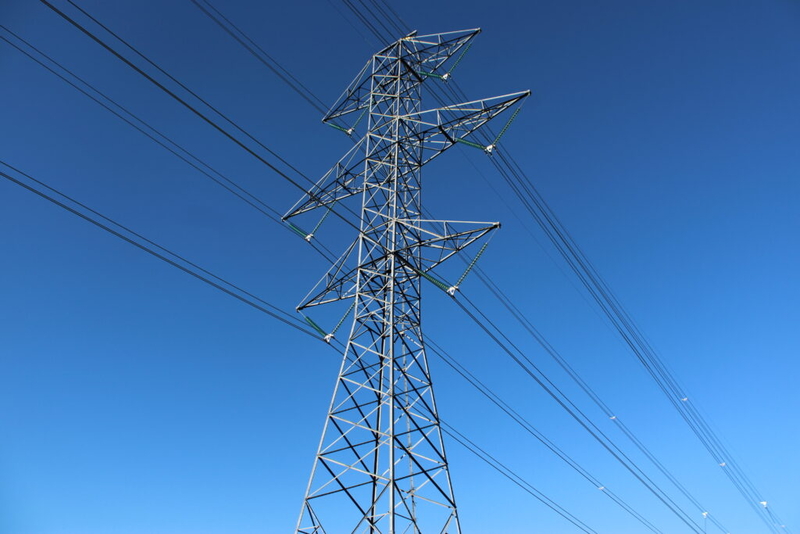
A power line is pictured crossing Beck Hill Road in Powell County, Montana on Thursday, June 11, 2026 (Jordan Hansen / Daily Montanan)
A newly seated member of the Montana Public Service Commission is free to participate in the NorthWestern Energy and Black Hills Corp merger decision despite not being present at the hearing about it.
That’s according to a unanimous vote this week by the PSC.
But the question about whether Commissioner Kirk Bushman can vote on the $15.4 billion merger is still pending in Lewis and Clark County District Court.
The issue arose because Bushman recently stepped into office at the PSC after Commissioner Brad Molnar was suspended. Molnar participated in the hearing in May on the proposed merger, but Bushman did not.
The decision will have implications for Montana ratepayers, and lawyer Monica Tranel argues the people making decisions on the merger should be the same ones who hear direct evidence about it.
In a filing with the PSC, Tranel argued that either Molnar needed to participate in the merger decision — since he attended all four days of the hearing — or the parties involved in the case needed a chance to present evidence to Bushman.
In a unanimous decision Tuesday, the PSC disagreed with Tranel’s argument and said Bushman won’t be excluded from the merger vote.
In an interview Wednesday, Tranel said the merger vote is the PSC’s only chance to exert influence on a new parent company before it absorbs NorthWestern — should the commission approve the merger.
After a merger, the PSC would continue to regulate the Montana utility, but Tranel said Montana regulators lose influence over the larger parent entity.
“We no longer have any authority or control over the parent company,” Tranel said.
Tranel represents the Montana Farmers Union and 350 Montana, which has a mission to reduce atmospheric carbon dioxide and end fossil fuel burning. The parties argue the merger will hurt Montanans.
The PSC is made up of five commissioners, all Republican, from different districts in Montana.
In July, Molnar was suspended for one year for professional misconduct, and Bushman is serving in his place until next July.
Tranel wanted Bushman to hear evidence directly before voting on the merger, but the PSC said that would happen only if a majority of decisionmakers hadn’t heard the case.
In this case, four out of the five commissioners attended the hearing and can decide the matter, the PSC said in its decision.
The PSC also said the temporarily appointed commissioner takes on “all duties of a suspended commissioner,” and commissioners regularly make decisions in cases that started before their terms.
But Tranel said she disagrees with the PSC’s interpretation of the legal procedure and argues parties have the right to present evidence when a new commissioner steps into office.
Tranel had put the question to both the PSC and the district court, and the case is still pending in court.
Tranel shared one reason she believes it’s important for the new commissioner to hear from parties about the case directly.
She said at a recent PSC meeting, Bushman asked to confirm that the PSC continues to regulate NorthWestern if it merges with Black Hills, so “nothing changes.”
Tranel said staff and other commissioners agreed, and she said she too agrees the PSC continues to regulate the Montana utility.
But she said the context around the Montana utility changes.
“The question is what is that utility and where does it rest within the larger corporate structure?” Tranel said. “And that’s the problem.”
Currently, she said, NorthWestern Energy is 90% of the regulated portion of the overall organization, NorthWestern Energy Group, Inc.
If a merger takes place, she said, the Montana PSC will not regulate the new parent organization; it will oversee only the Montana utility, which will represent just 30% of the regulated portion of the new company. In other words, Tranel said, if NorthWestern needs money to cut down trees to help with fire mitigation, it will be vying for capital with other utilities in other states.
Regulators in other states have in similar cases imposed significant conditions from a parent company, Tranel said.
She said the merger vote is the only opportunity the PSC has to set those conditions, such as ensuring capital from Montana not be used to shore up problems in another state if, for example, a data center goes belly up elsewhere.
“This is the only time this commission will touch the parent entity, and it’s imperative conditions be imposed now,” Tranel said.
At a meeting this week, PSC chief legal counsel Amanda Webster said staff recommended against delaying the merger decision, which is due by Oct. 12 but could be extended to Nov. 10.
Helena, MT