Audit finds Pa. Department of Aging’s oversight of county offices lacking
Sep 23, 2026 | 5:46 pm ET
Description
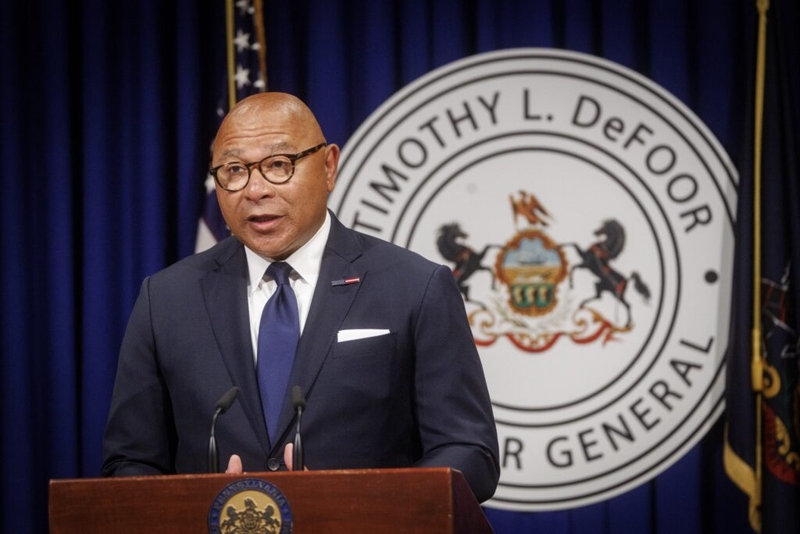
Pennsylvania Auditor General Timothy L. DeFoor speaks during a news conference at the Pennsylvania Capitol in Harrisburg, Pa., on Wednesday, Sept. 23, 2026, announcing the findings of a performance audit of the Pennsylvania Department of Aging. The audit examined the department’s oversight of elder abuse investigations conducted by Area Agencies on Aging. (Commonwealth Media Services)
A new system for evaluating the performance of county offices that investigate claims of elder abuse fails to protect the commonwealth’s senior citizens, an audit found.
It was conducted by state Auditor General Timothy DeFoor, who released the results Wednesday.
The Pennsylvania Department of Aging, which was the subject of the audit, offered a 30-page response to the findings, saying that the auditor general’s office conducted its probe as the agency was rolling out the new system.
As a result, the Shapiro administration said, the report doesn’t accurately reflect the department’s work, processes or legal responsibilities. The new system, called the Comprehensive Aging Performance Evaluation (CAPE) was only seven weeks old when the audit began in January 2024, the department said.
“An entire cycle of monitoring had not occurred under the new system and therefore, any audit of its effectiveness is neither complete nor accurate,” the response, included in the audit report, said.
DeFoor, a Republican, said the Department of Aging delayed the audit for about six months during which, it was slow to make documents and employees available to auditors. It was conducted from January 2024 to June 2025.
He added that the department rejected his office’s findings and recommendations and questioned the integrity of the auditors and whether they followed government auditing standards in their work.
“This is very disappointing,” DeFoor said, “Especially considering the significant scrutiny the Department of Aging has been under from whistleblowers, news media, and senior citizen advocates about the inadequacies surrounding CAPE.”
A spokesperson for the Department of Aging questioned the timing of the report as Democratic Gov. Josh Shapiro seeks reelection in November. His Republican opponent is state Treasurer Stacy Garrity.
“The Auditor General has been in office for nearly six years and has only completed a handful of audits on state agencies over his term — but today, he decided to release an inaccurate, misleading report just weeks before an election,” spokesperson Karen Gray said. “In a craven and transparently political move, the Auditor General completed this report months ago but decided to release this report today in a desperate attempt to help his political allies.”
DeFoor said the department’s response to the audit continued to disappoint him.
“I hope PDA will take a good look in the mirror and do what’s best for older Pennsylvanians,” DeFoor said in a statement. “Now isn’t the time to point fingers and make personal attacks. It is time to do what’s right and improve the system they created to oversee investigations of elder abuse.”
Department of Aging Secretary Jason Kavulich spoke about CAPE at an event in Northumberland County earlier this month. He said it replaced an ineffective legacy system that rated county Area Agencies on Aging (AAA) on a pass/fail basis and t did not provide adequate oversight. The prior system also lacked guidance for AAAs on what steps were needed to become compliant.
“CAPE not only provides those granular details to ensure a AAA is able to improve, but it also delivers historic levels of transparency and accountability of the AAA network,” the department said in a release.
The commonwealth has 52 AAAs that provide an array of services including investigating claims of neglect, physical or mental abuse, and fraud and financial abuse.
The objectives of the audit were to determine whether the Department of Aging monitored AAAs regarding investigations of elder abuse under the Older Adults Protective Services Act and whether AAA staff received the required training.
The auditor general’s office made 10 findings and 39 recommendations for the Department of Aging and three for the General Assembly regarding changes to the program.
Among them, the office said the CAPE process doesn’t effectively assess risk of harm or mistreatment, its follow-up and record retention requirements provide limited oversight, and it needs stronger oversight of death reviews.
DeFoor also noted the Department of Aging considers its 20-day investigation window to be a goal, rather than an obligation and its lack of a timeline for financial exploitation investigations leaves seniors at risk of greater harm.
The office also said CAPE’s 18-month evaluation cycle is out of sync with the statutory requirement to evaluate AAAs annually.
Deputy Auditor General Gordon Dillinger said Wednesday the office’s recommendations to the Department of Aging include ways to improve its monitoring, training, record retention, meet its own deadlines, improve quality assurance and increase transparency.
The recommendations to the General Assembly focus on strengthening the Older Adults Protective Services Act, improve the review process for suspicious deaths, and create a task force to gather input from stakeholders and cooperate with the department to ensure seniors are protected from financial exploitation and abuse.
Harrisburg, PA