Louisiana community colleges face faculty poaching from new industry
Sep 23, 2026 | 5:27 pm ET

Description
Louisiana higher education leaders say the companies behind major industrial projects in the state are luring highly skilled instructors from the state's community and technical colleges, making it more difficult for the schools to train and produce homegrown workers needed for their facilities. (Photo by Joshua Haiar/South Dakota Searchlight)
Major companies investing in Louisiana are looking to the state’s community and technical colleges to supply their workforce, and they are also poaching the instructors who teach there, the school system’s leader said this week.
A series of major industrial projects are coming to Louisiana, touting numerous high-paying jobs that require specialized training, most notably the Hyundai steel plant in Ascension Parish, the Meta Hyperion data center in Richland Parish and a Space X launch facility in Vermilion Parish.
Their staffing demands are straining the state’s ability to train enough students to ensure the new jobs go to Louisianians, Louisiana Community and Technical College System President Richard Nelson told the Board of Regents at its monthly meeting Tuesday.
Another challenge for the system as it tries to fill those jobs is the companies hiring highly-skilled tradespeople from community colleges who are training the next generation of workers, higher education leaders said at a budget hearing Tuesday.
“We can’t produce 10 times, 100 times more welders or plumbers if everyone is poaching all of our faculty,” Commissioner of Higher Education Kim Hunter Reed said. “So that issue has to be resolved, and companies need to stand in partnership with us as we try to do this work.”
In addition to luring away faculty, Nelson said some companies are hiring students before they complete their training to meet their need for workers with even basic technical skills.
Entry-level positions at the Meta data center start at $44,200 a year, according to figures from Louisiana Economic Development. The annual pay for lowest-paid workers at the SpaceX facility will be $78,000, while Hyundai has not made entry-level compensation for its steel mill jobs public.
Nelson said the demand for workers is so high that the system would have to double its enrollment for Louisiana residents to fill the available jobs. The system enrolls more than 100,000 students annually and awards credentials and degrees to over 30,000 students a year.
To meet the workforce demand, Nelson said the LCTCS budget would have to increase more than $100 million annually. Its budget for the current academic year is $340 million.
“What (we) really have to do is build that infrastructure to provide a much greater level of workforce than what we’ve been used to,” Nelson said.
Nelson said the additional money could be used to pay skilled faculty enough to remain in their jobs, to build new training facilities and provide students with wraparound services, such as childcare and transportation.
Starting up new programs to meet the needs of the companies currently hiring is more expensive than maintaining existing programs, according to Nelson. The cost primarily falls on the state rather than on the businesses, he said.
Providing the funding needed to train their workers should be part of the conversation when big employers are looking to come to Louisiana, Nelson added.
“Once they sign the paperwork, well, now you have to actually provide the people, and it’s going to be over a period of years after that,” he said. “If there’s no funding to do that, what position are we in?”
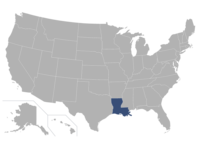
Baton Rouge, LA