SC gets approval for 2-week red snapper season as lawsuit continues
Sep 22, 2026 | 5:01 pm ET
Description
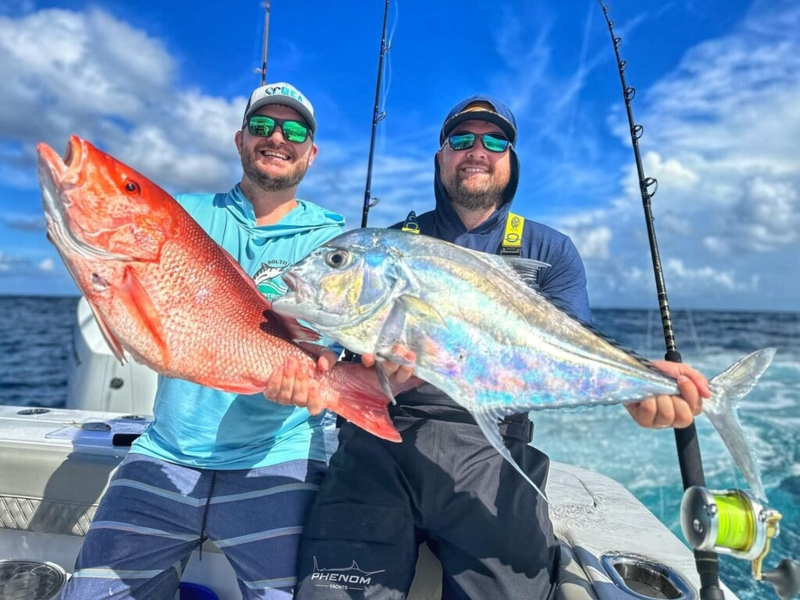
Gettys Brannon, left, holds a red snapper on a fishing trip with Russ Tomlinson, on July 12, 2024, the one day that year they could fish for snapper. Tomlinson, president of Sportsman Boats, is holding an African pompano. (Photo provided by Gettys Brannon)
COLUMBIA — South Carolina anglers will have two weeks to fish for red snapper this year, a federal agency said Tuesday.
The decision came after months of back and forth over the length of the season. South Carolina, along with other coastal states, got the go-ahead in May for a two-month season, but a federal court put that on hold a month later after businesses and conservation advocates sued.
Under the permit approved this week, South Carolina’s season will open Oct. 9 and close Oct. 22.
The Department of Natural Resources’ updated application for an extended season, submitted in July, was meant to assuage some of the concerns raised in the lawsuit while still giving anglers a chance to catch the prized fish, according to the permit.
Officials asked to open up recreational fishing for all of October, with the option of reopening the season in December if anglers didn’t reach the proposed harvest limit of more than 19,000 fish.
Although the upcoming season isn’t as long as officials wanted, it will be the longest in the state since 2009, according to the South Carolina Boating and Fishing Alliance. Last year, anglers had two days to catch the fish, which many consider fun to find and delicious to eat.
Anglers and state officials decried the two-day season as dangerous, since it often meant fighting bad weather, and more disruptive to the fish, with anglers descending all at once instead of spacing out fishing trips.
“This is the most meaningful access South Carolina anglers have had to this fishery in more than 15 years, but the bigger story is where we go from here,” said Gettys Brannon, president of the boating and fishing alliance.
Along with setting a two-week timeframe, the approval established a pilot program for anglers to report the fish they catch. Using that data, DNR officials will track how many of the fish are swimming off the coast, according to the permit.
Anglers had 2 days to catch red snapper off SC’s coast this year. They want a much longer season.
Reports will also help officials make sure anglers don’t catch more than the approved harvest limit of 8,695 fish. If that cap isn’t hit during the two weeks, the National Oceanic and Atmospheric Administration could approve more fishing time in December.
“The mandatory, near real-time reporting and subsequent monitoring of red snapper landings and discards serves to minimize risk that this expected harvest level is exceeded,” the application reads.
Anglers have to register to participate, but the process is free.
Tracking is vital, Brannon said. The federal government started restricting access to red snapper after a survey found the number of fish dwindling in 2008. Since then, seasons have grown shorter out of concern about overfishing.
In recent years, however, people off the coast have reported an increase in the number of red snapper they see and catch while looking for other fish. Shortened seasons make tracking the actual number of fish difficult, supporters of the plan said.
Allowing the state to collect its own data could paint a clearer picture of how many fish are swimming off the Palmetto State’s coast, Brannon said.
“The reporting component cannot be an afterthought,” Brannon said. “If we want South Carolina to have a larger role in managing this fishery, we have to demonstrate that a state-led system can produce reliable, timely data. Angler participation is what makes that possible.”
The South Carolina-based Coastal Conservation League, which focuses on preserving resources along the coast, is on board with the idea as a way of better managing the population of fish.
The Southeastern Fisheries Association, which represents nearly 300 southeastern businesses, and the Ocean Conservancy, a national nonprofit, are against the expansion.
The two sued the Department of Commerce, which oversees the permit process, over the approval of expanded seasons in South Carolina, Florida, Georgia and North Carolina. The organizations said in court filings the federal government failed to consider the possibility of overfishing in violation of a 1976 conservation law.
That case is ongoing. Whether the case challenges the adapted permits remains to be seen.
Columbia