SC drivers can take UTVs to the roads later this year. Until then, DMV says to keep them home.
Sep 17, 2026 | 6:15 pm ET
Description
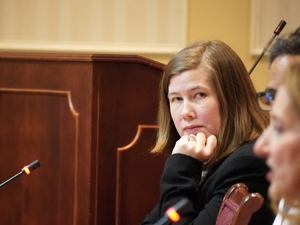
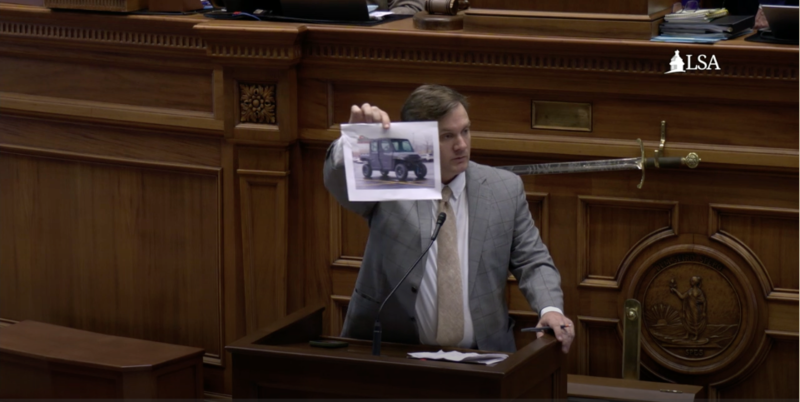
Sen. Russell Ott, D-St. Matthews, shows senators a photo of a utility task vehicle at the Statehouse in Columbia, S.C., on Thursday, April 16, 2026. (Screenshot of SCETV legislative livestream)
COLUMBIA — Owners of utility task vehicles can start driving the small, enclosed vehicles on public roads this year under a new law.
The vehicles, which are popular among farmers, hunters and other outdoor enthusiasts, have existed for years in a legal gray area, without clear requirements or bans on where they can operate, legislators said. Starting Nov. 18, drivers will have to register the vehicles and meet certain requirements to take them off their property.
Until then, drivers should keep the vehicles home, according to the Department of Motor Vehicles.
“Our priority is the safety of all South Carolinians, whether they will be riding in a UTV on a public road or in a passenger vehicle next to a UTV,” DMV director Kevin Shwedo said in a statement.
Registration, which includes a license plate, will cost $10 and last two years under the law, which passed in May.
To run on public roads, the vehicles must have four wheels, a top speed over 55 miles per hour and a width of 80 inches or less. They also need to have similar features to cars, including seatbelts, headlights, brake lights, taillights and turn signals.
Drivers have to be 17 or older and have a driver’s license. No UTVs will be allowed on public roads with a passenger who is 8 years old or younger, and anyone in the vehicle who is under the age of 21 must wear a helmet with a face shield.
UTV drivers must also carry insurance.
The vehicles won’t be allowed on roads with a speed limit above 55 miles per hour, and they can’t travel on any interstates. Drivers also can’t take their vehicles further than 10 miles from the address where the UTV is registered.
Cities and counties can put additional restrictions on driving UTVs, including where and when they can operate.
The rules are, by design, similar to those about taking golf carts and all-terrain vehicles on public streets, legislators said. Similar to ATVs, UTVs are typically enclosed and have a steering wheel instead of handle bars.
“We do have a lot of different vehicles that are allowed to be on our roads, from bicycles to mopeds to motorcycles to cars and trucks,” said Sen. Russell Ott, who sponsored the bill. “This is just another one that essentially has evolved over time.”
People in rural areas use the vehicles to manage large swaths of property, since they can get to places where many cars can’t, said Sen. Chip Campsen, who noted he drives a UTV of his own.
“When I’m burning timber, when I’m planting food plots, sometimes I don’t have any option but to get out on the road and come back in,” the Isle of Palms Republican told senators during debate on the bill earlier this year. “For rural South Carolina, that needs to happen.”
Ott, a Democrat from rural St. Matthews, has seen more UTVs on the road since he started introducing proposals to allow them on public roadways six years ago, he told senators during debate on the bill.
“I certainly see UTVs on the roads back home where I live every week, if not every day,” Ott said. “It’s just a common occurrence.”
If legislators did nothing, the number of UTVs on the roads would likely continue to grow without any regulation, Ott said.
Many drivers believed they could register their UTV in a different state and legally drive it in South Carolina, Ott said. The vehicles are legal in some capacity in 33 other states, according to data tracking site World Population Review.
Other people believed they weren’t allowed to drive on public roads in any instance. Police shared in their confusion, said Sen. Greg Hembree, who led the subcommittee that heard the bill.
Because South Carolina had no laws specifically addressing the vehicles, drivers and police were left to wonder what was legal and what wasn’t, he said.
“They’re kind of in no man’s land,” said the Little River Republican.
That could create major issues in the case of a crash, Hembree said. If an uninsured UTV driver hit a car, for instance, the driver could end up out of luck in an attempt to recoup their money, he said.
Some legislators raised safety concerns about driving smaller, slower-moving vehicles on roads alongside cars and trucks. The law passed the Senate in a vote of 26-18 and the House by 109-3.
The Department of Public Safety, which tracks car crashes, doesn’t release the types of vehicles involved. Golf carts, which are slower, are estimated to be involved in nearly 4,000 annual injuries nationwide, according to the American Academy of Pediatrics.
“I’ve seen so many times where a vehicle would pop over a hill and not see” a slower-moving vehicle, said Sen. Ronnie Cromer, a Prosperity Republican, who voted against the bill.
Putting restrictions on when and how people can drive the vehicles is meant to help prevent those problems, Ott said.
“A lot of people are using these and enjoying them,” Ott said. “There’s nothing wrong with that, and we just need to try to put some safeguards and rules and regulations around it.”
Columbia