A forward-thinking Agriculture secretary gifted us a wonder 100 years ago
Sep 18, 2026 | 7:00 am ET
Description
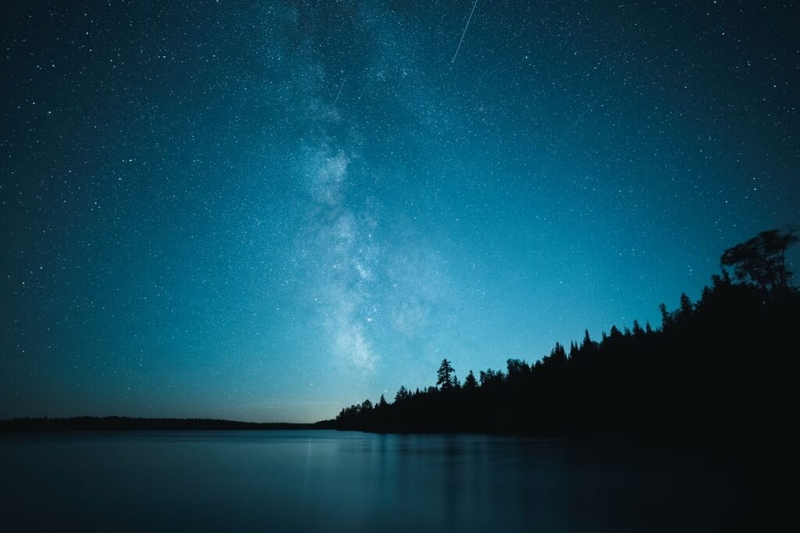
Night sky in the Boundary Waters Canoe Area Wilderness. (Photo by Joe Pohle, courtesy of Save the Boundary Waters)
This week marks the 100th anniversary of the policy directive by U.S. Agriculture Secretary William Jardine that 640,000 acres of forests and waters in northern Minnesota be managed as a roadless wilderness area.
“It will be the policy of the Department (of Agriculture) to retain as much as possible of the land which has recreational opportunities of this nature as wilderness… Not less than 1,000 square miles containing the best of the lakes and waterways will be kept as wilderness recreation areas.”
Jardine’s directive established three wilderness roadless areas — the Caribou Lake, the Little Indian Sioux, and the Superior — in the heart of our priceless canoe country. Until then, the only federal public lands managed as wilderness was the Gila roadless area in New Mexico.
The designation of these roadless areas was the Department of Agriculture’s response to demands from northeastern Minnesota business boosters that roads be built across the canoe country — from the Fernberg Road to Seagull Lake and from Ely to Buyck (with spur roads to Lac la Croix, Loon Lake, and Trout Lake) — and that a road be built to every lake.
Long under the thumb of mining and logging companies owned by distant barons — “outsiders” — leaders viewed tourism as their economy, run by locals, that they could control. They thought that the proposed roads would be a major step to provide access to tourists to every corner of the North Woods.
But others took a longer view of canoe country management. The U.S. Forest Service’s first landscape architect, Arthur Carhart, paddled the canoe country many times during the period from 1919 to 1921. He saw the unique value of the canoe country of the Superior National Forest as a recreational wilderness area that excluded automobiles.
Congress betrayed the Boundary Waters. Time for Minnesota to act.
Carhart’s perspective on a roadless wilderness area was advanced by Paul Riis and the Izaak Walton League. They were supported by Aldo Leopold, a giant of public lands conservation. Leopold articulated his land ethic by urging that wilderness protection preserve unique and representative natural areas, wildlife and scenery.
He paddled the canoe country for two weeks in 1924, and again for 10 days in 1925. Alarmed by the road building proposals, Leopold transmitted his view of wilderness management to Jardine, the Agriculture secretary. Leopold defined wilderness as a “continuous stretch of country preserved in its natural state, open to lawful hunting and fishing, big enough to absorb a two weeks’ pack trip, and devoid of roads, artificial trails, cottages, or other works of man.”
Jardine’s directive was a compromise brokered by Leopold. The three roadless areas were of exceptional value for wilderness canoeing. No roads or any recreational developments would be allowed. The policy conserved lands that provided “a virile and wholesome form of recreation off the beaten paths.” Although the heart of canoe country was kept free of roads, the Echo Trail from Ely to Buyck was completed in 1928. Spur roads to Lac la Croix and Loon and Trout Lakes were banned as was the Fernberg-Gunflint road.
Following Jardine’s directive, the Forest Service planned a development-free canoe area within the Superior National Forest. Portages would be maintained and minimal improvements made to camp sites, but no roads or other recreational developments would be allowed. Jardine also committed to acquire, for the public’s benefit, private inholdings.
The 1926 policy ushered in a new and fundamental change in forest administration; Jardine’s policy explicitly acknowledged that societal uses of national forests for recreation were as important as timber harvesting.
But it was also clear that the protection of the canoe country wilderness was a lightning rod. The struggle between conflicting views for managing Minnesota’s wildest country seems endless.
Reflection and thanksgiving can be very personal. Preservation of the Boundary Waters has given us an utterly priceless wild landscape of woods and water.
In addition to the 100th anniversary of the Jardine directive, this year also marks the 75th anniversary of my first canoe trip to Knife Lake.
This summer, at the age of 77, I ventured on two Boundary Waters canoe trips in the company of younger people who fully appreciate the value of this place and who will work to protect it. They and I are eternally grateful for Carhart, Riis, Leopold, Jardine, Ernest Oberholtzer, Sigurd Olson, Bud Heinselman, Bill Magie and countless others who had the vision and the gumption to fight for the canoe country.

Saint Paul, MN