Lawmakers punt on data center concerns
Sep 18, 2026 | 6:00 am ET
Description
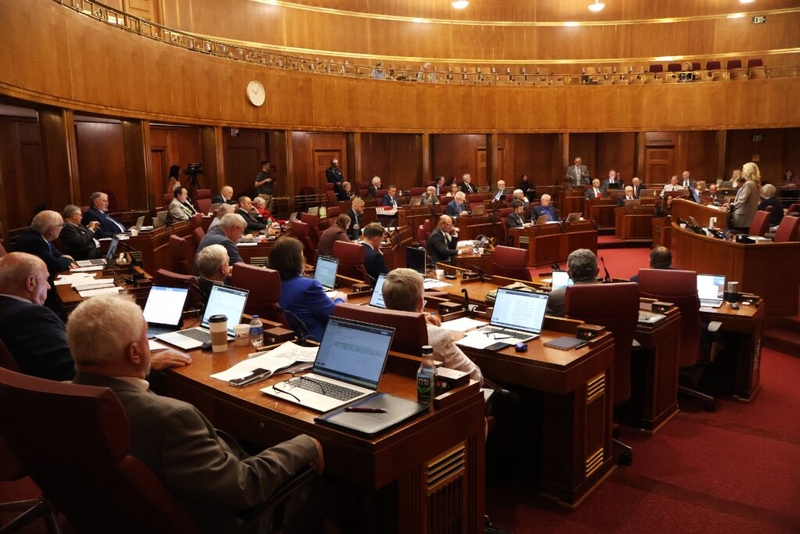
Members of the North Dakota Senate participate in a special session of the Legislature on Sept. 4, 2026. (Photo by Michael Achterling/North Dakota Monitor)
For the moment, set aside the question of whether huge data centers are good or bad for North Dakota. For now, stay clear of the clutter of conflicting information about water usage, the effects on consumer electricity rates, the potential for sound pollution and health problems, and the prospect of gigantic buildings standing empty in a few years should the rapidly evolving technology for data storage change yet again.
Instead, focus on the failure of North Dakota legislators to seize an opportunity to pause the rush to build data centers, so that those very questions could be discussed, and possibly answered. Instead, realize that majority party lawmakers in a special session in early September not only further opened the door to this unregulated and extraordinarily powerful industry, but also betrayed the public’s trust by refusing to pass a ban on nondisclosure agreements (NDAs) between billion-dollar, out-of-state companies and local elected officials.
It should be stressed again and again that questioning the potential effects of data centers is not anti-data center. Rather, it is reasonable to demand pertinent, honest information from the powerful and wealthy corporations that want to do business in the state. After all, some of these companies make the oil industry look like the corner store.
Data center nondisclosure bill dies in North Dakota Senate vote
It might be too late. The horse is out of the barn. It’s water over the dam. That ship has sailed. When the Legislature meets in regular session in January, it will be a day late and a dollar short. Pick your idiom. They all ring true.
Majority lawmakers said they will pick up the dropped ball in the 2027 session. The effect of their legislative nonfeasance will be to have given the data center companies a full four months to continue and even accelerate the building of the gigantic complexes throughout the state. They are quite capable of precisely that, given the speed at which the sprawling buildings have been constructed in Ellendale and Harwood. Rapid planning and development is underway for at least two more massive installations.
The special session’s failure to redefine the limits of nondisclosure agreements between the industry and elected local leaders is especially troubling. Fargo Democratic Sen. Tim Mathern couldn’t muster support for his reasonable proposal during the brief Senate floor debate. Other legislators seem to have bought into the nonsense that any business development is good. They argued that the state’s open meetings and open records laws, and freedom of information tools, are sufficient to let the public know what is going on, despite the NDAs. Not so.
It is not possible to use those methods to inform the public when the NDAs and meetings between the companies and individual public officials are not revealed. The press and public can’t possibly demand information when they don’t know what to ask for because the deals have been signed and sealed at secret meetings. Furthermore, an unannounced one-on-one sit-down between a mayor and a company executive does not constitute a public meeting under the law. It’s a cunning way to circumvent the law.
Violations of the state’s sunshine laws happen all the time. But when a township fails to announce a meeting where supervisors buy a few loads of gravel, it’s not a major matter. The data center stratagem, however, has successfully blacked out the transparency that is fundamental to local government. The data center phenomenon is a very big deal, and it has happened without required public participation. The backlash is accelerating, and it’s aimed not only at the companies, but also at the tone-deaf Legislature.
Are data centers good for North Dakota? They might very well be. Bad? Maybe. But if the impact is bad, North Dakotans might not know until it is too late. The blame for that circumstance will rest with majority lawmakers who failed to apply the brakes, and with local elected officials who signed NDAs.
Bismarck, ND