What will we do when all the newsrooms go dark?
Sep 18, 2026 | 7:53 am ET
Description
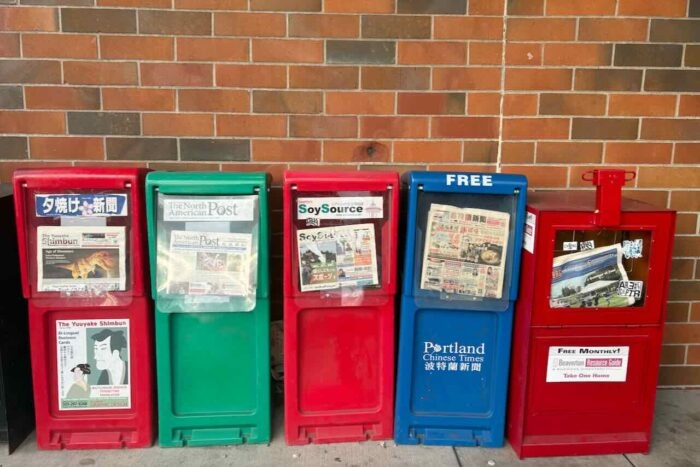
The Lexington Herald-Leader recently laid off a majority of its staff. (Julia Shumway/Oregon Capital Chronicle)
Late last week, I woke in the middle of the night with vertigo. The floating ear-crystals kind where the room spins and spins, floor-to-ceiling, and for which the cure is to do something called the Epley maneuver which, for seconds that feel like hours, intensifies the spinning, making you feel like you have slipped gravity until the spinning finally, mercifully, slows and stops.
Also late last week, the Lexington Herald-Leader gutted its newsroom.
Veteran reporter John Cheves shared this news on Comment on Kentucky, saying, in part, “It’s popular in some quarters to sort of sneer and then mock newspapers, or to greet with apathy the demise of newspapers, but I can assure you you’re gonna miss us when we’re gone.”
It is popular to sneer and mock. But as someone who already lives in the small-town news desert of Anderson County, KY — where there are, to my knowledge, at least two complex local investigations that need to be done, but no one is here to do them — I already have a too-real sense of what he means.
Last week was also the 25th anniversary of 9/11, and I repeatedly thought of that last part from Cheves — you’re gonna miss us when we’re gone — as I rested my head to keep from triggering the vertigo and listened to dozens of archived news reports from the morning of 9/11 and the months and years that followed. Virtually every story was from 60 Minutes or other accredited news sources, including local newspapers and TV stations that were trusted by everyone from grieving families to fire departments to companies who’d been housed in the World Trade Center trying not only to recover their businesses, but to support families of employees who’d died or were still listed as missing.
You can’t do this without thinking about today’s fractured media landscape.
Consider: If a 9/11 happened today, would you know the difference between a true or false report? Could you trust an “influencer” — or a hundred “influencers” — over credentialed journalists? How would you know which photos and videos are real, or if someone’s statement had been fairly edited? Who might a vulnerable, grieving family trust with their story? How many scams and false reports would there be due to jackals just trying to get clicks and make a buck?
Considering the preponderance of lies and AI-slop produced daily by the U.S. President himself — on his own social media platform and on video/microphone — how will we know what to believe or what to do in a national emergency?
Because in 2026, that’s where we are.
And here comes AI.
I read and watch a lot of conservative news these days. Not Fox or OANN— that’s not news, that’s junk food — but serious, professionally edited outlets like The Dispatch and the Wall Street Journal. If you’d have told me 10 years ago that my information diet would soon include men like Jonah Goldberg, Kevin D. Williamson, and Robert Kagan, to name a few, I’d have laughed. And yet I am increasingly convinced that, just like the regular physical exercise we abhor, the daily exercise of considering opposing arguments, of talking to each other, of being able to separate straight reporting from thoughtful opinion while being open to both, are the keys to our sanity and our future.
I was talking recently with a local friend who does not agree with me politically. We both miss having a robust, local newspaper. “We have no idea who we are as a community anymore,” they said.
One of the 9/11 stories I listened to over the weekend, while I kept my head still, was with veteran Associate Press photographer Richard Drew from the 60 Minutes archive. “My job is to record history every day,” he said. And when John Dickerson asked him what happens without the focus on facts and history? “You’re not a journalist,” Drew said. “Then you’re just a person with a camera.”
What will we do when the newsrooms go dark?
When we are flooded with so many photos and videos and stories from so many sources that we don’t know what’s real?
When there is no one left with the resources, protections, and skills to conduct proper investigations and hold the powerful to account?
When we find ourselves out searching the massive, disorienting swirl of information, how will we find our history?
As with vertigo, the room spins.
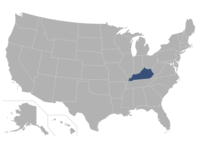
Frankfort