New dashboard shows term limits on affordable status of properties around Virginia
Sep 17, 2026 | 5:28 am ET
Description
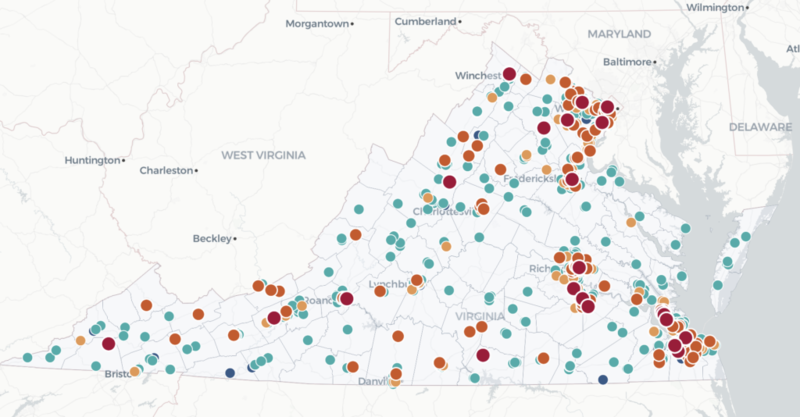
A screenshot from a digital dashboard the tracks the affordability status of housing around Virginia that uses federal tax credits. (Courtesy Housing Forward Virginia/Virginia Housing Alliance/Locus Impact)
A newly launched digital dashboard spotlights affordable housing properties whose affordability terms are set to expire, so that local governments can preserve them if they wish.
Housing Forward Virginia, in partnership with Virginia Housing Alliance and Locus Impact, collaborated to craft the tool. The groups approached the state’s housing authority to get the data they needed last summer and worked on crafting the interactive dashboard, which launched this month.
Low Income Housing Tax Credits (LIHTC) are a federal tax incentive that developers can tap into when building apartments geared towards tenants earning certain percentages of area median income.
The process is designed to provide cost-conscious housing for low-income earners, who might otherwise struggle to afford market-rate rents.
Of Virginia’s nearly 108,000 LIHTC units around the state, more than 18,000 of them are set to lose that status by 2030, with some expiring within the next year.
The LIHTC status of Chicago Manor, a 74-unit property in Richmond, will lapse at the end of next year, unless Richmond City Council voted to preserve its affordability status.
The credits for Hillside, a 36-unit property in Tazewell in Southwest Virginia, will expire in 2028. The same thing will happen late next year at Fields at Cascades, a 321-unit property in Northern Virginia’s Loudoun County.
Because the tracker offers statewide data, local governments can trace residential parcels in their own turf as they deliberate whether or not to purchase expiring LIHTC properties and seek to keep them affordable.
A new law by Sen. Elizabeth Bennett-Parker, D-Alexandria, gives localities the right of first refusal during the sale of properties like Chicago Manor, Hillside and the Fields at Cascades.
This means that cities and counties could purchase apartments whose affordability status is ending in order to preserve them, averting the risk of displacing residents if private buyers acquire those properties.
Maria Dougherty, an associate with Housing Forward Virginia, said the timing of the dashboard’s launch “has been really excellent” and that there’s “a lot more utility for it” now that Bennett-Parker’s bill has become law.
“We have an affordable housing crisis with these units, and cannot afford to lose them,” Bennett-Parker said in a statement.
Identifying expiring units and allowing a first right of refusal are two parts of the solution, Dougherty said.
“The thing that’s going to really help these properties stay affordable is getting nonprofits funding that will allow them to really compete on the market and acquire them,” she said.
Nonprofit housing organizations often help preserve units and assist with other housing issues. They frequently rely on a variety of funding sources from philanthropic donations and state and federal grants to do it.
The 21st Century Road To Housing Act, a major bipartisan law Congress passed this summer, includes provisions to fund programs that preserve affordable housing.
During a meeting last week hosted by U.S. Sen. Tim Kaine, D-Virginia and U.S. Rep. Jennifer McClellan, D-Richmond, Richmond Mayor Danny Avula implored the nation’s legislature to ensure the bill’s funding provisions are fully appropriated in the months and years ahead.
In the meantime, Dougherty said she and her partners will continue to fine tune their dashboard so that it can become an even more helpful tool.
Updated data from the state’s housing authority should land by the end of the year, Dougherty said. The new information will include more LIHTC properties, including expired ones.
The aim is for the groups, local governments and state leaders to learn how those properties transitioned to market rate, and which actions might have been able to preserve them.
Dougherty said the coalition has already engaged in some conversations with property owners whose LIHTC status expired to glean how it happened and whether they’d tried to extend the credits.
Some expired properties are already available on the map from the first wave of data. Dougherty and colleagues are debating how to present those types of properties in their dashboard in the future.
“There’s lots of things that people want from a tool, and sometimes you’re like, ‘how do you put it all in there without overwhelming users?’”

Richmond, VA