With McConnell back, Senate ag committee advances farm bill on party lines
Sep 16, 2026 | 7:37 pm ET
Description
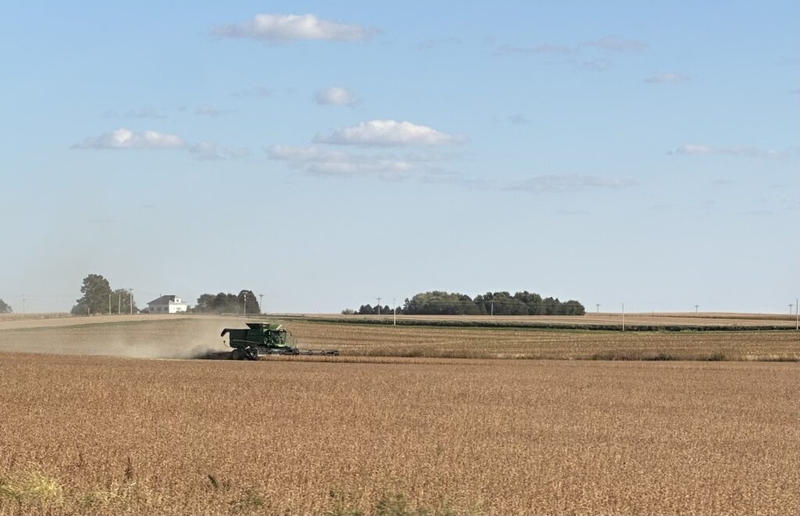
A farmer harvests soybeans Oct. 7, 2025 near Dike, Iowa. (Photo by Cami Koons/Iowa Capital Dispatch)
Republican members of the Senate Agriculture Committee voted Wednesday to advance a farm bill, though Democrats on the committee voted against the package due to continued disagreements on a nutrition section of the bill.
The committee marked up the bill in August, then recessed after a failed vote as Democrats held out over their proposal for an extension of when some states will have to begin paying for a share of federal nutrition benefits. Republican leadership amended the bill before the August hearing to offer a one-year extension, but Democrats continued to argue for a two-year extension.
While Republicans hold the majority in the committee, Republican Sen. Mitch McConnell’s more than 90-day public hiatus due to a health issue meant the body didn’t have enough votes to pass the farm bill from the committee in August.
McConnell returned to the Capitol earlier in the week, allowing Republicans in the agriculture committee to advance the bill along party lines.
Senate Majority Leader John Thune, said in each of the five farm bills he has worked on, the opposing parties “always seem to come together at the end” to get the bill done.
“Honestly, that’s what ought to be happening here, folks,” Thune said.
Thune said he didn’t understand why Democrats were choosing to “block vote” against a bipartisan bill that is “principally about production agriculture.”
The farm bill is typically reauthorized every five years, but the many programs under the bill have operated on various extensions of the 2018 farm bill for the past several years.
Democratic Sen. John Fetterman from Pennsylvania said the ag sector is “begging” for a new farm bill.
“We’ve got to find a way to pass this thing because people are coming all the way from my state saying, ‘We can’t keep waiting for this,’” Fetterman said. “We have to deliver for our farmers.”
The error rate issue
Republicans’ One Big Beautiful Bill Act included language that requires states to lower their Supplemental Nutrition Assistance Program payment error rates, which measures a state’s accuracy in determining who is eligible for SNAP and how much they receive.
The latest SNAP payment error rates show only nine states are below the 6% error rate threshold that allows their SNAP programs to continue to be 100% funded by the federal government. As the law currently stands, all other states will have to pay 5%, 10% or 15% of SNAP benefits costs in their state starting Oct. 2027.
States with an error rate above 13.34%, however, are eligible for a two-year extension. Democrats sought to extend this extension to all states, especially as some states are seemingly raising their current error rates so they can benefit from the extension.
In August, Republicans on the Senate agriculture committee adjusted the farm bill proposal to include a one-year extension, but Democrats would not vote in favor of the bill.
Farm bill proposal fails in US Senate ag committee over SNAP error rate issue
Ranking member Amy Klobuchar of Minnesota said it was her goal to “get this farm bill done, and to get it done by the end of the year,” and noted difficulties facing farmers and ranchers – like global trade disruptions, input costs and “headwinds” from tariffs.
The Democrat said she was appreciative of Chairman John Boozman’s one-year delay, but said it would still allow certain states to get off “scot-free” while other states need tens of millions of dollars, according to estimates from the Center on Budget and Policy Priorities, to pay for their nutrition programs.
“We don’t want to have a situation where high-error-rate states get off scot-free while the rest of us pay,” Klobuchar said. “And we have shown our commitment and will continue to do that to improving this bill to get us to a bipartisan product that can be successful on the Senate floor.”
If the version of the bill that advanced Wednesday is passed and signed into law, states would have until October 2028 to lower their error rates before they are required to shoulder part of the costs.
Thune argued Democrats should be supportive of the bill, because if it doesn’t pass, current law will remain in effect and states will have to start paying for their error rates in 2027.
Thune also noted that the bill included a number of Democrat-led amendments, and bipartisan issues like allowing year-round, nationwide access to E15, a fuel blend with 15% ethanol.
Several senators sported buttons at the hearing that read “E15 now” and agricultural groups, including National Corn Growers Association, National Farmers Union and the Renewable Fuel Association, thanked the committee for advancing the measure.
Iowa senators try for amendments to bill
At the August markup of the bill, senators went through the massive piece of legislation title by title with amendments and objections, before voting, unsuccessfully, on the bill as a whole. Boozman did not open the bill up again for amendments Wednesday, though Sen. Joni Ernst, R-Iowa, attempted to talk over the roll call vote to argue her amendment should be heard.
Ernst argued she had filed her amendment prior to the August deadline and held that the final title of the bill was not closed prior to the committee’s recess in August.
Ernst said her amendment presented a “balanced middle ground approach” to address Proposition 12 – a California law stipulating that certain products, including pork products and bacon, must come from animals who were raised under certain conditions.
Senate farm bill draft focuses on farm economy, keeps ‘Big Beautiful’ SNAP cuts
Congressional efforts to undo Proposition 12 have been championed by Iowa Republicans and supported by agricultural groups including the National Pork Producers Council and American Farm Bureau Federation. Animal rights, environmental groups and some producer groups, have pushed back against these efforts and celebrated that such language was not included in the Senate’s farm bill.
Ernst said her amendment would have preserved Prop 12 and other existing laws, while preventing “future mandates from creating an unaffordable patchwork of 50 different production standards for farmers across this country.”
“This is a serious attempt to find common ground and give our producers certainty going forward,” Ernst said. “Yet, after following the recommended process, again given by your staff, and doing the bipartisan work, we are not even being given an opportunity to bring the solution before the committee for a vote.”
Boozman said he did not block the amendment from being brought forward during the bill markup in August.
Sen. Ben Ray Luján, D-New Mexico, said that while he might not vote with Ernst, “procedure” in the committee is supposed to “protect the voices of colleagues to raise issues that matter to us in our states.”
“Because the senator from Iowa was recognized, and then just run over, that does not sound like the rights of those of us that sit on the committee were protected,” Luján said to Boozman.
Sen. Chuck Grassley supported his Iowa colleague and said he was “hoping” the committee would “get a chance to vote on an amendment very important to Iowa” as the top pork producing state in the nation.
“It’s just stupid that we don’t have a chance to bring Iowa’s interest to this debate on the first farm bill that we’ve had in discussion for now the third year,” Grassley said.
Grassley said he had also hoped to discuss his own bipartisan amendment, drafted with Democratic Sens. Cory Booker of New Jersey and Adam Schiff of California to “finalize” certain rules in the Packers and Stockyards Act.
Grassley has previously criticized U.S. Secretary of Agriculture Brooke Rollins for delaying the implementation of rules, which he said were “put in place to protect” meat producers in the U.S., in particular poultry producers who have invested in infrastructure costs while corporations haven’t “honored fully” their commitments with family farmers.
“I just want to express my irritation about the whole thing, and just hope that somewhere along the line, at least the Secretary of Agriculture will wake up and draw back her delays of these rules,” Grassley said.
Rollins said in June the rule was a “Biden-era” regulation and that USDA needed additional time to review the rule.
Boozman said if he opened the bill up for Ernst or Grassley’s amendments, he would have to restart the markup, and “we’re not prepared to do that.”
Sen. John Hoeven, R-North Dakota, reminded his colleagues that there would still be room for amendments to the bill on the Senate floor.
“Let’s go to the floor, offer up amendments, have robust debate, and get this done for our farmers and ranchers,” Hoeven said.
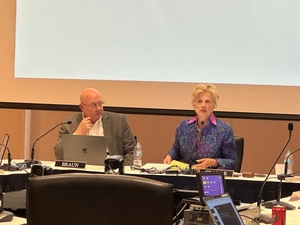
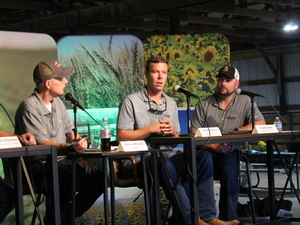
Before the House left town Wednesday, members of the House Agriculture Committee heard testimony from producers across the country about increasing demand for “homegrown products” by advancing things like stronger antitrust laws, country of origin labeling and expanded biomanufacturing opportunities.
In his opening comments, Chairman Glenn Thompson, R-Pennsylvania, noted that the House had already passed its version of the farm bill, and he looked forward to “the Senate upholding its end of the bargain soon.”
In a statement Wednesday evening, Boozman said advancing the bill from the Senate committee was a “critical step” toward getting results to a “hurting” farm country.
“While this is clearly welcome progress, we need more of our colleagues’ votes to reflect the urgency of supporting farmers, ranchers, forest landowners and rural communities,” Boozman said.
Des Moines, IA