Residents push back against planned Nashville ICE coordination center
Sep 16, 2026 | 1:26 pm ET
Description
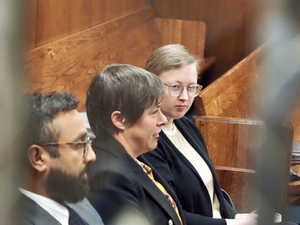
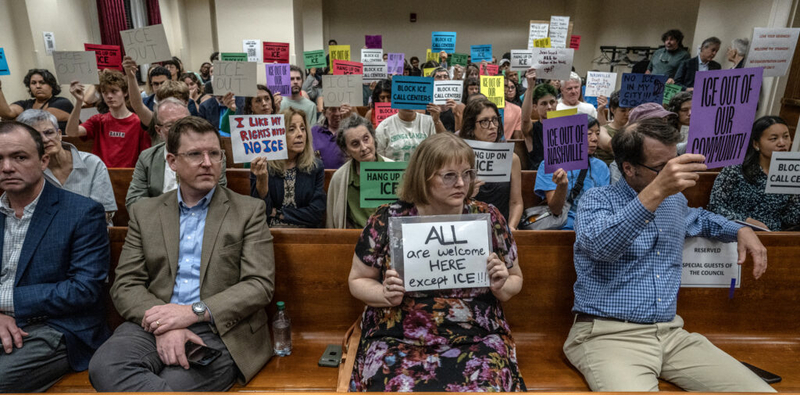
People at the Nashville Metro Council protesting the Immigration and Customs Enforcement national support center on Tuesday, Sept. 15, 2026. (Photo: John Partipilo/Tennessee Lookout)
Dozens of residents packed the Nashville Metro Council on Tuesday to speak against plans to establish a national immigration enforcement support center in Nashville.
One after another, Nashville residents took to the podium during the meeting’s public comment period to say they opposed the coordination center.
“We are here to protect our community from a system that doesn’t reflect the morals and ethics of our city,” said Alexandra Van Zeelandt, who criticized ICE’ mass arrest and deportation policies.
“Our city protects its people, all of them, and we expect the same from anyone who chooses to operate here,” she said.
Federal documents show Alaska-based Koniag Services landed a government contract of up to $63 million to provide “services in support of enforcement and removal operations” in Nashville, effective Aug. 6.
The services include a 24/7 operation to coordinate with local police and sheriffs across the country who have entered cooperative agreements with the federal government to enforce immigration laws.
The contract, which originally listed the small Middle Tennessee town of Adams, Tenn. as its place of performance, was later edited to say the center will be located in Nashville, listing a zip code that corresponds to the Donelson neighborhood. No specific location has been publicly revealed.
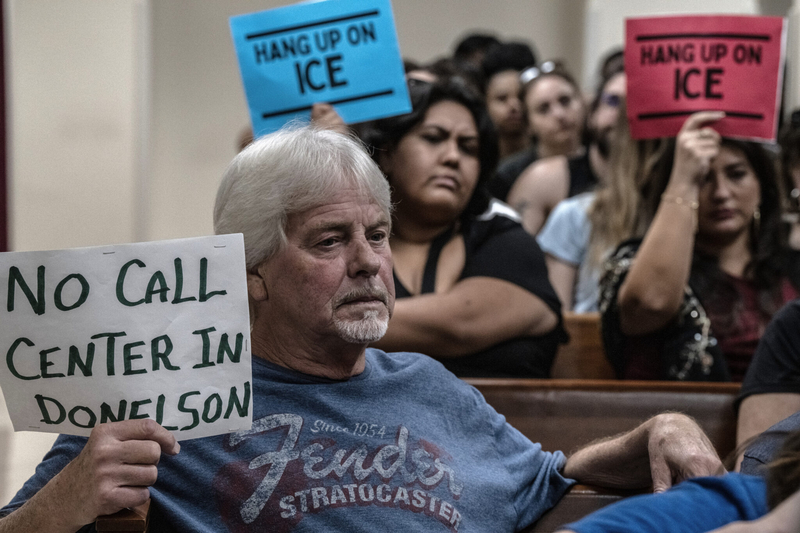
The call center was not part of the meeting’s agenda and council members took no action Tuesday.
A Koniag representative has not responded to the Lookout’s questions in recent weeks, and did not respond again on Wednesday. In August, a spokesperson said the company was “not at liberty to discuss this very recently awarded contract at this time.” The company has posted more than two dozen job listings for a Nashville call center, which list government security clearances as an employment requirement.
Immigration and Customs Enforcement also declined to answer questions about the center’s physical location or plans, citing security concerns.
It is unclear how elected council members could legally intervene to prevent the ICE center’s presence in Nashville. A spokesperson for Mayor Freddie O’Connell told the Lookout in late August that he was “still in the process of getting a consistent depiction of what is planned.” The Lookout sought additional information from the mayor Wednesday.
ICE changes location of Tennessee call center site from Adams to Nashville
Nevertheless, speakers on Tuesday night urged council members to take action against the support center. Some speakers noted that an effort to establish a mass ICE detention center in Lebanon, Tenn. earlier this year was scrapped after strong community pushback.
Jennifer Berry, who identified herself as a longtime educator, told council members she was “deeply concerned about what we are teaching our children by potentially allowing a 287(g) ICE coordination center to operate in our community.”
Nashville children are already fearful of ICE’s power to separate them from their parents and families, she said.
“They do not need us to normalize surveillance, suspicion and the idea that some families are less deserving of safety and surveillance than others.”
The government’s description of the contract responsibilities, in a document published in November soliciting bids, describes an operation that would more closely integrate the work of local police and federal immigration authorities. The document says the support center’s primary function would be to operate a call center capable of handling an estimated 6,000-7,000 daily inquiries from law enforcement agencies across the nation. The document also describes providing local law enforcement with “targeting focus and material” to locate immigrant children.
“They are building infrastructure to surveil our neighbors, share information about our neighbors and ultimately remove our neighbors from families and their communities,” Luis Mata, communications and deputy director for the Tennessee Democratic Party, told councilmembers.
“Someone’s father or mother doesn’t come home. A child loses a parent. Your favorite small business closes down. That is what all this infrastructure eventually touches.”
Nashville, TN