Top insurance official recommends task force for studying Idaho’s most critical healthcare issues
Sep 15, 2026 | 8:03 pm ET

Description
The exterior of the Idaho Statehouse as seen on Jan. 14, 2026, in Boise. (Photo by Pat Sutphin for the Idaho Capital Sun)
As the Idaho Legislature continues to study the state’s health insurance system before reconvening for the 2027 legislative session, the state’s top insurance official recommended having prolonged study of healthcare issues.
The suggestion came soon after Dean Cameron, the director of the Idaho Department of Insurance, started speaking to the Legislature’s Health Insurers Working Group.

Back when he served in the Legislature — where he served for 25 years — he said that lawmakers had a task force that met throughout the summer studying healthcare issues faced by consumers, businesses and Idahoans.
“It might be time to consider dusting that process off,” Cameron said.
Then he delved into how the agency regulates health insurers and other insurance companies — and provided a glimpse into some of the common reasons behind complaints, which Cameron urged providers to lodge with his office if they have an issue.
“We take our responsibility very seriously,” Cameron said.
A significant amount of complaints that the state agency receives against health insurers are related to claims being denied, along with pharmacy benefits and plan cancelations, according to statistics the Department of Insurance shared with the committee.
If Idaho insurer met hospital’s pay raise, state employees’ costs would rise, official says
According to the state agency’s data, Regence BlueShield of Idaho saw an uptick in complaints that were ultimately resolved by an arbiter — formally called an external reviewer — starting in 2024, soon after the company took over the state’s contract to provide health insurance for state employees and their family members. Cameron told lawmakers that the rise was partly because the company had recently taken over the state contract, and partly because the state had banned covering prescription medication for weight loss in late 2025. Just under a third of the decisions in the 217 complaints Regence faced in 2025 were overturned by external reviewers, according to the Department of Insurance.
The state legislative working group was founded after contract negotiations between Portneuf Medical Center in Pocatello and Regence fell through, leading to the hospital to be out of network for the state’s insurer. Last month, the two struck a deal to go back in-network.
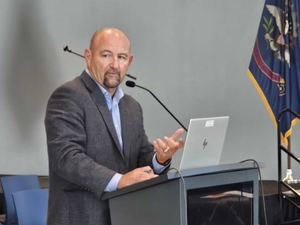
For the first time, the hospital’s CEO, Nate Carter, addressed the committee Tuesday.
Part of the reason this committee was formed, he said, was to navigate through contracting issues — which he said his hospital was glad to have resolved with Regence.
“But also this committee is meant for a much larger purpose, which is to assist providers and insurers both in working together to make sure that patients, my neighbors, my friends, and my family have access to high quality care in their respective communities,” Carter said.
Other healthcare policy updates: Pharmacy middlemen, a depleted teacher insurance fund, and a dispute over billing
Cameron also provided updates on other healthcare policy issues in the state.
In 2024, the Legislature passed a bill to regulate pharmacy middlemen companies, called pharmacy benefit managers, or PBMs. Since then, Cameron said the Department of Insurance had levied nearly $400,000 in fines against PBMs. But the true amount of fines may decline, he said, if one of the recently fined PBM complies with certain requirements.
In late August, the Department of Insurance petitioned a state court to allow the agency to take over the Idaho School Benefit Trust, which appears to be running out of money to pay public school employees’ health insurance claims, Idaho EdNews reported. Cameron told the committee that the agency is also probing what led up to this point.
“We’ve opened an investigation to look at what happened, and who knew what when, and what decisions were made, and why were they made,” he said. “… That one will take a bit of time, but we are focused on trying to have answers to you on that — hopefully, in the next couple months before the (legislative) session starts.”
Shifting to a billing dispute between Idaho’s largest health insurer and a North Idaho microhospital, Cameron said state officials are “seeing a significant concern” with alleged abuse of a congressionally created arbitration process that lets providers dispute payments by insurers. Blue Cross has said that the North Idaho facility, Post Falls ER and Hospital, is out-of-network for health insurers and instead relies heavily on the arbitration process, which is called Independent Dispute Resolution.
“We’ve got at least … one provider who is profiting by the use of the independent dispute resolution system. And we need to have that discussion because that’s driving everybody’s costs up,” Cameron said. “You will see nationally, there’s a lot of pressure right now on Congress to fix the independent dispute resolution and the No Surprises Act in Congress.”
‘Why would we have a summer committee’
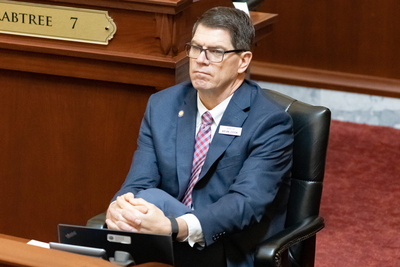
Appearing at the committee virtually, Sen. Kevin Cook, R-Idaho Falls, asked about why the Legislature would need a healthcare committee that meets outside of legislative session.
“I don’t see any reason why a provider should be calling a legislator and saying ‘I’m not getting paid,’ or ‘My reimbursement is nine months late,’” said Cook, who sits on an interim panel overseeing the state’s shift to privatized Medicaid and sponsored a successful bill to restore Medicaid mental health benefits cut by a contractor. “… I’m not going to point fingers at this point of who’s wrong and who’s right. But I just think we’ve got these divisions and departments to handle this stuff. Why would we have a summer committee?”
Cameron said the Legislature makes policy, and the state agencies enforce it. He said he used to chair a past interim legislative healthcare panel, and its monthly meetings sparked with policy solutions.
“I hope providers aren’t calling you. But if they’re doing so, they’re doing so out of frustration,” Cameron said. “And if they’re frustrated, I hope they’ve at least tried to call us first, and they’ve tried to sit down with us. And maybe they didn’t get the answer they wanted to get.”
He encouraged hospitals and providers to bring issues to his agency.
“We feel like we have a pretty good success rate when we hear about it. … We have a horrible success rate on something we’re not hearing about,” Cameron said.
The committee’s next planned meeting is Oct. 14.

Boise, ID