A pilot program in Plymouth hopes to crack the code on insurance in coastal communities
Sep 11, 2026 | 9:49 am ET
Description
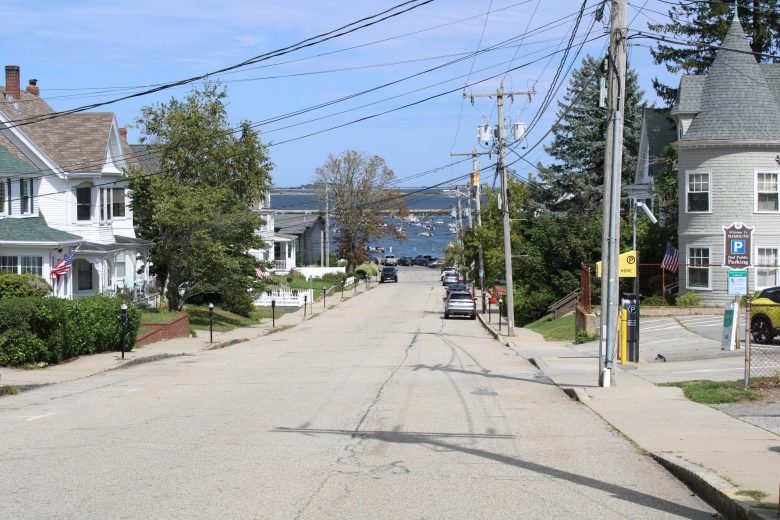
Plymouth’s harbor is seen from town hall.
ONE COASTAL COMMUNITY in Massachusetts is preparing to spend the next nine months diving into the wonky insurance issues plaguing a critical 500-property zone that’s vulnerable to sea level rise.
The rest of the state might want to pay attention.
Plymouth, a seaside town known for the arrival four centuries ago of the Pilgrims to its shores, is now confronting a volatile future as encroaching waters threaten its people, economy, and tax base.
So, the town of 68,000 has launched an effort, backed with nearly $300,000 in state money, to figure out what to do about the potential higher insurance costs and lost tax revenue preparing to wreak havoc on communities like Plymouth as the impacts of climate change intensify.
InnSure, a Cambridge-based nonprofit that helps communities navigate insurance markets through local planning, is building a digital platform that models how different building improvements and climate resiliency projects within the specific zone in Plymouth would affect insurance costs and reduce risk to extreme weather events.
The new system, which builds on a pilot project launched in Salem last year, will be able to break down benefits as granular as, say, what happens if 300 of the 500 identified properties are raised by three feet, or if 200 properties install upgraded fortified roofs to protect against wind damage, or if the town installs a new marsh at the shoreline.
The idea is that both town leaders and individual property owners will be able to determine what investments they should make in order to minimize risk — and therefore lower their insurance premiums.
To Steve Brandt, chief development officer at InnSure, that means that town climate, energy, and planning officials are “firing up” the desktop application “every day to help inform decisions around the community.”
“There are so many incredible resilience efforts happening here in Plymouth, but where the disappointment comes is, ‘Hey, we did all this great work, we spent all this money. Why doesn’t the insurance industry now recognize that with value in their pricing?’” Brandt said. “The whole purpose of this program is to turn the process on its head, where the community with this new data is in control of their insurability as opposed to hoping the industry responds to what they’re doing.”
The insurance challenge for coastal states like Massachusetts has been a vexing one. Inflation and tariffs are scrambling rebuilding costs, and the rise in climate-driven natural disasters has contributed to a recent increase in private insurers not renewing policies and the state’s insurer-of-last-resort seeing a growth in the number of enrollees.
The home insurance market in the Bay State is in far better shape than in hard-hit California or Florida, but the catastrophic losses there driven by wildfires and hurricanes create a sense of urgency here.
Chunks of shoreline lost to rising seas and more frequent floods not only reduces the town’s property tax base, but it also threatens the livelihoods of people who depend on the town’s maritime economy, said Michael Cahill, climate resiliency and sustainability planner for Plymouth.
The issue isn’t theoretical for Plymouth, either, which found itself in the bullseye of a record-breaking winter storm earlier this year that pummeled it with 25 inches of snow and took out power for 80 percent of the town.
Unlike parts of the Massachusetts coast dotted with mansions and second homes, the immediate waterfront neighborhood in Plymouth is lower income, with three different Census tracts totaling around 2,000 households on or near the water earning 65 percent or less of the statewide median income.
Those neighborhoods are the backbone of a bustling harbor key to the town’s economy, including a robust fishing and aquaculture industry and various cruises and boat tours coming through Plymouth.
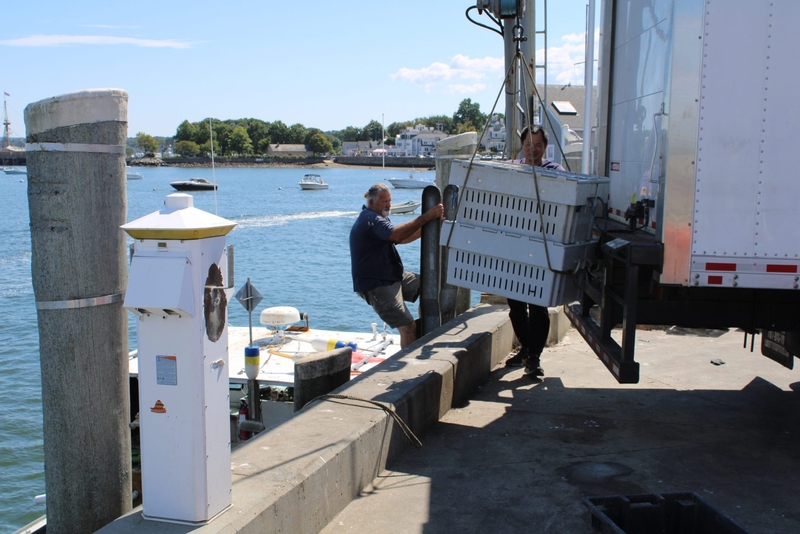
In total, 85 percent of the town’s revenue is generated by property taxes, said Derek Brindisi, Plymouth’s town manager.
“An important part of this is what are the consequences if we don’t do this work?” he said. “Because of sea level rise, we’ll lose a portion of our coast, which means we’ll lose a portion of our economy and a portion of our revenue. That has a consequence on the services that we can provide — public education, public safety. So this work that we’re doing today has a trickle-down effect in so many other different areas.”
Massachusetts could experience over $1 billion in coastal property damage each year by the 2070s, according to a state report released last year.
That’s led the state to consider whether and how communities should retreat from the coast altogether, something under active consideration through a potential voluntary buyout program. And Massachusetts lawmakers are weighing a new requirement for property sellers to disclose its flood risk to new potential buyers.
It’s against this backdrop that Plymouth is looking for solutions.
Even as it pursues this effort with InnSure, the town has already embarked on a project to raise a frequently-flooded boat ramp by three feet and is studying how best to rebuild a sea wall separating the harbor from its downtown. And it’s one of about 20 communities in Massachusetts that offers residents discounts on flood insurance premiums through a federal program.
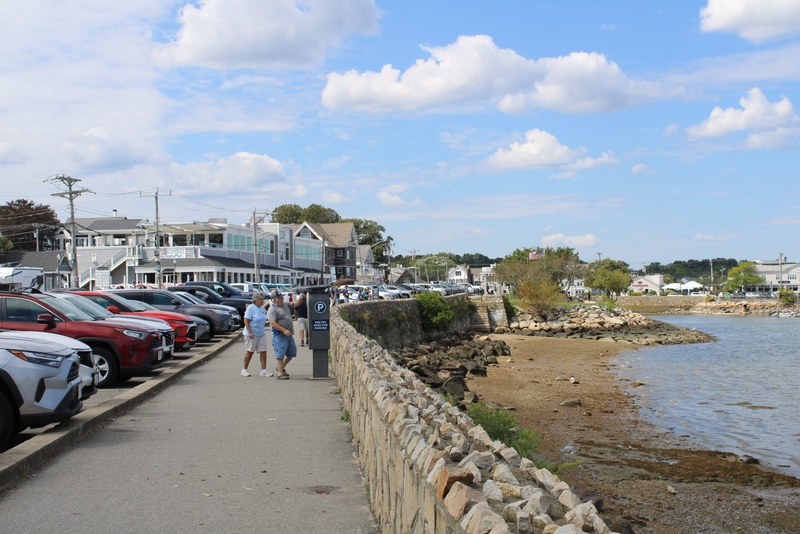
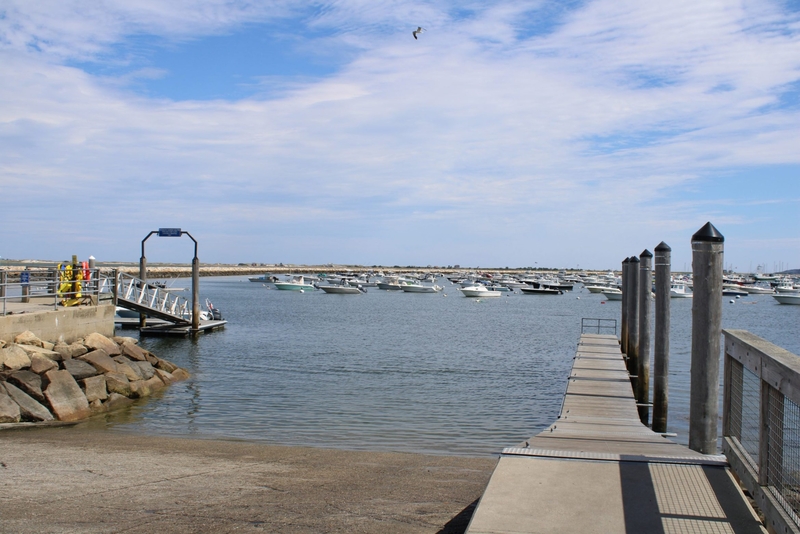
The scope of the problem of sea level rise — and the limited ability of one town alone to do much of anything about it — means partnerships like the one Plymouth has with InnSure are all the more powerful in arming residents with actionable information, Brandt said.
“Climate change can be a highly charged conversation,” he said. “Data and personal experience with disaster or insurance negates some of that and can take a lot of that noise away. It becomes really practical because you boil it down to, ‘Here’s what could happen. Here’s what you could do to mitigate that risk. And here’s the implications if that’s not done.’”
While InnSure’s project, which is set to be completed by the end of the fiscal year, promises to provide direction for how Plymouth and other coastal communities can grapple with rising seas, it also exposes two uncomfortable realities.
Even if various resilience improvements lead to avoided damages and savings on insurance costs down the line, the up-front investments required can be prohibitive.
There’s hope that the new data can help the town and local property owners win more grants to help fund the improvements, especially as the state readies an infusion of money through an environmental bond bill that the Legislature will likely send to Gov. Maura Healey’s desk this fall.
But the initial cost of these projects risks slowing progress as communities up and down the coast — and increasingly inland ones, too — bear the constant drain of their budgets to beef up shoreline protection and refix roads, docks, and properties that have suffered repetitive losses.
Then there’s the prospect that InnSure’s work will reveal large insurance gaps — and that it could take people paying more, not less, in insurance costs to close them.
Just 4 percent of US homes have flood insurance, since only homeowners in the Federal Emergency Management Agency’s flood zones are required to purchase it. That leaves many properties that are at risk without coverage should disaster strike. Many general home insurance policies don’t cover damage due to flooding.
“There are massive gaps out there in terms of what is insured,” said Chris Stark, executive director of the Massachusetts Insurance Federation. “I don’t envy the leaders that are going to have to get the buy-in from everybody to tackle this problem.”
Plymouth officials know the tradeoff in embarking on such a localized deep dive into the insurance needs and opportunities of one part of town could uncover some unsettling realities and trigger a backlash.
But they argue it’s better to understand where the vulnerabilities are and work to rectify them than not know at all.
“If we get data that’s not favorable, it’s our role as the municipality to provide people with the most accurate information available to help them make sure that they’re making informed decisions,” Cahill said. “That will give us information on where, as a municipality, we should be focusing our efforts.”
InnSure chose Plymouth in the first place as the site of this project because the town has been forward-thinking both in its approach to climate issues and its entrepreneurial spirit, Brandt said: The town declared a climate emergency in 2022 and is supporting the growth of several startup companies to grow its blue economy.
Now, the hope is that the model works as a key part in the toolkit used by municipalities and residents to plan for the future and fend off the climate-driven insurance collapse that has taken hold in other parts of the country.
“The goal for what we’re trying to build is to prove that this model works, take it to the rest of the town, and then work with the state to expand this,” Cahill said. “If we can really internalize and identify risk properly, we’ll be much more prepared to make actual changes that impact people’s lives.”
Boston