Lawmakers consider introducing recording to Oklahoma courtrooms to assist operations
Oct 07, 2026 | 4:50 pm ET
Description
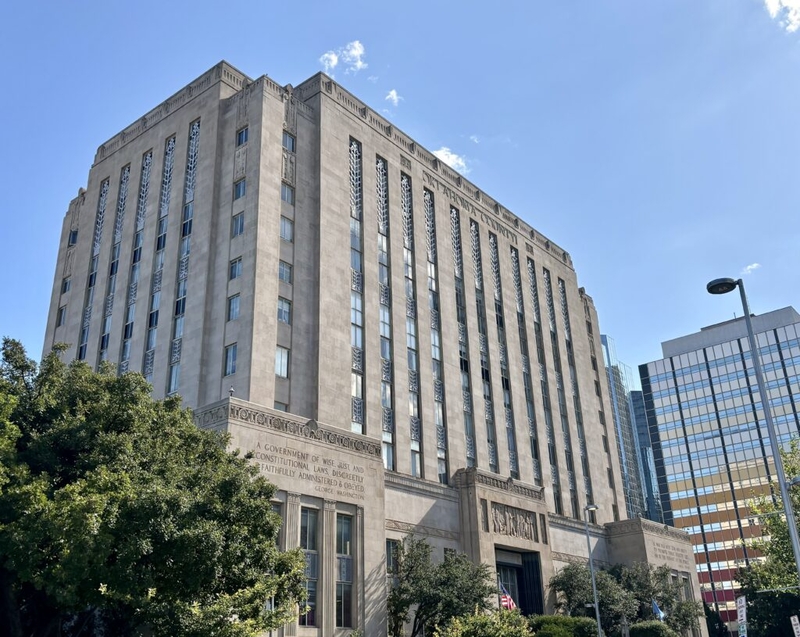
The Oklahoma County Courthouse in downtown Oklahoma City, pictured Aug. 15, 2024. (Photo by Nuria Martinez-Keel/Oklahoma Voice)
OKLAHOMA CITY — Lawmakers on Wednesday discussed taking another stab at modernizing Oklahoma courtrooms by introducing audio and visual recording technology.
At an interim study hosted by Sen. Christi Gillespie, R-Broken Arrow, and Rep. Derrick Hildebrant, R-Catoosa, lawmakers considered if a pilot program in a dozen courtrooms across the state could alleviate strains left by court reporter shortages and improve transparency and trust in the state’s judicial system.
“It is not livestreaming or broadcasting courtroom proceedings, although it does have that capability,” Gillespie said. “It does not replace court reporters with AI-generated transcripts. And when an official transcript is needed, a certified court reporter would still be responsible for certifying that record.”
The two lawmakers last session authored Senate Bill 1386 which would have created the pilot program in 12 courtrooms to record proceedings for the record. The measure never passed off the Senate floor, but Gillespie said Wednesday that she’s planning to work on it again.
“What we are studying is the use of permanently mounted audio and video technology to preserve a complete, accurate, and reliable record of courtroom proceedings, providing another tool for the transparency, accountability, and public confidence in our justice system,” she said.
The three-year pilot program is estimated to cost $2.3 million, said Diana O’Neal, director of the administrative office of the courts. This includes $25,000 in technology upgrades and software licensing for each courtroom, plus the cost of two full-time IT officers and operators for the software during proceedings.
Oklahoma Supreme Court Chief Justice Dustin Rowe said while the state’s high court currently offers audio and visual livestreams of proceedings, the matters before the panel are usually relevant to the entire state. This is not often the case in trial courts where matters can be more personal, he said.
Legislators need to be wary of livestreaming proceedings if they can then be clipped, potentially manipulated and disseminated on social media, Rowe said.
“We can’t lose the public’s respect for the rule of law and the judiciary,” he said. “It would be devastating. And so, whatever happens and whatever comes out of these discussions, I ask you to keep that at the forefront.”
Of the 198 court reporter positions in Oklahoma, 75 are vacant, Rowe said. There are some counties with a single court reporter trying to work with multiple judges which delays proceedings, he said.
Laura Griffin has been a court reporter in Oklahoma for 37 years. The state should continue to improve the court system with technology, but audio and visual recording cannot replace what a court reporter offers, she said.
Court reporters can ask for clarifications, for speakers to raise their volume or for parties to stop talking over each other, none of which a recording can do, Griffin said.
“It’s not whether technology should assist the guardian of the record,” Griffin said. “They should not replace the guardian of the record. Those are two very different things, and very different issues.”
She said court reporters would not be able to certify transcripts produced by these recordings.
Jeremiah Gregory, district attorney for Payne and Logan counties, said he would go further than what the interim study discusses and recommend livestreams and broader public access to recorded proceedings in an effort to prevent the spread of false narratives.
“I don’t believe that’s something that should be held private,” he said. “With the exception of the juveniles, the adoptions, the guardianships, the family and domestics. I think that should apply to where it’s only available to the judge, a court reporter, and the parties, for the obvious reasons of the people who are involved, are very vulnerable.”

Oklahoma City, OK