Black children in SC are more likely to be detained than their white peers, report finds
Sep 10, 2026 | 9:20 am ET
Description
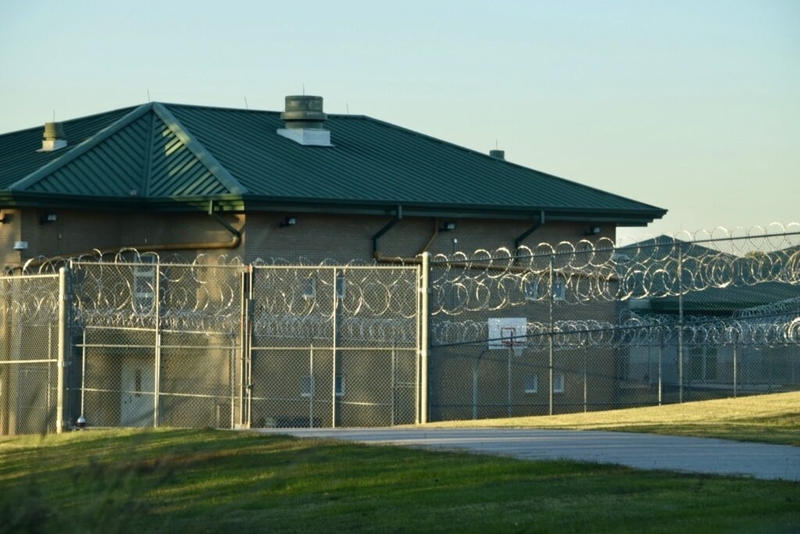
The Department of Juvenile Justice's detention building near Broad River Road. (File photo by Jessica Holdman/SC Daily Gazette)
COLUMBIA — South Carolina locks up Black children at a higher rate than white children, found a report from a civil rights group released Wednesday.
The American Civil Liberties Union’s report, which drew from public records, came amid a push from legislators to crack down on violent crime among youth and improve conditions at the state Department of Juvenile Justice, where complaints about overcrowding and violence have persisted for years.
“Vulnerable youth are suffering through a crisis in the South Carolina Department of Juvenile Justice, and our state owes them a chance at real healing and rehabilitation,” said Jace Woodrum, head of the state’s ACLU chapter, in a statement.
“We are calling on the state legislature to address the dangers and inequities exposed in this report,” Woodrum continued. “These children can’t wait another year for justice.”
Legislators’ efforts will continue this year, said Rep. Brandon Cox, a Republican from Goose Creek who led a six-member bipartisan committee tasked with tackling youth crime rates. The panel’s existence suggests an appetite among legislators to tackle the problem in the coming session, he said.
DJJ officials support changes to help the children in the agency’s care, spokeswoman Michelle Foster said in a statement Thursday.
“SCDJJ agrees that meaningful juvenile justice reform requires both strong community-based alternatives that prevent deeper involvement in the juvenile justice system and safe, effective secure services for the small population of youth that require that level of care,” the statement read. “SCDJJ remains committed to advancing both.”
The ACLU is also suing the state agency over alleged mistreatment of youth and uninhabitable conditions. The report is not part of the lawsuit, which is ongoing, but instead meant to fill in the gaps left when DJJ stopped publishing regular reports about the number of youth housed in its facilities and the charges they faced, according to the ACLU.
Racial disparities
Since 2017, the first year the ACLU included in its report, the number of youth under the age of 18 held in DJJ facilities has dropped from a daily average of 400 to 271.
Roughly three-quarters of those children are Black, the ACLU found. The report doesn’t include disparities in arrest rates or explain the reasons for the disparity.
A decade ago, in 2016, 64% of children detained were Black, and 31% were white, the group found. About 28% of youth statewide are Black, according to the report.
More than 25K SC teens committed crimes last year. Legislators are looking for solutions.
The reason for the disparity remains unclear, according to the report. However, the number of Black children detained compared with white children likely begins with which youth local law enforcement officers are stopping and arresting, which can lead to a referral to DJJ, the report reads.
“You can come and sit in our courtrooms here in Charleston County and watch the cases that are being brought before the family court, and it’s Black child after Black child after Black child after Black child,” public defense attorney Tamara Coppinger Green said in the report.
Figuring out for certain what’s driving that disparity will be key to resolving it, Cox told the Daily Gazette.
Cox wants to take a more comprehensive look at what leads children and teenagers to getting locked up. Legislators and advocates have pointed to a series of socioeconomic factors as reasons youth might commit crimes.
In 2023, 44% of Black children lived in two-parent homes, compared with 76% of white children and 67% of Hispanic children, according to the SC Office of Juvenile Justice and Delinquency Prevention. Black children in the state are also more likely to live in poverty, with 32% in households below the poverty line in 2023, compared to 10% of white children, according to United Health Foundation’s national data.
Addressing overlooked problems, such as child nutrition and excessive screen time, might help steer more teenagers on the right paths, Cox said. Getting to the root of the issue is important because getting out of the legal system can prove difficult for children once they’ve gotten in trouble once, he said.
“My goal is to keep children out of that system,” Cox said. “All children.”
Several of the ACLU’s proposals for improving the system include diversion programs, such as requiring family counseling before a child is sent to DJJ for non-violent offenses or encouraging community-based programs that teach children problem-solving skills. Legislators proposed bills that would do that, though none became law this year.
Status offenses
Generally, the rate of crime among children and teenagers has decreased over the past two decades, the report found. In 2005, 2,489 youth received referrals to DJJ for violent offenses. By 2025, that had fallen to 1,149.
Of the total referrals last year, roughly 14% were cited for status offenses, which are only illegal until a child turns 18. Running away, skipping school and “incorrigibility,” which means failing to listen to their parents, are all offenses that can land a youth in legal trouble.
So can loitering in a billiards hall and sneaking into an R-rated movie, though those offenses aren’t enforced. Legislators this year repealed a portion of the law banning pinball for minors, which also went unenforced.
Legislators tasked with curbing juvenile violence in SC start with teens already charged
South Carolina is the only state that locks up youth on status offenses alone, according to the ACLU.
Legislators have talked for years about eliminating status offenses, though no comprehensive bill has made it over the finish line. The effort to legalize pinball for youth took a decade of proposals to become law.
That should be a top priority for legislators when it comes to addressing crime among youth, Cox said.
“Being in the DJJ facilities, it’s pretty sad when you see a kid who skipped multiple days of school sitting next to someone who’s been accused of adult homicide,” Cox said.
‘Further traumatized’
The report was intended to take the place of regular reports the Department of Juvenile Justice stopped publishing years ago. Those featured data about its detention and evaluations centers, including how many children were housed there and what offenses they were charged with committing.
Police officers, solicitors and school officials can refer youth to DJJ for certain offenses. During the 2024-2025 fiscal year, DJJ received nearly 12,700 referrals for children as young as 5 years old, according to the report.
The agency can either release the child back to a parent or guardian or keep them in a detention center while waiting for their day in court. South Carolina has two state-run detention centers, one in Columbia and one in Greenville, as well as a youth wing at the Charleston County jail.
SC juvenile justice changeups add capacity to reduce overcrowding, violence
The agency has an estimated 356 beds, though the children housed are often not distributed evenly across buildings, meaning the detention center can remain overcrowded while evaluation facilities have beds to spare.
Once a judge has found a child delinquent, that child is evaluated and committed to DJJ to serve out the length of their sentence, which can be a set amount of time or until the youth’s 22nd birthday.
Overcrowding and general conditions for youth have improved in recent years, the report acknowledged. DJJ opened an Upstate detention center in June 2025 to increase capacity, and a treatment center for youth with mental health needs started accepting patients in March.
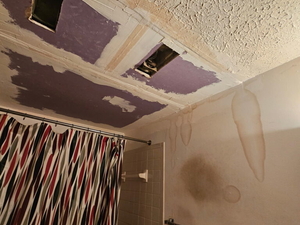
Still, the ACLU raised concerns about continued violence and maintenance issues at DJJ’s detention centers.
In 2025, DJJ reported nearly 850 instances of physical violence, 170 incidents described as “sexual in nature,” and 27 near fatalities. The report did not include any more details on those incidents.
Youth were reported as restrained 62 times and put in isolation 36 times that year, according to the report. That suggests an environment that punishes teens rather than rehabilitating them, the ACLU wrote.
“Traumatized children that have had, most likely, a high number of adverse childhood experiences, end up in systems where they’re further traumatized, where they’re not getting help, and also where they’re exposed to other youth with violent proclivities,” said Aleksandra Chauhan, an attorney who represented youth in court, in the report.
Columbia