She put money into CalPERS for decades. It demanded she repay $1 million over a part-time job
Sep 10, 2026 | 8:00 am ET
Description
In summary
Government retirees who go back to work must follow strict pension laws or risk serious consequences with CalPERS. Several faced enormous bills.
Linda Samsom couldn’t sleep the night she received the letter from her pension fund, the California Public Employees’ Retirement System.
It said she broke California pension law with a part-time job advising the Yolo County Sheriff’s Department after she retired from a long career in local government.
She made about $80,000 in the time she worked for Yolo County, and for that CalPERS demanded she pay back every penny she took home from her $10,000 a month pension over that period: $1,050,875.
Or, she could make a deal that would cut her pension cut in half.
“The emotional roller coaster I’ve been on has been absolutely frightening,” Samsom said. “I go from being in a panic thinking of what will happen if my pension is cut in half to being really angry that CalPERS, which I believed belonged to the retirees and the government employees, could do this to us.”
Samsom now is suing CalPERS over how it claws back money from retirees who run afoul of pension law. In particular, the lawsuit in San Francisco Superior Court alleges that CalPERS is ignoring a three-year statute of limitations on pension errors and that the penalties it issues in those cases are excessive.
A spokesperson for CalPERS said the fund had not received Samsom’s lawsuit and declined to comment on pending litigation. In records from related administrative cases, CalPERS contends it has no statute of limitations for violations of the pension law that limits work after retirement because they were not honest mistakes but rather intentional efforts to game the system. State law also requires that retirees pay back their pensions if they illegally go back to work.
The new lawsuit follows an April settlement in which CalPERS backed down from its seven-year effort to recover hundreds of thousands of dollars from four pensioners who were hired through a private company to work as consultants in city governments. Like Samsom, they also were surprised by letters from CalPERS demanding they pay up to $1 million.
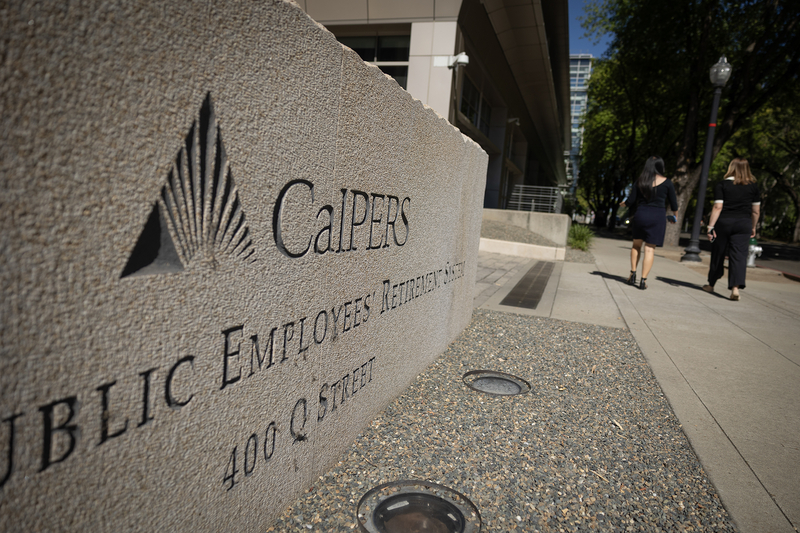
The cases turn on an important branch within CalPERS, its office of audit services. It’s charged with making sure that employers and workers are making the correct contributions toward their retirement plans, and that retirees are receiving their correct pension income. That’s critical to making the numbers pencil out at the nation’s largest pension fund, which as of this week manages a portfolio worth $658 billion.
In cases like Samsom’s, the audits are meant to prevent double-dipping, which refers to people who earn income from a California government agency while also receiving a pension. That’s why California pension law caps how many hours retirees can work for government agencies.
The audit that led to Samsom looked at Yolo County’s broader use of retired workers. County spokesperson Will Arnold said the county is reviewing the findings and “will determine whether any changes to its practices or procedures are appropriate.”
The audits sometimes catch workers and their employers by surprise and can lead to costly corrections for both sides. Organizations representing cities and counties, for example, in April wrote letters to the CalPERS board urging it to be more consistent in making decisions about when retirees can hold part-time positions.
The Legislature last month passed a bill that would require CalPERS to give better notice of audits to employers, and for those employers to inform relevant public employee unions of those investigations. One of California’s largest unions, the California School Employees Association, advocated for Senate Bill 1038 to speak up for members who get caught up in the audits and then have to repay money to CalPERS.
“Public employees and their unions are important stakeholders in the audit process, and quick resolution benefits everyone — especially in cases where an ongoing payroll reporting error compounds over many months or years,” the union wrote to lawmakers as it lobbied for the measure.
‘I love the work’
Samsom spent her career working for Riverside County. She retired in a role that involved overseeing the estates of people who died without beneficiaries, and taking care of the remains of indigent people.
She said the Yolo County Sheriff’s Office called her as she prepared to retire and sought her help standing up a similar position there. It wanted her help writing policies and procedures to create an office similar to the one she worked in for Riverside County.
Yolo County drew up a contract calling her a “consulting specialist,” and she went to work.
“I love the work. I enjoy the work. I was happy to help Yolo set up this office, they were so gracious and so appreciative,” she said.
Pay records published at the website Transparent California show she earned between $7,200 and $23,000 over the years she worked for Yolo County while also receiving a pension.
The CalPERS audit office this year determined that Samsom’s employment violated California pension law because her pay rate of $50 an hour was higher than a comparable position for a government employee, according to her lawsuit.
That led to the notice she received demanding that she repay all of her pension earnings or accept a 50% reduction in her retirement income.
“She thought she was doing a good thing,” said her attorney, Scott Kivel. “She had no idea that eight years later CalPERS would come after her and say, ‘You violated the law because you were paid this slightly higher amount than a comparable position.’”
Unresolved questions from CalPERS settlement
CalPERS retiree David Dowswell, another plaintiff in the new lawsuit, had a similar experience when the pension fund determined his work for the city of Dixon violated state law. He worked for the city through an independent contractor, an organization called Regional Government Services.
The city signed off on his work through the company in 2013, and both he and the city believed it complied with pension law.
He got a letter like Samsom’s after CalPERS concluded otherwise.
“The largest pension fund in the United States by far sends me an invoice that I owe them $1,064,000 and I have 30 days to repay. If you didn’t see it in black and white, there’s no way you’d believe it,” he said.
His pension was restored in April through a settlement the CalPERS board approved after an administrative law judge sided with him and three others who worked for Regional Government Services.
But the case was complicated. In fact, a California appeals court ruled in favor of CalPERS at an earlier stage. The final settlement did not require CalPERS to acknowledge a statute of limitations for working-after-retirement violations.
That’s partly why Dowswell wanted to file the new case, to have a judge resolve once-and-for-all how far CalPERS can go in clawing back money in cases like his.
“CalPERS shouldn’t be allowed to just run roughshod over their retired annuitants,” Dowswell said, using the California’s government’s term for working retirees. “(CalPERS) should be like any other agency, obligated to follow the law, not just apply it as they see fit.”
Sacramento