State treasurer to provide upfront cash for storm-hit communities
Sep 10, 2026 | 10:41 am ET

Description
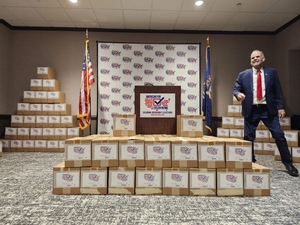
Indiana Treasurer Daniel Elliott, speaking, is flanked by Jonathan Whitham, Gary Mayor Eddie Melton, state Rep. Danny Lopez and Connersville Mayor Chad Frank, from left to right, at a Statehouse press conference on Sept. 10, 2026. (Photo by Niki Kelly/Indiana Capital Chronicle)
State Treasurer Daniel Elliott is making $50 million available immediately for communities hit hard by last month’s wind and flooding damage.
Cities, towns, counties, townships, schools, libraries and municipal utilities with damage to public infrastructure or facilities from a natural disaster can apply for up to $1 million. A disaster declaration is not required to apply.
“As I’ve had the opportunity to go to some of these communities, see some of the difficulties that these local leaders are dealing with, these folks who are working hard on the ground, talking to them on the phone, going to their locations, seeing people living in tents, I realized that as treasurer, I need to do something,” Elliott said.
He chairs the Indiana Bond Bank, which regularly lends money to Indiana governments for infrastructure projects at a discounted interest rate.
“Disaster relief funding takes time to arrive, and repairs to roads, utilities and public buildings often cannot wait,” a news release on the new program said. “RAPID lets an Indiana community begin that work now and repay as its insurance proceeds and recovery funding come in.”
RAPID stands for Recovery Advance Program for Infrastructure Damage.
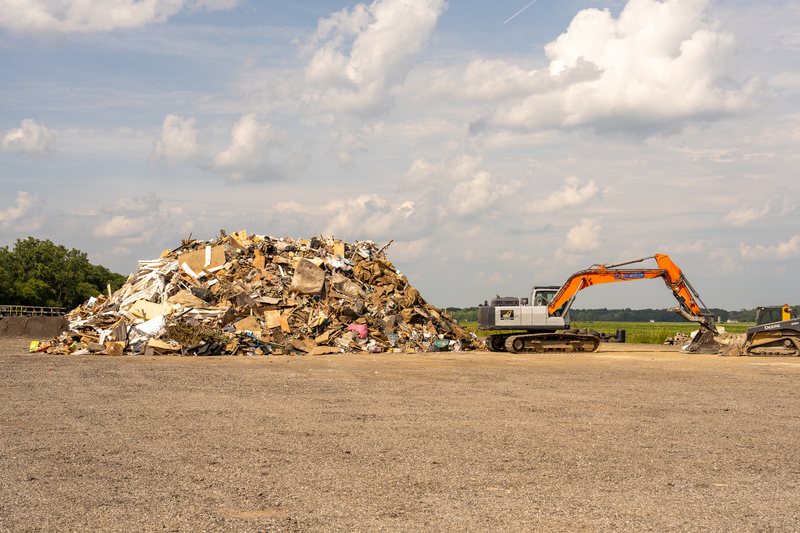
The storms that began Aug. 11 caused severe flooding in many communities in central and eastern Indiana and pushed the White River to record-high levels as it flowed into Indianapolis. Northwest Indiana incurred widespread wind damage, including more than 350,000 power outages in the area.
President Donald Trump granted a major disaster declaration for 21 Indiana counties, which allows individuals and local governments to seek aid. But that aid takes time to be delivered.
“This program covers a gap that has been a challenge for states and continues to be a challenge for every other state … by filling that gap between the time of the disaster and when that money starts to flow in these communities,” said Jonathan Whitham, executive director of the Indiana Department of Homeland Security. “Not every community can front the cash to begin that recovery process.”
That’s where the new program comes in.
It can be used for an array of needs, including debris removal and cleanup, damage assessment, repairs and replacement. Some specific examples given at Thursday’s press conference included repairing roads, replacing wastewater equipment ruined by being underwater and removing trees and debris from roads and sidewalks.
“Our community came together and cleaned up about 15,000 cubic yards of debris. We wanted to get it off the streets. We did not want people to look at everything they had lost, sitting out in the pile, rotting away, mold setting in, the smell, and then everything they had loved just disappear,” said Connersville Mayor Chad Frank.
He estimated the wastewater facility alone had suffered $5 million in damage.
Elliott said he can ask the Indiana Bond Bond Bank board for additional money if it is needed.
Whitham said the program will be a permanent way to help local governments hit by disasters. That leaves state disaster funds, paid for by a fireworks tax, to be directed to individual Hoosiers in need.
The money — including a low 2% interest rate — can be repaid with federal or state recovery funding, long-term financing, local funds or a combination.
Applications are due at least two weeks before the intended closing date of the loan. The next deadline is Sept. 16 for a Sept. 30 closing.
Indianapolis, IN