Remembering Flight 93 through the lens of healing
Sep 09, 2026 | 3:45 am ET
Description
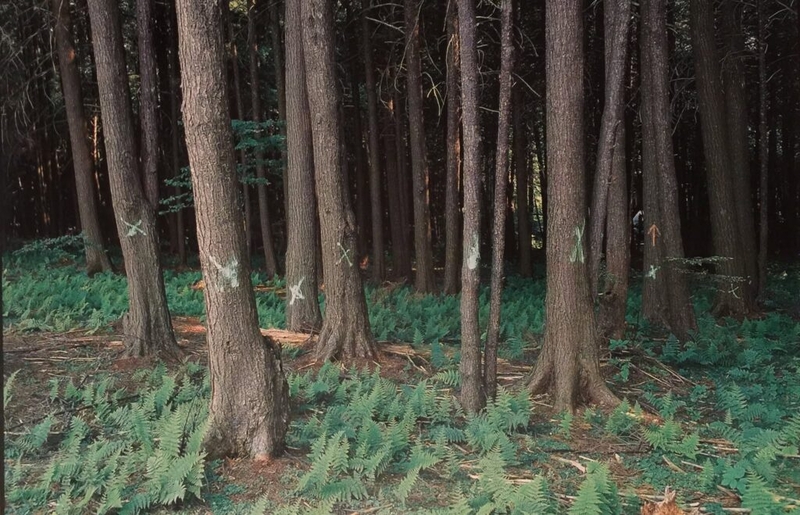
Hemlock trees in the woods that are part of the Flight 93 crash site. They were marked with spray-paint by searchers in the days and weeks after the crash. This photo is from sometime in 2006. (Photo courtesy of Tim Lambert)
The parking lot was dotted with just a handful of cars on this comfortable August morning. It was the first week of school for many families, so visitors were a bit more sparse than usual.
After a two-hour drive from Harrisburg, Pennsylvania, to this secluded spot in Somerset County, it was nice to stretch my legs and feel the sun on my face. I had nearly forgotten how windy it can be out here.
My brain sort of went on autopilot as my body started to slowly move forward, past the education center and a small group of tourists milling around, and onto a black granite walkway. Every few steps, I’d glance at an engraving in the pathway — marking the time and location of a terrible event that preceded what I’d see when the walkway simply ends.
Passing through two towering concrete walls, my eyes were focused on the overlook ahead. The expanse of fields of tall grasses, trees and flowers disappeared from view. I reached the end and stood in front of a waist-high glass window, marked with the phrase: “A common field one day. A field of honor forever.”
I was back at the Flight 93 National Memorial.
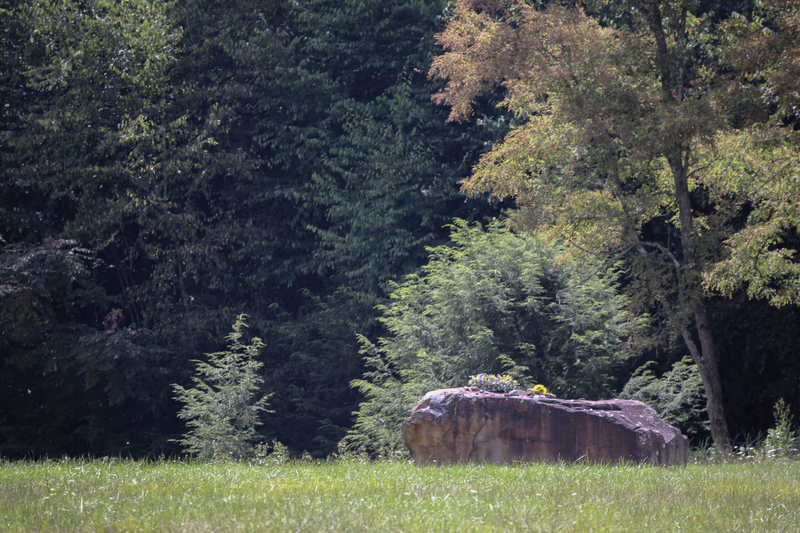
Instinctively, I glanced up at the blue sky. “It would have passed right over my head,” I thought as I looked out at the green field. A boulder marked the approximate area where United Flight 93 met the earth at more than 560 mph on Sept. 11, 2001. Forty innocent passengers and crew as well as four al-Qaida terrorists lost their lives there.
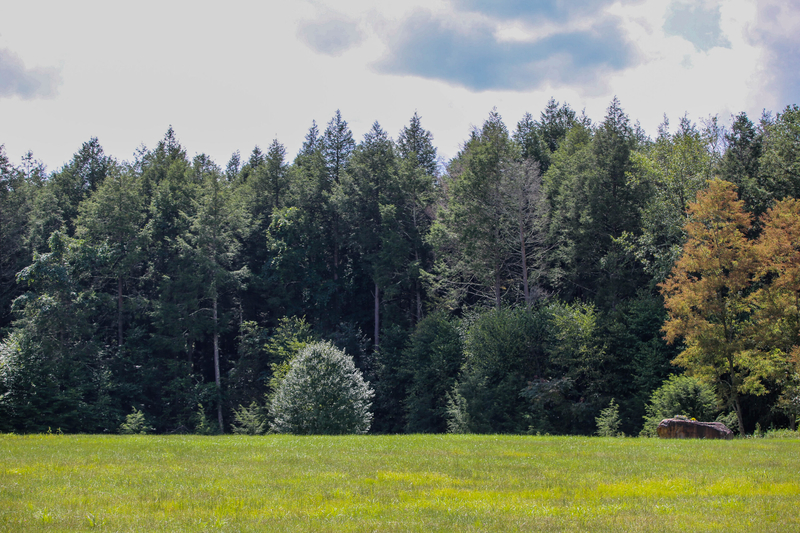
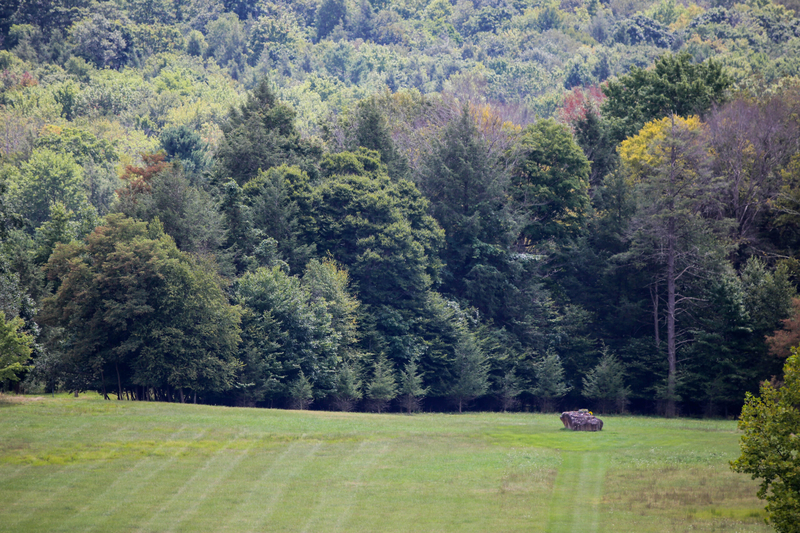
It was peaceful now. The sound of birds, crickets and cicadas merged as the wind picked up again. The grass had recently been mowed, and 60-foot-tall hemlock trees still stood around the area that’s come to be known as the “bowl.”
Has it really been 25 years since that horrible day?
The rebellion
Perhaps the story of Flight 93 has faded over the last quarter century, so it might be a good time to pause for a refresher.
The cross-country flight was headed from Newark, New Jersey, to San Francisco when it was delayed on the runway for about 25 crucial minutes. Takeoff occurred about four minutes before the first jetliner struck the World Trade Center in New York.
Once in the sky, the four al-Qaida terrorists took control of the plane somewhere over northeast Ohio. Because of the late takeoff, passengers and crew members were able to gather invaluable information through 37 phone calls to loved ones about the attacks in New York and at the Pentagon outside of Washington, D.C., and what was likely their fate too.
So, they came together to try to retake the hijacked jetliner and protect innocent people on the ground. Investigators believe the intended target was the U.S. Capitol, but when faced with the uprising, the terrorists chose to bring the plane down amid the struggle for control of the cockpit.
After strikes on the symbols of America’s financial and military strength, al-Qaida designed the fourth blow to destroy the very seat of democracy.
Thanks to the actions of 40 people who found courage amid the most terrifying experience of their lives, the terrorists failed in the final act of their attack.
A caretaker
This was my first visit to the memorial in Stonycreek Township since the remembrance event to mark the 20th anniversary of the attacks in 2021. I’m not sure why I haven’t been back. Life has a way of just churning along, I guess.
I was a visitor now, experiencing this out-of-the way field like any other person who found themselves drawn to it. I couldn’t help leaning over to someone who was asking their friend or partner a question and answering it for them.
“Yes. They did recover the black box.”
Force of habit.
You see, from 2001 to 2009, I was one of a handful of caretakers of this area that became known around the world on that horrible Tuesday morning. Some of the land that was considered an essential part of the crash site had been in my family for more than seven decades. It’s not talked about much, but there were at least five other private property owners in the same situation.
Back in the 1930s, my grandfather purchased about 200 acres just outside Shanksville and near Lambertsville. It eventually was whittled down to 163 acres after he and my father built several cabins and sold off pieces of land here and there. (My grandfather also worked on building the Pentagon during World War II, but that’s another story.) My father handed it off to me in the 1990s.
I never thought much about it (except when the property tax bill came), until that day in September.
‘Those trees are ours’
Like most journalists, Sept. 11 was a blur of trying to make sense of the senseless and calmly conveying what we knew to listeners, readers and viewers (while barely holding it together).
When I heard about a plane going down near Shanksville late in the morning, I wondered if my dad would know where the crash site was and if he could put me in touch with one of his old friends for an interview. Around 4:30 p.m., I stopped what I was doing in the radio station newsroom and glanced at the TV atop a filing cabinet. The network reporter was standing at the corner of the Lambertsville and Shanksville roads.
Instantly, I remembered my family’s piece of land and knew it was close to where that reporter was. “Nah. There’s no way,” I thought. All reports at the time said the site was at a reclaimed strip mine.
After covering a prayer vigil outside Harrisburg, traffic was nonexistent on my drive back to the station. I glanced at a sign that sent a chill down my spine: “I-81 to NYC is closed. Emergency personnel only.”
It wasn’t until I returned to my Gettysburg apartment early in the morning on Sept. 12 that my worst fear came to life. On my answering machine was a message from my dad, who had been following the story all day. He saw the video of the smoking crater and burned out trees just yards from the impact site.
“Those trees are ours.”
Behind the locked gates
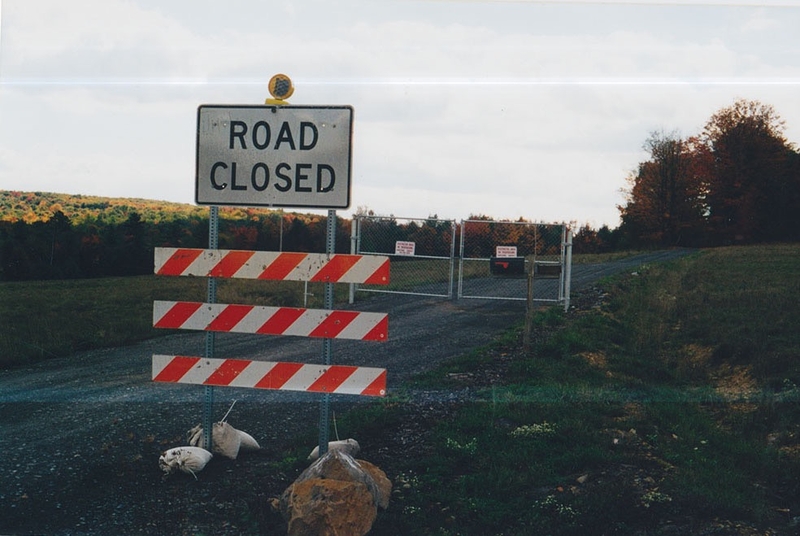
Since I was the only one of the affected landowners who lived outside Somerset County, it took several weeks before Somerset County Coroner Wallace Miller tracked me down to confirm my dad’s belief and offered me a tour of the site.
Faced with the invitation to visit a place that had been sealed off from the public since the attacks, I knew I had to approach it respectfully and carefully. So, I told Miller I was a journalist and would like to record our conversation and take photos.
His response? “What are you going to do? Report on yourself?”
“Trust me,” I thought, “I have no idea how this will work.”
To be honest, I wasn’t confident I could even find the property. I hadn’t visited since I was about 8 years old. My dad met me at the Pennsylvania Turnpike exit and I followed him there — on highways, backroads, past Shanksville and finally onto a dirt road.
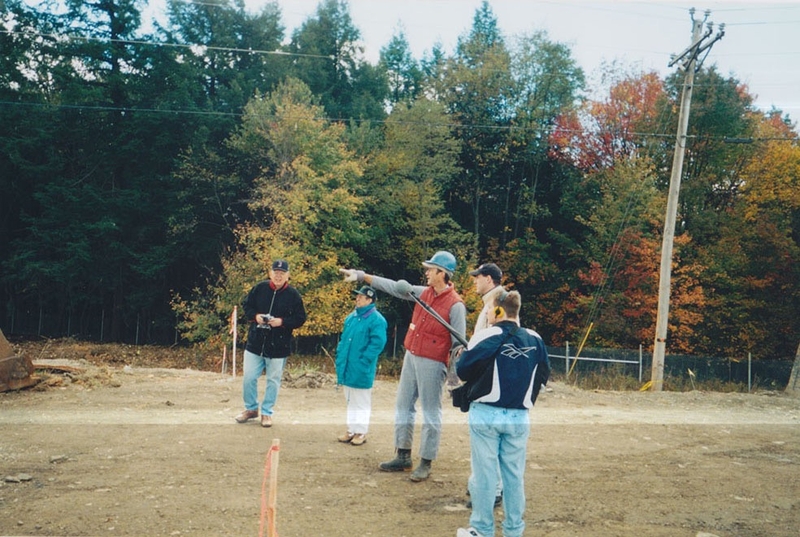
We drove to a security gate and a sheriff’s deputy checked for our names and waved us through to where Miller was working on cleanup with volunteers. As we got out of our cars, the wind picked up and immediately, we knew this experience was going to be like no other.
The air smelled like jet fuel.
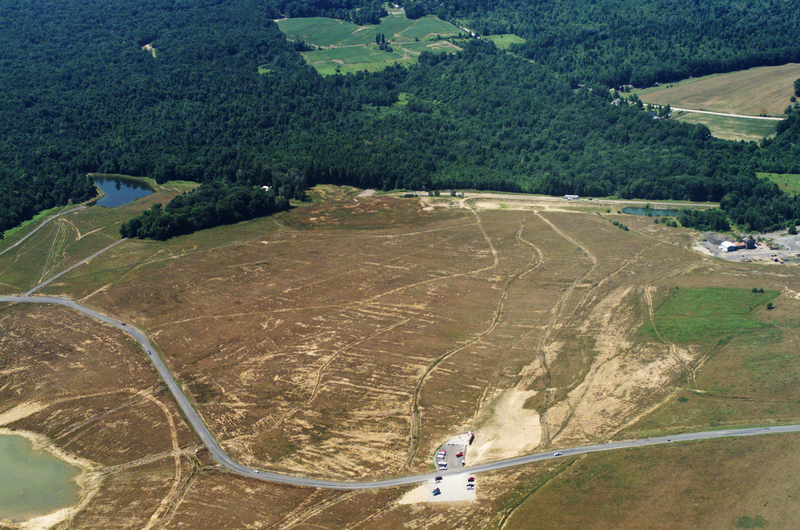
Miller explained how the investigation determined the plane was violently wagging its wings before flipping upside down. It then plunged straight into the reclaimed strip mine, with the first-class section and cockpit areas breaking off and exploding into the grove of hemlock trees. The rest of the plane telescoped itself into the ground. It disintegrated into thousands upon thousands of pieces.
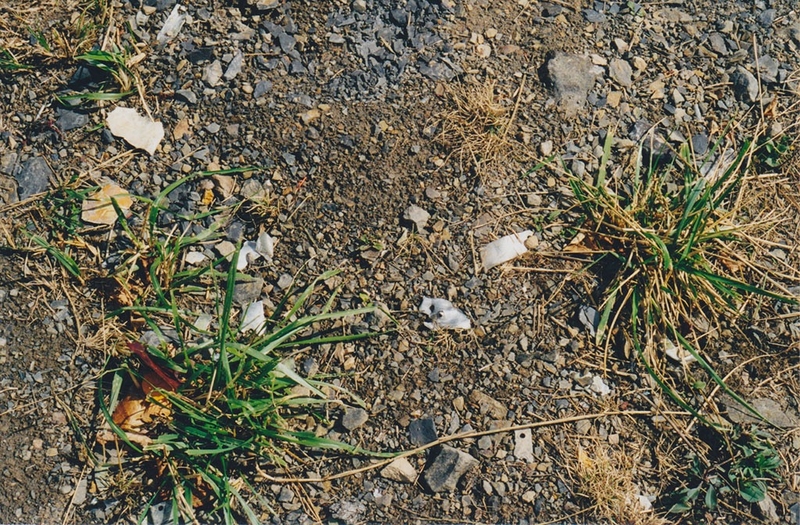
When I asked what he found from the plane, the coroner bent down and picked up a piece of jagged metal the size of a dime and said simply, “A lot of these.”
It was like a camera shutter in my head when I blinked. I mean, I literally heard a “click.” When I opened my eyes, the ground around us was littered with debris.
Flight 93 was all around us.
‘Tell their story’
Having lived in Gettysburg for about seven years and with deep interest in history, I realized right away the profound responsibility I now faced. This was the final resting place of 40 passengers and crew members who provided a devastated nation with a sense of pride and resolve for their actions over the skies of Somerset County.
My name may have been on the deed, but the land itself didn’t belong to me anymore. It belonged to the grieving families and would need to be protected and preserved.
I would soon learn that firsthand.
In December 2001, I was bracing myself for a meeting in Shanksville over whether the Flight 93 crash site would become a national memorial.
I was standing in the parking lot of Ida’s Country Store, talking to the mother or mother-in-law — I can’t remember — of flight attendant Sandy Bradshaw. In a phone call from the hijacked plane, Bradshaw had told her husband she was boiling water to throw on the terrorists.
As I sipped my coffee and shook off the chill, the woman looked me in the eye and asked, “So … you’re a journalist?” When I nodded my head, she simply said, “Tell their story.”
For two decades, those words were my guiding light. I found myself in a unique situation — journalist, landowner, caretaker — when it came to the site itself. Remember, the crash site had been sealed off from the public since 9/11.
It was a responsibility I took seriously. Some of my friends would describe it as obsessively.
I did my best not to take advantage of it. I just wanted to write about the journey the people left behind found themselves on after the crash. I tried to help people understand what that land was like in the months, years and now decades, after Flight 93 met the earth.
What I really had no way of knowing was that the backbone of my work would be about healing.
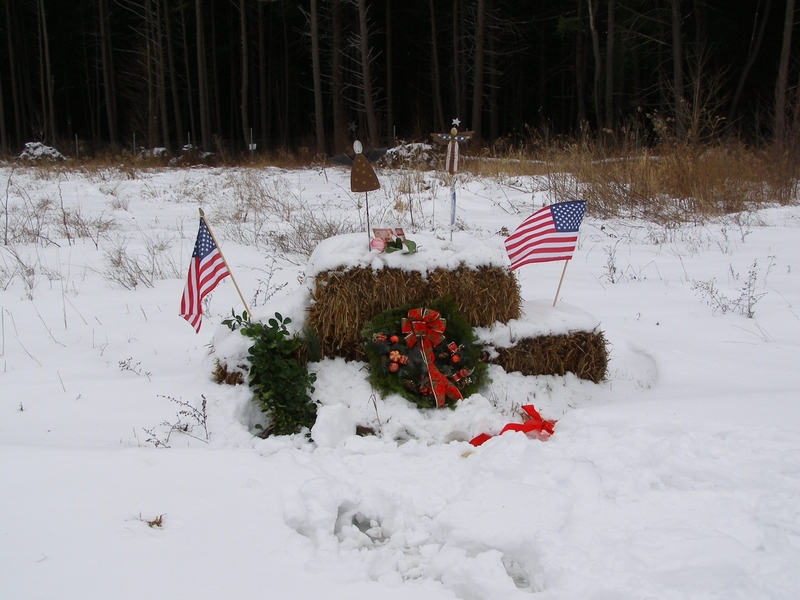
A bond forged in grief grows into friendship
A woman approached me during a break in a meeting of the families that Miller had organized in New Jersey in February 2002, and asked if I was a landowner.
When I told her I was, her next words nearly broke me. “I’m sorry you are involved in all of this and that you lost so many beautiful trees.”
It was Debby Borza, whose 20-year-old daughter, Deora Bodley, was the youngest passenger on Flight 93. And I couldn’t comprehend how, amid her grief, she could say something so kind … so thoughtful … to this stranger.
Little did I know how much of a force of positive nature Debby was and how much she would impact my life over the next two decades.
We would meet at the site — sometimes by chance, sometimes for an interview — in the place that served as her daughter’s final resting place. There was no other possible setting to talk about the things we shared.
Ahead of the five-year anniversary, Wally Miller called me one day in July and asked if I was going to be in Shanksville that weekend. I couldn’t figure out why he’d asked. My birthday was a few days away and I had just started dating someone (now my wife, Amy). There wasn’t a good reason to spend as much time at the site as I had in those first couple of years.
After sensing my reluctance, Wally admitted that Debby wanted to throw a surprise birthday party for me at the Pine Grill Restaurant.
How do you say no to that?
So, Amy and I made the familiar drive along the turnpike and walked into a raucous dinner with several family members who were in town for a Flight 93 Advisory Commission meeting. This was the first time she would meet my “other” family.
What was noticeable was how much they enjoyed being around each other. Theirs was a bond that had been forged in tragedy and grief, but that had grown into friendship and respect.
They sang “happy birthday” to me, which we captured on audiotape. I never shared it publicly.
That little piece of kindness I kept for myself.
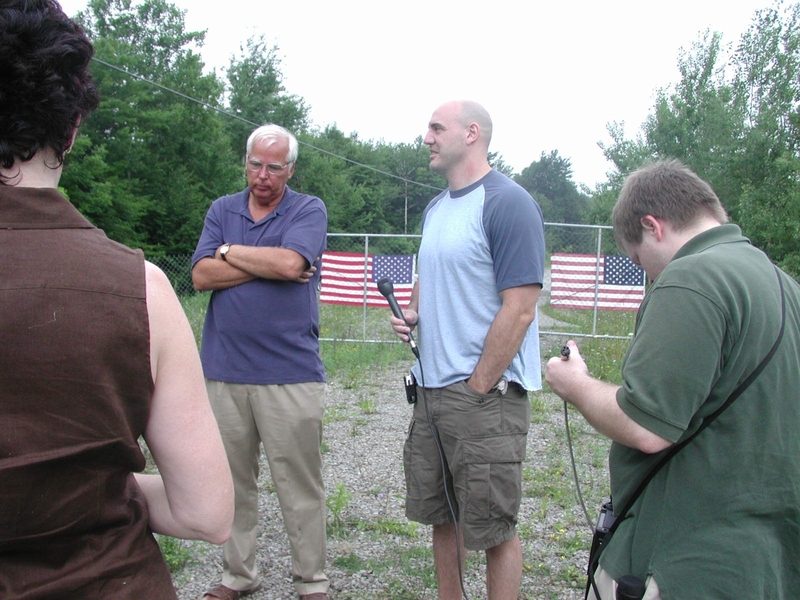
Healing
Walking down a winding path to a restricted area with locked gates, Ken Nacke reflected on his journey to cope with the loss of his brother Louis “Joey” Nacke on Flight 93.
As we entered, the first thing that hit him, he said, was the loss. Wishing he wasn’t there. Wishing he didn’t have to be here.
Then, he said hello to Joey.
It was 2011. I joined Ken as an outsider. No longer a caretaker, it was the first time I’d walked these familiar grounds since I sold the property — the 6 acres considered an essential part of the crash site to the National Park Service and the rest to the nonprofit group the Families of Flight 93.
A Baltimore County, Maryland, police officer at the time, Kenny and I had crossed paths numerous times over the years. He and his sister were in the audience when the federal government — in an unprecedented move — played the black box recording of the final moments of Flight 93.
The loss of his brother — a weightlifter with a Superman tattoo — hit him hard, and he struggled for several years to come to terms with its suddenness and senselessness. He had vivid dreams of being on the plane during the charge to try to regain control of the cockpit.
But, he found a way to turn the corner, thanks to a couple of bear cubs.
He was sitting on a bench near the tree his family planted in Joey’s memory, when the pair came out of the woods to explore. Suddenly, they began to play — wrestling and roughhousing — like only siblings can.
Just like he used to do with Joey.
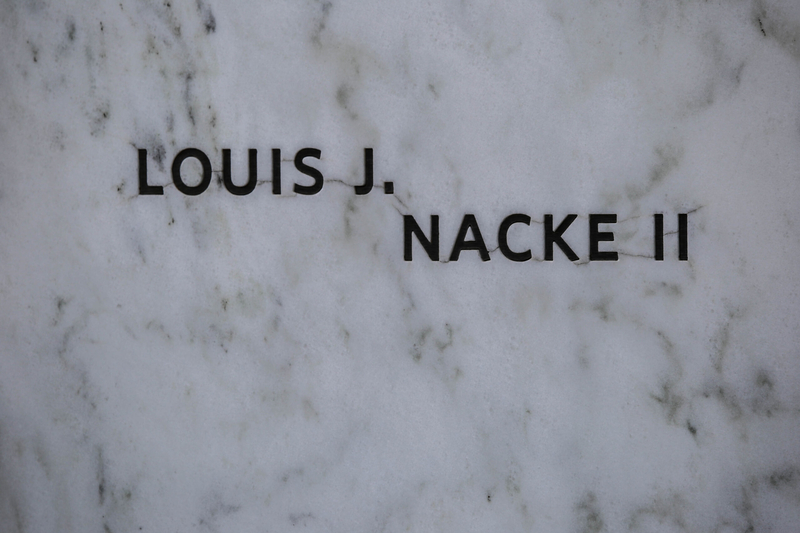
Could I? Would I?
I’ve only flown once on Sept. 11. It was in 2018, and I was headed to a journalism conference in Austin, Texas.
Standing in the line for security, plenty of thoughts and reflections ran through my mind.
Being in the airport is boring and mundane.
You wait around.
A lot.
On Sept. 11, 2001, the passengers and crew of those four flights had no idea what awaited them.
They probably flipped through books or listened to CDs on a Walkman.
All the while waiting to board.
Waiting.
Just like I was.
Ever since that horrible day, I glance around the plane anytime I fly … taking stock of who’s onboard.
Then, my mind goes to Flight 93.
If something goes wrong, will anyone step up?
Could I?
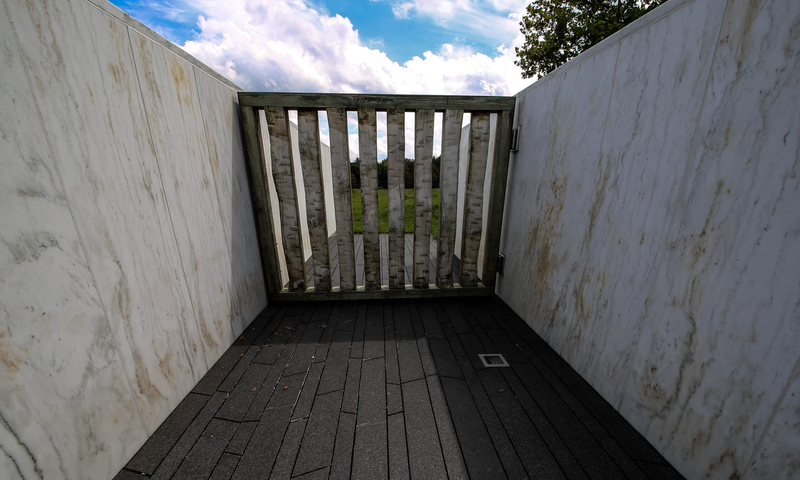
Twenty-five years later
Not much at the memorial had changed since 2021. But, I felt like it’d changed for me. I experienced it like everyone else, outside of catching up with one or two folks from the National Park Service who’ve been at the site since it opened 15 years ago.
I toured the visitor center and looked at the books for sale in the gift shop. I drove to the walking pathway that takes you as close as a visitor can get to the “sacred ground.”
Only the family members can enter the field and the woods. I walked along the Wall of Names, stopping to say hello to those whose families I had grown close to over the years. I peered through the giant wooden gate (made of hemlock) at the boulder — a gate that only opens every Sept. 11 to allow loved ones to walk to the site.
It’s a different experience now.
I’m not standing in the bowl or walking near the cabins my grandfather and father built as my eyes stayed glued to the ground — scanning left to right and right to left — looking for anything that doesn’t belong in this secluded spot.
A piece of wire.
A jagged sliver of metal.
Searching for reminders that Flight 93’s story is still being told.
Never forget
The lessons of how 40 passengers and crew stood up and became heroes must never be lost to time or relegated to footnote status in this nation’s history books. And in this time of polarization and partisanship, those lessons are more important than ever.
The Flight 93 National Memorial will always be more than “a field in Pennsylvania.”
This amazing group of strangers, when faced with an unthinkable situation and unimaginable fear, got together and took a vote on whether to fight back.
Let that sink in.
They trusted the democratic process.
They trusted each other.
May the nation always remember their selflessness and sacrifice.
May it always remember how they came together — from different backgrounds, different ages, different incomes, different countries — to decide together to fight back and stop evil in its tracks.
May their lesson always remind us it’s better working together than bickering among ourselves.
May that lesson never be forgotten.
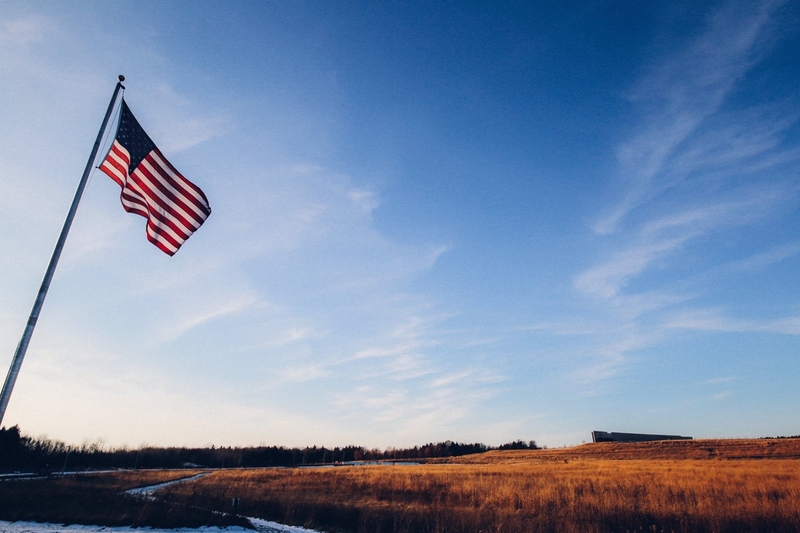
On the 20th anniversary of the 9/11 attacks in 2021, Lambert was working at WITF and teamed up with NPR’s Scott Detrow to produce an hour-long documentary telling the story of Flight 93 and how some family members found ways to cope with their grief — Sacred Ground.
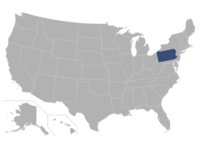
Harrisburg, PA