Wisconsin Democrats have their work cut out for them
Nov 14, 2026 | 4:00 am ET
Description
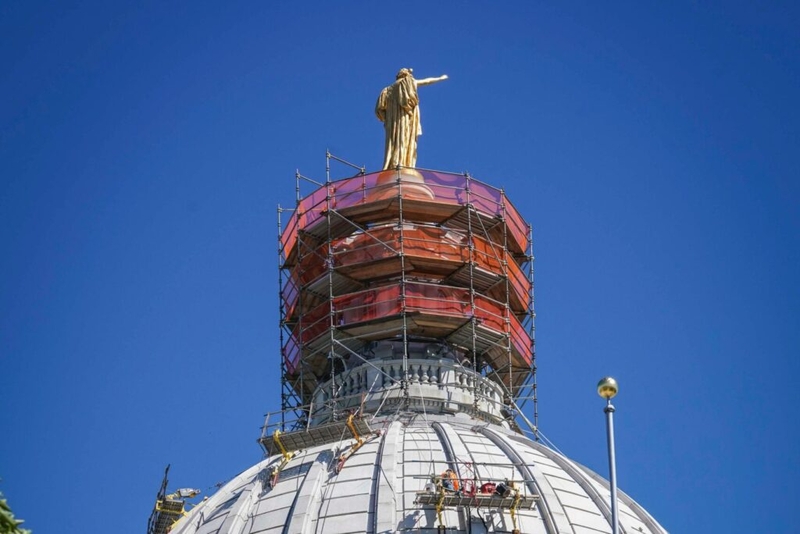
Scaffolding on the State Capitol of Wisconsin | Photo by Greg Anderson
There are a lot of big things Democrats in Wisconsin can do with their new, trifecta control of state government. Reinvesting in public schools — and shifting the burden for keeping schools afloat off local property taxpayers — would be a great start. So would overturning Act 10 (unless the state Supreme Court beats them to it), restoring the prevailing wage law and getting rid of so-called right-to-work legislation, thus reversing the largest decline in union representation in any state over the last 40 years. Add to that getting rid of PFAS, preserving public land, creating a nonpartisan redistricting process that ends gerrymandering once and for all. All of these things are possible when the new governor and Legislature get to work.
While state officials can’t reverse federal policies that are driving up the cost of living, let alone end the disastrous Iran war, they can do a lot to improve the material wellbeing of state residents just by turning the page on 15 years of austerity.
Wisconsin is sitting on a state budget surplus that mostly represents the money the state no longer pays to support schools. For more than a decade, Wisconsin has let its education historic system degrade while hoarding that money.
At the same time, local property taxpayers are overextended and grouchy from years of reaching into their own pockets to make up for the state’s failure to support schools.
Former Wisconsin Gov. Scott Walker’s assault on unions hurt teachers and other public employees directly, but it also created a much harsher, leaner environment for working people across Wisconsin and their families.
A recent report by the Illinois Economic Policy Institute highlights the ways anti-union policies in Wisconsin have harmed the middle class, degraded a once-great public school system and made life more expensive and less secure for working families.
This was not what Walker and his allies advertised when they pioneered the divide-and-conquer politics that pushed down union membership, wages and labor force participation for both union and non-union workers.
Supposedly, busting teachers’ unions was going to give schools the budget flexibility to do more with less, and slashing state funding for education would mean lower taxes. Instead, schools went into a long financial slide, accompanied by cuts to programs, increasing class sizes and declining test scores, while property tax rates soared.
Walker and the Republicans talked a lot about making Wisconsin “open for business” and ushering in a new era of prosperity. But the promised 250,000 new private sector jobs never materialized, and wages, job growth and GDP languished compared to our neighboring Great Lakes states, as “data wonk” Bruce Thompson wrote in an analysis for Urban Milwaukee of the effects of Act 10.
All of this, plus Republicans’ stubborn refusal to accept the federal Medicaid expansion for years before President Donald Trump’s massive assault on healthcare, contributed to Wisconsinites’ particular struggles with affordability — the issue that drove the blue tsunami across the country in the 2026 midterms.
Voters in the last election expressed serious doubt about some of the core tenets of Republican economic policy, including the idea that tax breaks for the very rich will make us all more prosperous, and spending on schools and other basic social goods is a burdensome waste.
In the Republican radio address this week, incoming Republican Senate minority leader Julian Bradley acknowledged the stunning midterm rebuke to his party, saying “folks who are struggling to get by want to know that there’s a path to get ahead.”
“We hear you,” he said on behalf of his fellow members of Wisconsin’s severely diminished Republican caucus. Then he doubled down on the philosophy that got them where they are today: “If the new Democrat majority wants to focus on affordability, then we should be talking about meaningful tax cuts, returning the surplus to the families who earned it and clearing away the red tape that makes it harder to build a home or hire a worker.”
If voters wanted more of the same Republican tax cuts and deregulation Bradley is pushing, and which reached a new peak with Trump’s massive “One Big Beautiful” transfer of wealth from the many to the few, the election wouldn’t have gone the way it did.
According to Bradley, Democrats are talking about “higher taxes, more spending, redrawing maps” and “not a single one of these ideas will lower your grocery bills.”
It’s true that ending Trump’s tariffs and the war in Iran that is driving record-high diesel prices would be the fastest route to cheaper groceries. But state Democrats can do a lot to improve Wisconsinites’ economic wellbeing by bringing back middle class jobs and union protections that raise wages. Using state money to support schools will lower property taxes. Investing in healthcare, child care, mass transit, environmental protection and clean energy will improve the economy and the future of our state.
Wisconsinites are eager to see government get to work to get those things done.
Madison, WI