Q&A: State Sen. Mike Reese, McNeese State president
Sep 08, 2026 | 4:52 pm ET
Description
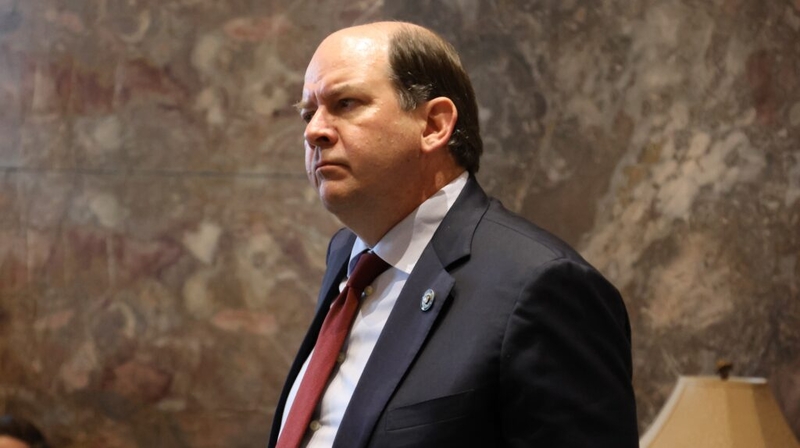
Sen. Mike Reese listens to debate on the floor of the Louisiana Senate on May 27, 2025. (Wes Muller/Louisiana Illuminator)
Mike Reese is both a Republican state senator from Leesville and president of McNeese State University in Lake Charles, having taken on the latter role July 1. In a recent interview, he detailed his work chairing a study committee looking at Louisiana’s higher education funding formula.
This transcript of the interview has been edited for length and clarity. The full interview can be heard on Episode 67 of “The Light Switch” podcast.
Piper Hutchinson: Why is the state studying the higher education funding formula?
Mike Reese: I’m getting all these calls from institutions in my district or in other areas of the state that are saying if we don’t provide this additional funding, that they’re going to have a difficult time providing the service they provide. It has finally kind of built to this point where I think that the legislature has to kind of pause to say, “Well, wait a minute, we need to better understand what drives this formula.”
I think that the legislature doesn’t want to be in the business of picking the winners and losers.
Hutchinson: What are the complaints that you’re hearing from the universities?
Reese: Overall, it’s just it’s a total level of funding, right? They’ve said our portion of state support has diminished, and it’s more and more difficult to meet our mission with the amount of state support that we get. And we don’t have a lot of areas to go to, right? You have the state support, we have some scholarship support, we have some federal support in the way of Pell Grants, and a few other grants that we may receive.
And then after that, it’s really the transfer of the cost to the students through tuition and fees. We’re very reluctant to continue to transfer more of that cost.
Hutchinson: This task force is looking at how to allocate the funding that has been given to higher education. But you mentioned that there’s been a decrease in state support. Are there also discussions on the legislative end about providing more funding for the universities?
Reese: I think that’s absolutely the case. So I think that you know part of this process is education to the rest of the legislators, as much as it is a review of how the formula currently works. Because the formula, if you actually stretched it out to what it would predict would be needed, it would be more like $2 billion, and we’re funding it more at the tune of about $700 million. So we know that it’s constrained.
Higher education in Louisiana, short $800M, appears headed for a funding overhaul
Hutchinson: Being in the legislature, you’re very aware that there’s never enough money to go around. Can you tell us about some of the constraints contributing to that for universities and the state as a whole?
Reese: There’s an anticipation that our state’s going to receive less in Medicaid funding from the federal government. In Louisiana, it’s not constitutionally protected — the funding responsibility of the state to higher education — and so when we have to start cutting the budget somewhere, typically one of the areas that has been the bill payer for other state responsibility has been higher education. We don’t want to be constrained by the lack of a qualified workforce.
Hutchinson: One of the big questions that predicated this task force and some lawmakers’ interests in the funding formula was this “underrepresented minority” metric within the funding formula. That’s now been taken out, but can you tell me a little bit about what the concern was about that for lawmakers? Was it a concern about at least the perception that universities were continuing to fund DEI after lawmakers have made it clear that that was no longer a priority?
Reese: Clearly the legislature had a position on that. Even the federal government had a position on that, and I think that it was meant to not be identified in the formula.
Hutchinson: Do you think the task force report itself is going to include an overhaul of the formula or call for changes to the formula?
Reese: I don’t know yet. Is it a matter of just that we need more money going into this formula that works pretty well, or do we need a little bit of both? Do we need some tweaks to the formula to address some of the problems that this commission is going to highlight, in addition to the legislature perhaps enhancing the amount of state funding going into the formula?
Hutchinson: How are you managing two pretty big jobs?
Reese: Right now we’re not in session. I very recently resigned from all of my committee assignments. I retained this higher education funding formula [task force] because I think it’s so important and timely right now in Louisiana’s growing economy, and then I’ve retained a couple of military-related committee assignments that don’t meet frequently but are vitally important to my district. And so I think this is vitally important work. It’s hard for me to do the work in higher education and the rest of my colleagues do the work in higher education if we don’t get this right in terms of the funding formula.
Baton Rouge, LA