2026 Tennessee state House election: Five races to grab attention of both parties
Sep 03, 2026 | 6:01 am ET

Description
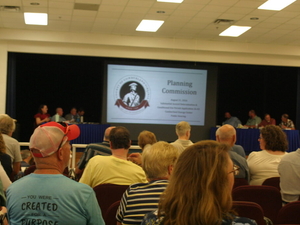
Tennessee Democrats are trying to flip a handful of legislative seats to pick up seats for the first time since 2018. (Photo: John Partipilo/Tennessee Lookout)
Five Tennessee state House races are likely to draw the most attention of both political parties this fall as Democrats look to pick up seats in the lower chamber for the first time in eight years.
Democrats hold two of the seats, while Republicans hold the other three. No matter the outcome, Republicans will maintain their supermajority control of the state House, since the party holds a 75-to-24 advantage.
The most flippable seat for Democrats is a Memphis district held by GOP state Rep. John Gillespie. The District 97 seat is the only one a Republican holds in the state legislature that former Vice President Kamala Harris won in the 2024 presidential election.
Gillespie ran about 5 percentage points ahead of Republican President Donald Trump in that election, defeating Democrat Jesse Huseth by around 1,100 votes. The 2026 race is a rematch.
Republicans’ top pickup opportunity is a Clarksville seat held by Democratic state Rep. Ronnie Glynn. Trump carried the District 67 seat in 2024, but Glynn won a narrow 131-vote victory that same year.
Other potential opportunities for Democrats include a district in Knoxville where Republican state Rep. Elaine Davis faces Democrat Bryan Goldberg. In 2024, Davis beat Goldberg by about 2,500 votes.
Democrats also plan to challenge a Clarksville seat, where Republican state Rep. Michael Lankford faces Democrat Allie Phillips. Phillips ran in 2024 against the late state Rep. Jeff Burkhart, who beat her by about 2,000 votes; Lankford was appointed in December to serve out the rest of Burkhart’s term.
Republicans want to flip a seat in Nashville’s suburbs that Harris won with just over 50% of the vote. Democratic state Rep. Caleb Hemmer held the seat the past four years, but he chose not to run this cycle. Democrat Mark Proctor faces Republican Bill Hancock this year.
The Tennessee House of Representatives has steadily moved in the GOP’s favor in nearly every election since it first gained control of the lower chamber in 2008. The party has held 75 seats since 2022, when the state last redrew House districts.
State Rep. John Ray Clemmons, a Nashville Democrat who chairs the state House caucus, said the goal for now is holding all their seats.
“The map is so gerrymandered, flipping any seat would be a win,” Clemmons said.
The national political environment should favor the Democratic Party, as New York Times polling averages show Trump with an approval rating of 38% and the generic ballot polling shows the party leading Republicans by 5-7 percentage points.
State Rep. William Lamberth, a Portland Republican and the majority leader for the House caucus, said the state GOP’s goal is to control all 99 seats, and they want to challenge “every race where a Republican is running against a Democrat.”
Hanging over the election is a threat of redistricting in 2027
Tennessee redrew its U.S. congressional map in May after the U.S. Supreme Court struck down a crucial part of the Voting Rights Act that required states with a history of racial discrimination to draw majority-minority districts to ensure Black representation.
The decision allowed state lawmakers to further gerrymander the state’s U.S. House map so Republicans could hold all nine of the state’s congressional seats, despite Democrats winning between 35-40% of the vote in past elections.
State lawmakers chose not to redraw any of the state legislative maps because the 2022 redistricting helped the party reach its current level of 75 seats. But depending on the results of the 2026 election, that calculus could change.
Clemmons said he is “very concerned” about the possibility of Republicans drawing a new map if Democrats make any gains.
“They will 100% redraw the map and try to rig it if they lose,” he said.
Nashville, TN