Somerset County schools book policy faces new State Board challenge
Sep 03, 2026 | 4:30 am ET

Description
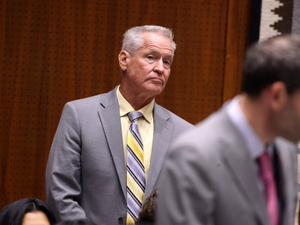
A Somerset County schools policy that would place "young adult" literature out of reach of almost all K-12 students faces a new challenge from critics who say it violates state law and the First Amendment. (Photo by Terry Vine/Getty Stock Images)
A Somerset County School Board policy that makes young adult books in school libraries unavailable to almost all students in county schools violates state law and the First Amendment, an appeal to the State Board of Education claims.
The appeal, filed by a county parent, the Somerset Education Association and the Maryland Association of School Librarians, targets board Policy 500-19, which requires that all young adult books be put in an adult section of the library and be prohibited for any student under age 18.
The updated policy, adopted by the county school board last month, also calls for discipline of school librarians for “insubordination” if they fail to follow the policy.
Besides violating free speech guarantees of the First Amendment, the appeal says the policy violates Maryland’s Freedom to Read Act, a 2024 law that prohibits books and other school library materials from being removed until a formal process is conducted. It also restrict disciplinary action against school employees who follow the law.
“Policy 500-19 nevertheless directs SCPS (Somerset County Public Schools) officials to favor materials that support the… beliefs and values endorsed by the Somerset County Board of Education,” according to the appeal. “While disfavoring materials associated with anti-religion, victimhood, rebellion, sexuality, and other ideas.”
Somerset County Superintendent David Bromwell declined via email to comment on the appeal Wednesday.
But Phaedra Spencer, president of the Somerset teacher’s union and a high school teacher and librarian, said the amended policy allows a majority vote of the school board to remove and purchase books in school libraries.
“Do I have to ask permission because the kids spilled Kool-Aid on their book [and] take it out of the library? Am I going to get in trouble because I didn’t ask you?” asked Spencer, who has a master’s degree in school librarianship. “That policy is really, really tying us down to be able to do anything.”
The appeal could extend a 60-day stay on the policy that was imposed last month by state Superintendent Carey Wright. The stay will remain in effect through Oct. 20, but can be dissolved sooner by the superintendent or state school board.

The Freedom to Read Act was approved by the legislature two years ago, during a time of national conversations on the subject of book bans.
Among its provisions, the law requires local school officials to set policies and procedures to review objections to books made by a student, parent or guardian. Local officials must also create reasonable timelines to conduct and conclude a review, and it says that books and other materials must remain available for use by students and school personnel until the review process has ended.
Maryland became one of the first states in the nation with strong protections to preserve access to information in libraries, as well as penalties for those who attempt to thwart access. It also prohibits retaliating against employees for doing their jobs.
‘I don’t care what anybody thinks, except for Jesus Christ’
The five-member Somerset County board voted Aug. 18 to amend its library policy follow what it said was U.S. Supreme Court precedent “in applying the school/library policy to students. All library materials must be educationally suitable for minors.”
The policy defines a child as age “0-18” and young adults as those ages 18 to 26. It prohibits minors from accessing “adult library materials.”
In terms of discipline, the policy says “the superintendent shall immediately implement disciplinary procedures for insubordination of adults in charge of ensuring proper educationally suitable material is accessible for minor children in Somerset County Public Schools.”
Board Chair Matthew Lankford, Vice Chair Andrew Gleason and Mary Beth Bozman voted for the policy. John Robertson voted against it and William McInturff Jr. abstained.
Before the meeting ended, Lankford had some closing remarks.
“When I really read these books, how many people have read these books? I’ll tell you the truth, I read them and it disgusted me,” he said. “So we give them books that’s got a hundred F-bombs, and we don’t expect them to use it in the classroom at our teachers. These are the things that, I don’t care what anybody else thinks, except for Jesus Christ, I don’t think they should be given to our children.”
But critics said the policy would put books like “The Diary of Anne Frank” or “To Kill a Mockingbird” off limits.
A week before the vote, the state Librarians Association wrote that the policy “demonstrates that the board is giving itself standing to flag, review, pull, or veto books on its own motion.” The association noted that Somerset’s policy would restrict certain books from being read because the school district should have “classical literature with well-known authors should be the priority when selecting books and media materials.”
In addition, the association said standard industry practice identifies young adult books as those for ages 12 to 17, not 18 to 26. It said the policy would remove award-winning books such as “All American Boys” (which highlights police brutality through the eyes of two high schoolers, one Black and one white) and “All Boys Aren’t Blue” (an author’s memoir of growing up Black and queer).
The policy “starves students of different perspectives and viewpoints, while also failing to get them excited about reading by making books available far beyond the types they see in the classroom,” the library association wrote.
That letter and other letters opposing the policy are included in the appeal.
Annapolis, MD