Lacking federal funds, local groups press to continue legal aid for immigrant children
Sep 02, 2026 | 8:30 pm ET

Description
A migrant child sits in the back of a border patrol vehicle after being apprehended near Ruby, Arizona, in June 2024. The Trump administration's decision to cancel a contract for legal representation for unaccompanied immigrant minors has left local legal aid groups scrambling. (Photo by Brandon Bell/Getty Images)
A legal motion filed in late August, begins this way:
“On the morning of August 6, 2026, in an immigration court in Los Angeles, an unaccompanied child appeared before an immigration judge – facing a Department of Homeland Security attorney and the possibility of removal. The child had no legal representation and appeared on their own.”
This is no anomaly.
That child is one of thousands of unaccompanied immigrant children across the country fighting for the legal services they are guaranteed by law, along with the right to shelter, healthcare, education and screening for human trafficking.
But the Trump administration has pulled funding to a nationwide network of nonprofits that represent children who have crossed the border without parents or legal papers. That has left groups like the Amica Center, based in Baltimore and Washington, to try to continue representing children without funding.
“No child should be forced to face immigration court alone,” said Michael Lukens, the executive director of the Amica Center for Immigrant Rights, which was a party to the August court filing in California. “Yet that is exactly what the Trump administration is trying to do. Every day without legal representation puts unaccompanied immigrant children at greater risk.”
Scott Bassett, a managing attorney of Amica’s Children’s Program, said its staff of lawyers, paralegals and social service professionals is currently monitoring more than 700 unaccompanied immigrant child cases.
Legal aid for immigrant kids in question after Trump administration pulls contract
While the Amica Center has been able to continue providing services, smaller nonprofits have had to cut back assistance or close altogether. Other groups, like the Chacón Center for Immigration Justice at the University of Maryland Francis King Carey School of Law, are trying to build net networks to reach unaccompanied minors.
But advocates say they are up against an immigration system that is not working in the child’s best interest and badly in need of reform.
“Personally, I think that it needs to come from Congress,” said Chacón Center Program Director Francisco Flores. “At the bare minimum, representation, specifically for children, if someone has an attorney, it gives them a better fighting chance.”
Federal government moves to end funding
Unaccompanied immigrant children are not held by the Department of Homeland Security but are placed in the custody of the Department of Health and Human Services, which is supposed to provide for their care and legal representation if there is no adult relative who can take them in.
But in December, HHS stopped paying the Acacia Center for Justice – which distributed funding to a network of some 100 providers, including Amica – in a dispute over access to sensitive client data. “We told them that ethically we could not provide it to them,” Bassett said. “They claimed that was non-performance and stopped paying us.”
On July 31, HHS allowed the contract with the Acacia Center to expire without renewal, leaving no plan for how these children would continue to receive representation.
HHS designated the nonprofit U.S. Committee for Refugees and Immigrants to temporarily take charge. But in the August court filing, Amica and three other legal service providers said USCRI attorneys frequently fail to show up at hearings “in any capacity, arriving late or leaving early, and remaining silent at moments when friend of-court services would have been valuable,” as in the California case.
The filing asked the U.S. District Court for Northern California to intervene to enforce the law.
Officials with HHS did not respond to requests for comment.
Maryland Hispanic student enrollment declines amid immigration fears
Expediting cases, compromises due process
Meanwhile, Bassett said, immigration judges have been under pressure to expedite cases, and tighten up any extensions, moves he says compromise the due process rights of unaccompanied minors.
“The immigration removal proceedings are just outrunning the few years you’d have to otherwise wait for access,” or the legal journey to a green card. He said advocates “are seeing a lot of kids with approved Special Immigrant Juvenile Status or pending status” who are being pressured by judges to take voluntary departure.
The Chacón Center trains future lawyers in its clinics, and represents immigrant clients in court. Faced with the lack of representation for unaccompanied minors, center Director Maureen Sweeney says one new initiative seeks to ensure that immigrant children in foster care are properly screened.
“We want to work with the state and the counties and the lawyers who represent these children to make sure that the immigration piece is being taken care of, and part of that will also be recruiting pro bono attorneys who would be willing to take on those cases and support these kids,” she said. “It’s a vulnerable group, but [the project] feels doable.”
It is not known how many of the 3,800 abused, neglected or abandoned children and teens in Maryland’s foster care system are also unaccompanied immigrants, but Flores said the center will seek to identify them.
Building a network
“Right now, we are focusing on creating this referral [and] training network, seeing what is already happening, that [attorneys] have everything they need to take on one of these cases using connections we have developed over the years with the pro bono, the nonprofit and the private bar,” Flores said. “We want to make sure that no child is ever overlooked or that they always have access to representation.”
For Flores, the mission is personal. Born in the United States to Salvadoran immigrants, he said he turned to a career in immigration law after witnessing the struggles his parents and his community faced to gain legal status.
For the last 13 years he has worked as an advocate for immigrant children, until recently as a senior attorney at the Amica Center.
“It makes me feel that if I can help them, give them the opportunity that I had, then I know that they are going to take that chance, run with it and do amazing, great things for this country,” he said.
A ray of hope
As for that child described in the August filing, it said that, “Without legal advice and almost certainly unaware of their rights – to the extent any children could understand the concept of legal rights – the child requested voluntary departure from the United States.”
“An attorney from the U.S. Committee for Refugees and Immigrants was in the court room … and said nothing as this child asked to waive all rights to seek asylum, likely not knowing whether the child qualified for asylum, Special Immigrant Juvenile Status, or any other relief,” the court document said.
But another lawyer with experience with unaccompanied minors, witnessed the scene and spoke up as friend-of-the-court. He asked the judge to continue the case to give the child a chance to consult an attorney.
The judge granted the request.
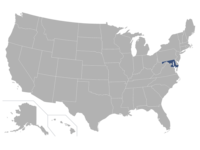
Annapolis, MD