NJ wants US Supreme Court to review Kalshi’s sports markets
Sep 02, 2026 | 3:22 pm ET

Description
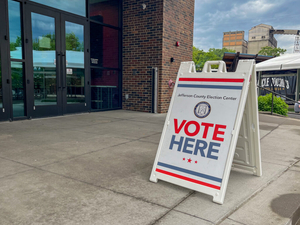
New Jersey wants the U.S. Supreme Court to review whether states can regulate prediction markets' sports bets. (Photo by Anne-Marie Caruso/New Jersey Monitor)
New Jersey asked the U.S. Supreme Court on Wednesday to review an appellate ruling that found a federal 2010 law bars states from regulating sports bets offered on prediction markets, arguing the high court should step because lower courts have split on this issue.
In a voluminous 332-page filing, the state argued a recent 2-1 decision from the U.S. 3rd Circuit Court of Appeals would effectively kill all state regulation of sports betting — including for casinos — and expose existing sports book operators to violations of federal law. That decision found sports bets offered by platforms like Kalshi and Polymarket can only be regulated by the federal government.
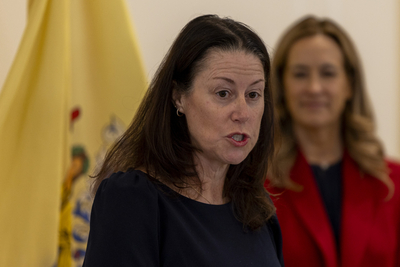
“Companies like Kalshi claim to offer legal sports betting in all 50 States, but they refuse to follow the gambling laws of any State,” said New Jersey Attorney General Jen Davenport. “These companies have no right to offer their sports bets without following state law, which is why dozens of States across the ideological spectrum have opposed them.”
In April, a divided 3rd Circuit panel ruled that sports bets offered by prediction markets were swaps, a type of financial derivative that can only be regulated by the Commodity Futures Trading Commission as a result of amendments made by the 2010 Dodd-Frank Act.
That decision, which for the moment bars New Jersey, Delaware, and parts of Pennsylvania from regulating prediction markets’ sports bets, is at odds with a ruling the 9th Circuit issued last month.
The 9th Circuit, which covers Nevada and other states, was dubious that Congress had intended to overhaul decades of gambling regulation “based on broad definitions of the words used in a Wall Street Reform Bill.”
In a statement, a spokesperson for Kalshi said the 3rd Circuit’s decision is the correct one and argued state regulation would be unfeasible for a business that operates across the country.
“Kalshi is an open, nationwide financial exchange. It cannot be regulated by 50 different regulators,” said Dani Lever, the spokesperson. “Both the 3rd Circuit and the District of New Jersey sided with Kalshi because the CFTC’s exclusive jurisdiction preempts state law. While New Jersey points to a recent decision in the Ninth Circuit, that decision agreed with that key principle.”
While the 9th circuit agreed the Commodity Futures Trading Commission has exclusive jurisdiction over swaps, it said the agency lacks the clear congressional authorization needed to treat sports bets as swaps. Kalshi advertises that it offers “legal sports betting in all 50 states.”
The disconnect between the two circuit courts demands that the U.S. Supreme Court step in, New Jersey argued in legal filings, adding more than 40 states had been opposed to Kalshi’s view of the legality of its sports bets.
“Given the volume of litigation cascading through the federal and state courts on this issue, and the Ninth Circuit’s explicit disagreement with the Third Circuit, there is no prospect that this disagreement will resolve itself absent intervention by this Court,” New Jersey said in court filings.
The state said allowing the 3rd Circuit’s decision to stand would effectively kill regulatory powers over sports betting the U.S. Supreme Court granted to the states in Murphy v. NCAA, which found a 1992 law unconstitutionally outlawed sports betting in most states.
Operators, including casinos, could escape state regulation just by self-certifying their sports bets with the Commodity Futures Trading Commission, New Jersey argued.
Further, because the Dodd-Frank law bars companies from offering swaps unless they are registered with the commission, accepting the prediction market’s reading would expose state-licensed sports books to nearly a decade of violations of federal law, the state said in filings.
“Kalshi does not abide in any way with our state’s gaming laws,” said Mary Jo Flaherty, interim director of the state’s gaming enforcement division. “This is a states’ rights issue. In New Jersey, gaming is prohibited by its Constitution, other than for exceptions approved by New Jersey voters. In this case, the State is upholding the will of New Jerseyans regarding the manner in which gaming can be conducted.”
Companies like Kalshi claim to offer legal sports betting in all 50 States, but they refuse to follow the gambling laws of any State.
Sports betting has a particular nexus in New Jersey. The state led litigation that ended a ban on sports betting under the Professional and Amateur Sports Protection Act of 1992.
Former Gov. Chris Christie, who signed laws legalizing sports betting here and whose administration opposed the federal sports betting ban in court but left office before the case concluded, predicted New Jersey would again prevail before the Supreme Court.
“It’s betting. It’s not an investment. It’s not a commodity. The Supreme Court has ruled that states have the right to regulate sports betting. I think that it’s going to go to the Supreme Court, and I’m confident [the prediction markets] will lose,” he told the Philadelphia Inquirer earlier this week.
Trenton, NJ