‘It’s shameful’: New Mexico veterans increasingly turn to food banks after SNAP rollbacks
Oct 19, 2026 | 3:30 pm ET

Description
New Mexico food banks report serving more people with less food after federal rollbacks to SNAP and an emergency food assistance program. (A food drive at Holloman Air Force Base in June 2025. Photo courtesy of The Food Depot)
New Mexico food bank officials told lawmakers recently that federal rollbacks to food assistance programs have impacted veterans’ food security, and left food banks across the state struggling to provide more help with fewer resources.
Previously, veterans received an exemption from the Supplemental Nutrition Assistance Program’s work-requirement rule. Under the “One Big Beautiful Bill Act” signed into law last year, veterans now must prove they are working, volunteering, participating in job training or looking for work for at least 80 hours a month to keep their food assistance benefits beyond three months.
“We see more veterans seeking assistance at food banks and our network of food security partners than we have in the past because they can no longer access the SNAP program,” Jill Dixon, executive director of The Food Depot, a northern New Mexico food bank, told lawmakers on the interim Military and Veterans’ Affairs Committee during its Oct. 16 meeting. Veterans living in rural areas in New Mexico, she continued, have been “disproportionately affected” by the federal changes.
Roadrunner Food Bank, whose distribution area includes both Cannon and Kirtland Air Force bases, saw a “shocking” 40% to 60% increase in the number of people seeking help this year, Katy Anderson, Roadrunner’s vice president of strategy, partnerships and advocacy, told the committee.
“Folks are telling us they’re struggling to make things work with the cost of groceries, the cost of fuel,” Anderson said. She added that Roadrunner received 50% less food from the U.S. Department of Agriculture’s Emergency Food Assistance Program compared to two years ago, while at the same time spending 70% more on fuel to transport food compared with last year.
Roadrunner stocks food for the Veteran Integration Services’ food pantry in Albuquerque, where veterans in need can receive a bag of dry and canned goods and a bag of frozen produce. Cedric Smith, who helps operate the food pantry, told Source NM that the pantry can’t provide as much as it used to for veterans.
“We barely have enough to get us from week to week,” Smith said. The pantry serves more than 70 veterans and their families weekly, and Smith estimated approximately 70% are senior citizens.
The change in SNAP requirements also has changed the clientele.
“Before it used to be a lot of homeless or low-income families. Now we get people that are working, but they’re not making enough money to buy the amount of food that their family might need,” Smith told Source NM.
New Mexico lawmakers did not mince words when presented on the status of food banks and veteran food insecurity in the state: “It’s shameful. This isn’t a partisan issue — this is a humane issue,” Sen. Gabriel Ramos (R-Silver City) said.
State Rep. Art De La Cruz (D-Albuquerque) added that the issue of veteran food insecurity in New Mexico is a “number one priority” that state lawmakers should urge New Mexico’s congressional delegation to address in Washington.
“It seems unconscionable to me that you are or have been fully employed by the federal government, serving in a capacity that we all respect and honor, yet there would be some service members and veterans that can’t afford food,” De La Cruz said.
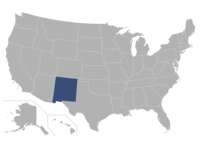
Santa Fe, NM