Federal appeals court allows mold lawsuit against Women’s Huron Valley prison to proceed
Oct 19, 2026 | 2:35 pm ET
Description
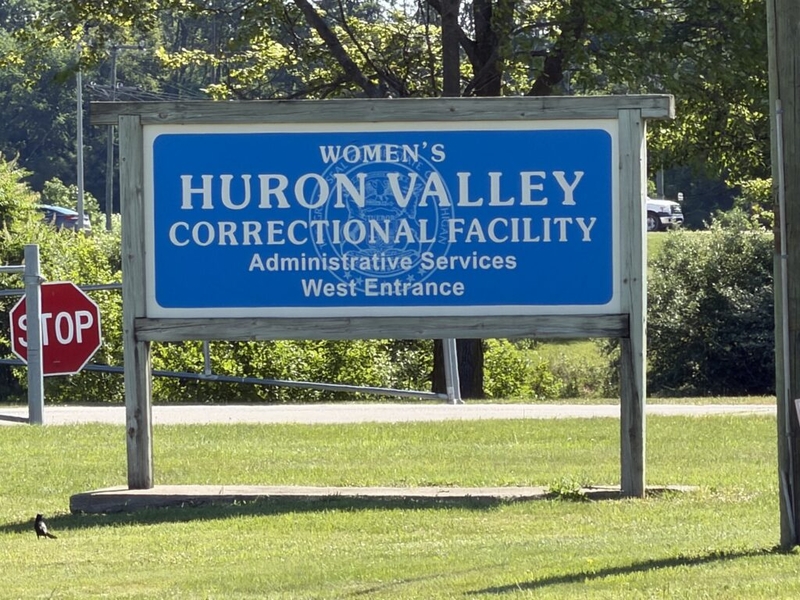
Women's Huron Valley Correctional Facility in Saline Township, Michigan. | Photo by Jon King/Michigan Advance
An Oct. 15 ruling by the 6th U.S. Circuit Court of Appeals will allow a lawsuit to proceed against the Michigan Department of Corrections and nine of its employees alleging that pervasive mold at the Women’s Huron Valley Correctional Facility has seriously harmed three incarcerated women and violated their Eighth Amendment rights.
The three plaintiffs in the case — Paula Bailey, Krystal Clark and Hope Zentz — allege in the complaint that they experienced severe health complications and were told by nurses that their symptoms were likely caused by mold exposure. The complaint describes black mold dripping in the showers at Women’s Huron Valley and a refusal of facility staff to address concerns raised.
“This lawsuit attempts to address some pretty fundamental structural deficiencies at the facility that are exposing women to really unsafe conditions,” said Channing Robinson-Holmes, a lawyer for the plaintiffs. “Whether it’s the ventilation itself being inadequate, which can lead to a host of problems, including dangerous levels of mold in the facility, there very well could be other unsafe conditions that are associated with inadequate ventilation, and we know that the structure of the facility itself is outdated.”
The lawsuit was filed in the U.S. District Court for the Eastern District of Michigan in November 2019. The case reached the appeals court in July 2025 after a district judge rejected immunity claims by defendants from the Department of Corrections.
The appeals court, in an opinion authored by Judge Richard Allen Griffin, upheld the district court decision for nine of the fourteen defendants — eight of whom were denied both qualified and governmental immunity and one, Michigan Department of Corrections Director Heidi Washington, was denied qualified immunity. The other five were granted immunity, though a partial dissent from Judge Ronald Lee Gilman argued that none of the defendants should have been granted this immunity.

Besides Washington, the eight other defendants not granted either form of immunity were all those who would have been directly present at Women’s Huron Valley, in positions including warden, deputy warden and physical plant supervisor.
In order to overcome the bar of qualified immunity, the opinion explains, plaintiffs must show that defendants violated a constitutional right and that the law was clearly established that a reasonable person would know that the conduct violated that right.
“Defendants argue that plaintiffs might have ‘experienced discomfort’ from the presence of mold in Huron Valley, but nothing rising to the level of an Eighth Amendment violation,” the opinion states, but says that none of the precedents provided by defendants convinced the judges. “The standard is whether the alleged conditions violate the ‘concepts of dignity, civilized standards, humanity, and decency that animate the Eighth Amendment.’ And contemporary standards of decency do not tolerate prolonged exposure to mold so pervasive and serious that it allegedly drips onto inmates regularly, exceeds healthy airborne levels, and causes severe respiratory conditions, rashes, and seizures.”
Robinson-Holmes described the defendants’ characterization of the conditions as mere discomfort as “like gaslighting their experience entirely.”
“It’s always damaging to minimize someone’s lived experience, and I think that there is a tendency to do that even more so in the context of folks who are incarcerated than maybe other contexts, which is in no way appropriate,” she said. “To do that was just really a minimization of what these women have experienced.”
As for governmental immunity, Michigan law states that government officers and employees are immune from liability in a situation like this if their “conduct does not amount to gross negligence that is the proximate cause of the injury or damage.”
“The complaint unquestionably alleges that harmful mold proliferated throughout the facility and that each plaintiff suffered serious injuries as a result,” the opinion explains as to why the eight defendants were not granted governmental immunity. “Further, as recounted above, the complaint alleges that these eight defendants knew of the pervasive mold in Huron Valley, either concealed the mold or refused to eradicate it, and, in many instances, received complaints about the mold’s harms.”
Lucas Verran, a spokesperson for the Department of Corrections, wrote to the Michigan Advance, “The department is aware of the opinion released yesterday and legal counsel is actively reviewing it. In regard to content, MDOC is not commenting on pending litigation at this time.”
Conditions in Women’s Huron Valley have been the subject of criticism from lawmakers and from advocates for years, especially when five women incarcerated at the facility died in less than three months.
“If the facility itself is defunct, you’re going to have all kinds of issues there,” Robinson-Holmes said. “When something happens like a death there, that raises concerns about what is happening at the facility, and if it is linked to the conditions of the facility itself.”
The department has repeatedly denied any issues with mold at the facility and released findings of independent environmental testing done by a private contractor, which concluded the facility did not have dangerous systemic black or toxic mold conditions.
But at a hearing of the Michigan House Oversight Committee in February, legislators agreed in a rare bipartisan fashion that the problem of mold in the facility did need to be addressed and that department leadership should testify before the state legislature.
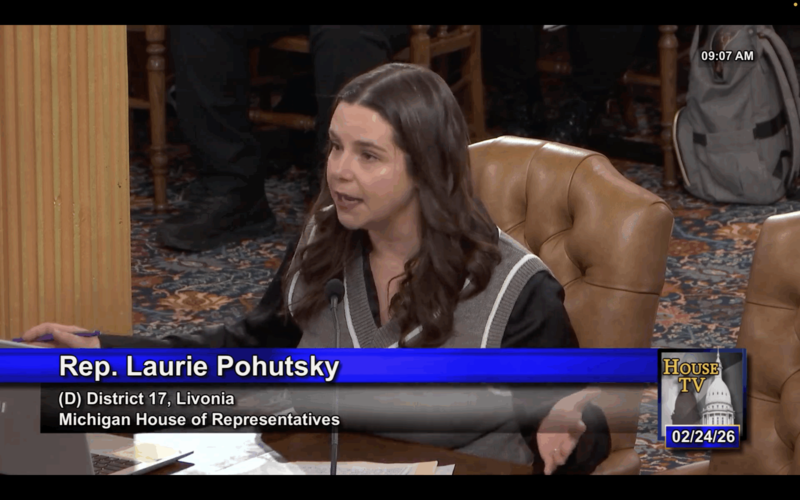
Rep. Laurie Pohutsky (D-Livonia) told Clark’s story dealing with mold in that hearing, describing that she “has visible mold growing in her ears, and has developed other health issues, including a facial droop and severe swelling in her arms, while incarcerated.”
In a July protest demanding the closure of the facility and access to better healthcare for women incarcerated in MDOC custody, Clark’s mother, Izora Clark, said, “At the end of the day, I didn’t even recognize my own child.”
Izora Clark said her daughter has mold in her hair and her ears, allegations also raised by Krystal Clark’s attorneys in an emergency motion to have her removed from the prison, citing what they described as her medical deterioration from toxic mold exposure. Krystal Clark was transferred to Duane Waters Health Center in Jackson after the motion was filed.
Michigan Department of Corrections spokesperson Jennie Riehle said at the time that Clark’s attorneys’ allegations “are not supported by the medical evidence or facts known to the department. Ms. Clark is not experiencing any emergent medical condition that warrants transfer from the facility.”
“The incarcerated women there do not deserve to live in unsafe conditions. Really, what the lawsuit is hoping to do is to remedy those conditions and get the attention of the state so that they’re investing in this facility,” Robinson-Holmes said, emphasizing the need for adequate care for people in MDOC custody.
She continued on to describe last week’s opinion as a victory for Eighth Amendment claims in general, solidifying that in the 6th Circuit, there are claims to be made for inadequate ventilation or dangerous exposure to mold in prison facilities, an area where previous lawsuits have often failed.
“Now we’re seeing that this has been successful, and which will hopefully help other litigants as they try to pursue justice for similar circumstances, which is really critical,” she said.
However, she noted that the discovery and remainder of the lawsuit process in district court may still take years for judges to make a final decision on the question.
Lansing, MI