Tennessee cattlemen brace for beef market unrest after Trump announced tariff-free imports
Sep 01, 2026 | 6:01 am ET
Description
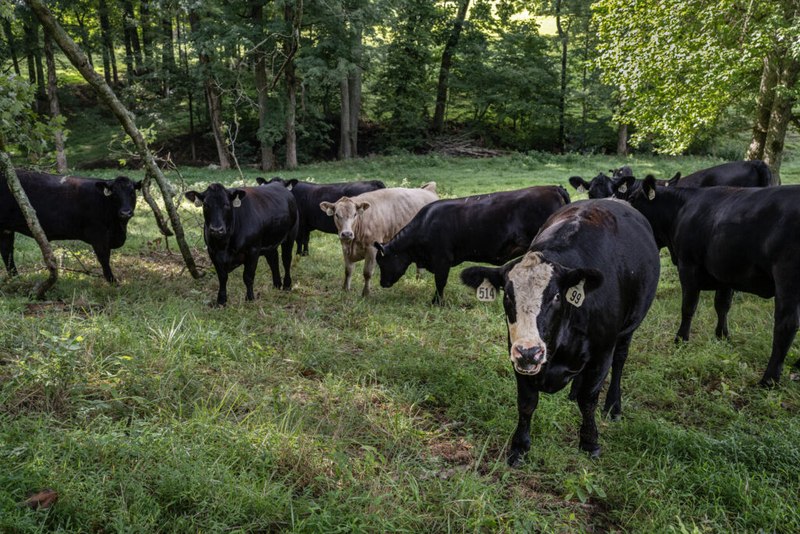
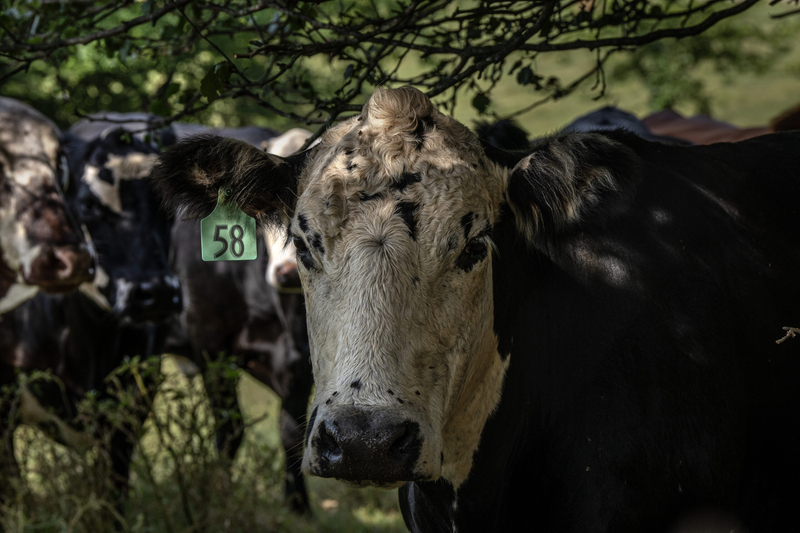
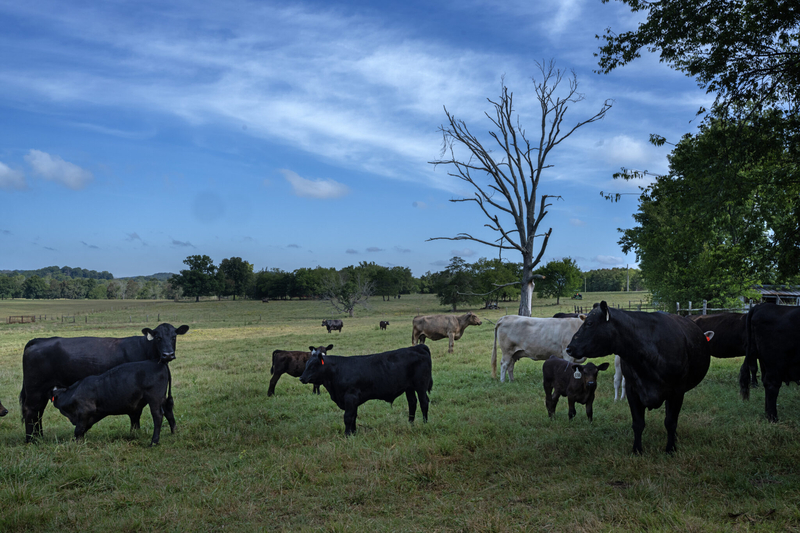
Cattle stand in a field at Blue Grass Farms in Bethesda, Tennessee, on Aug. 27, 2026.
(Photograph by John Partipilo/Tennessee Lookout)
Tennessee cattle producers are preparing to sell their spring-born calves in a beef market roiled by President Donald Trump’s Aug. 21 announcement of a plan to import about 660 million pounds of beef tariff-free in an effort to ease high prices for consumers.
The president’s proclamation drew pushback from national and state cattle associations and individual farmers who said the move could reduce prices for American cattle and create market uncertainty, both of which make it more difficult for farmers to recoup the costs of raising cattle and invest in growing their herds at a time when input costs are rising.
Trump and the U.S. Department of Agriculture announced multiple initiatives aimed at fortifying beef herds in the United States in the days that followed, including a promise to allow farmers to process their own beef and a program allowing producers to insure the value of breeding heifers.
But none of these initiatives are an immediate “fix” for current market challenges, and producers and economists are skeptical over whether they will be a long-term help or harm, according to University of Tennessee Extension Livestock Economist Andrew Griffith.
“When you throw out this type of information, and it causes the markets to go down quite a bit, which it has done, there’s going to be several people that aren’t happy about it because their paychecks are not going to be nearly as big as what they would have expected a few weeks ago,” Griffith said.
U.S. cattle producers reported 86.2 million head of cattle in January, the smallest herd since 1951, according to the USDA. There are many reasons for this smaller herd: higher costs of fuel, feed and other inputs needed to raise cattle, the fallout from drought and natural disasters, consolidation in the industry and the aging demographic of farmers, to name a few.
Beef prices were 9.4% higher in July 2026 than in July 2025, according to a USDA analysis of Consumer Price Index data.
The United States will begin importing tariff-free beef trimmings — which are used to make ground beef — from other countries on Sept. 1, and will continue for 90 days. The imports must be sold at “25 percent below the market price,” according to Trump’s proclamation.
Trump stated in a post on his social media platform Truth Social that the plan is meant to “reduce prices for Americans while giving space for our Great American Beef Herd to grow again.” But economists and producers say these imports aren’t likely to translate to significant savings for consumers at grocery stores.
They’re looking at a short-term fix when the only answer is a long-term fix. It’s going to drop our price, but our input costs are not dropping.
Beef cattle are one of Tennessee’s top agricultural commodities, making up nearly 17% of agricultural cash receipts, according to the Tennessee Department of Agriculture. The state is home to about 2 million cattle.
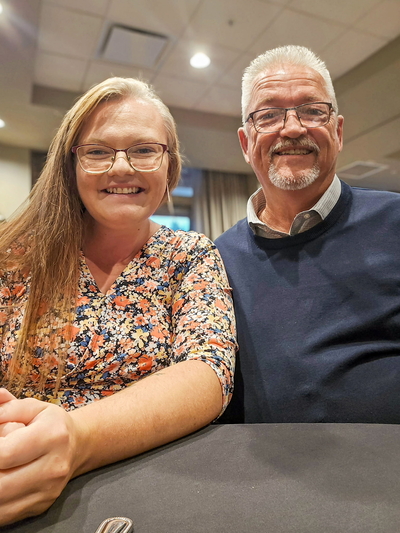
Michael Curtis co-owns Curtis Watkins Farms with his daughter, Krista Watkins in East Tennessee. “They’re looking at a short-term fix when the only answer is a long-term fix,” Curtis said. “It’s going to drop our price, but our input costs are not dropping.”
“It causes a loss of confidence in the market,” said Ben Neale, owner of Light Hill Meats in Columbia, Tennessee. Neale raises cattle and owns a small, federally inspected processing plant. The high price of beef is the result of supply and demand, he said, and the market would “work itself out” when prices rose higher than customers were willing to pay.
“The dust hasn’t had time to settle so that the market can get back to trading as it should,” Griffith said. “And we may see several more weeks of unrest, because I don’t think anybody knows what the implications of any of this are really going to be.”
USDA initiatives met with skepticism
As Curtis planned his retirement and Watkins took the reins of the family’s cattle operation, they decided to downsize from 40 head to 10. Raising cattle has become more and more expensive, the father and daughter said, with the rising cost of fuel, feed, equipment and veterinary supplies and care.
The farm mostly sells “freezer beefs,” bulk cuts from a single animal, to local families in addition to feeding themselves, Watkins said. She’d like to grow the herd again, but “with everything costing like it does, it’s just going to take some time.”
“If I had a heifer born today, and I wanted to keep her in my herd, it’s three years before she brings me any money by selling a calf,” Curtis explained. “That’s three years of input costs that I’ve still got to keep maintaining and put into that critter before she brings me a return.”
High demand for cattle combined with high input costs mean more pressure on farmers to slaughter heifers that might otherwise be used for breeding and herd replacement.
“I make no more money than I did 25 years ago,” Curtis said. “Cattle have gone up (in price), but not at the rate of our input costs, so we’re not making any more profit per head.”
The USDA announced on Monday a new insurance tool that would allow cattle producers to insure the economic value of a breeding heifer over a 2-year period, based on the animal’s slaughter value when they enroll. If the heifer’s slaughter value exceeds the value of keeping her as breeding stock during that period, the policy would make up the difference, according to the department.
Griffith remains skeptical of the initiative and others announced over the last week.
“In general terms, government intervention into markets is not efficient, so I’m afraid we’re starting to have a bunch of government intervention that will cause problems later down the road,” he said.
Other initiatives announced Monday include:
- A program allowing cattle producers to use certain farm disaster recovery funding to restore acres of conserved grassland.
- An initiative focused on support for new farmers and veteran farmers
- Encouraging federal and state institutions to purchase American-raised beef
- A loan program to support the establishment of small beef processors, regional processors and processor co-ops.
The processing initiative comes after Trump posted a statement on Truth Social calling out four major meat processors and describing them as a “nasty monopoly.”
Curtis said he’d like to see more competition among meat processors and a meat processor located closer to him to cut down on transportation costs — Tyson Foods announced it will close its beef processing operations in Joslin, Illinois earlier this month.
While allowing farmers to process their own meat might be helpful, Curtis and Watkins said they don’t see this initiative making drastic changes in marketing prices, and they’d need to know more about details.
The National Cattlemen’s Beef Association responded to Trump’s pledge to allow farmers to process their own food with a statement opposing “any effort that weakens food safety” or federal meat inspection.
Neale, whose processing plant can handle between 20 and 40 head per week, said he processes in one year what the large processing plants complete in a single day. He’s also unsure about Trump’s processing announcement, noting that it could make interstate commerce more complicated, because each state may have to agree to accept products from other states.
Griffith said the processing announcement isn’t likely to make an immediate impact on the market one way or another.
What does affect the market, Griffith said, is government statements and headlines.
Neale and Curtis similarly said they don’t want government interference in the cattle market.
“Allow the supply and demand to actually work itself out,” Neale said, not controlling markets with “sound bites and Truth Social posts.”
Curtis said the beef importing plan shows a fundamental misunderstanding of how raising cattle works.
“They’re not educated. They have not a clue as to what it takes,” he said. “That’s why I say the politicians need to stay out of it.”
Nashville, TN