Out-of-state doctors need NJ license to treat residents here via telehealth, court says
Sep 01, 2026 | 7:00 am ET
Description
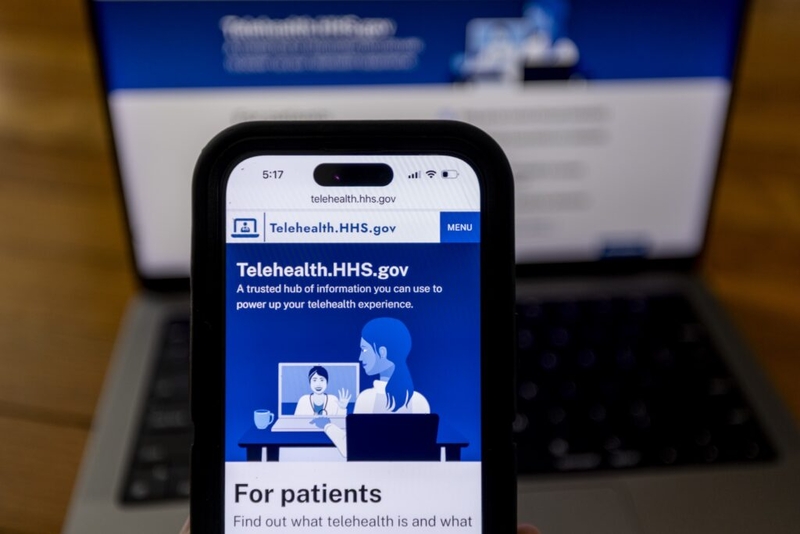
Two doctors sued to block a New Jersey law requiring out-of-state physicians to obtain a New Jersey medical license to practice telehealth with Garden State residents. But that law does not place substantial burdens on doctors, an appeals court said Monday. (Photo by Anne-Marie Caruso/New Jersey Monitor.)
Requiring out-of-state medical specialists to obtain a New Jersey license to treat people here via telemedicine is not a violation of the doctors’ or the patients’ Constitutional rights, a federal appeals court ruled Monday.
A panel of three judges with the U.S. 3rd Circuit Court of Appeals agreed with a lower court decision dismissing a case brought by two doctors and representatives for two of their patients who claimed their First Amendment rights were being violated by a state law that requires all physicians treating New Jersey-based patients to be licensed in state.
The judges decided New Jersey’s law does not violate the free speech rights of the doctors or infringe on the rights of the patients to access care. They also found that the requirement that all doctors providing telemedicine in New Jersey be licensed here does not discriminate against out-of-state doctors but treats all physicians the same.
New Jersey’s law is a “viewpoint neutral” and “content-based” restriction that reflects a long history of regulating medical practice, the judges said, noting that licensing laws date back to at least 1518 in England. New York and New Jersey were among the first American colonies to adopt physician licensing, regulations that predated the American Revolution, they noted, and the practice became widespread nationwide by the mid-1800s.
“The upshot is this: for well over a century, the States have uniformly required a license to practice medicine, including when that practice takes the form of speech, and those licensure laws have always been content-based speech Restrictions,” wrote Judge Thomas Hardiman for the panel.
The ruling is a win for the defendant, the president of the State Board of Medical Examiners, which licenses physicians here.
He was sued by Dr. Shannon MacDonald, a Boston-based radiologist who specializes in rare pediatric cancers, and Dr. Paul Gardner, a neurosurgeon in Pittsburgh who is an expert in certain skull surgeries, who argued that New Jersey’s licensing process is overly burdensome.
The plaintiffs also included a minor referred to as J.A., a patient first treated by MacDonald when he was 18 months old and previously lived out of state; his father, New Jersey resident Michael Abell; and Hank Jennings, a New Jersey resident who underwent surgery with Gardner in Pittsburgh when he was 19 years old. Both patients want the option to continue their treatment with the out-of-state specialists.
Monday’s decision notes that the plaintiffs agreed medical licensing is important to protect patient health and safety and didn’t fault New Jersey for its requirements, including that physicians be trained, pass exams, and undergo a background check.
“They instead argue that the licensure process is an undue burden on specialists who, like Drs. MacDonald and Gardner, have national practices and are already licensed in states with essentially the same substantive conditions for licensure,” Hardiman wrote in the ruling.
Attorneys for New Jersey said medical licensure here for out-of-state doctors typically costs $550 and takes about three months. New Jersey also participates in the Interstate Medical Licensing Compact, which includes 42 states — including Massachusetts and Pennsylvania — and physicians in participating states can obtain a license here for $700 in a process that takes “weeks,” according to the decision.
“Plaintiffs have plausibly pleaded only that Dr. MacDonald and Dr. Gardner desire not to assume additional burdens, and that is not enough for us to conclude that the burdens are substantial,” Hardiman wrote.
Telemedicine has grown in New Jersey and nationwide since the pandemic. Gov. Mikie Sherrill signed legislation in June that extends a requirement that doctors get paid the same for telehealth consults as they would earn for in-person patient visits.
Trenton, NJ