‘I Got Scared to See My Coworker Like That’: New York Farmworkers Labor Through Extreme Heat
Sep 01, 2026 | 5:00 am ET
Description
Photo courtesy of New York Focus
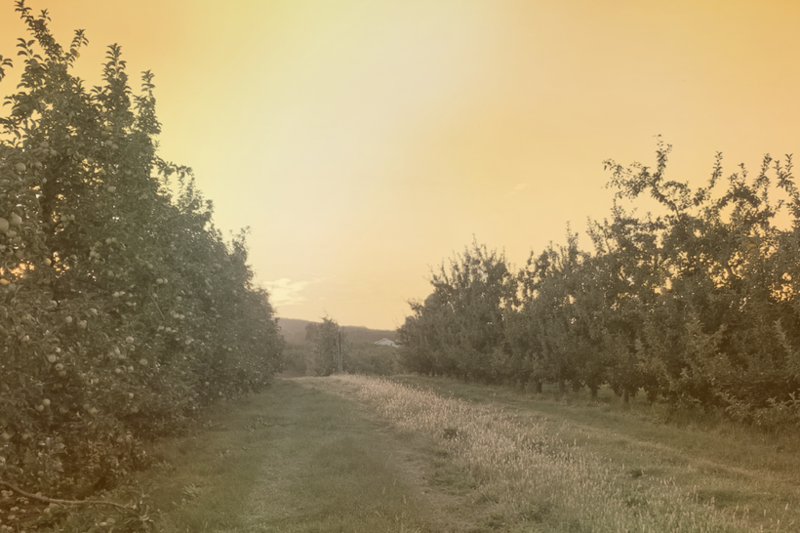
On an early August afternoon, as Adriana climbed up and down a ladder to tie the tops of apple tree branches together at the Western New York farm where she works, the sun was relentless. The only shade came from her wide-brimmed hat and the small leaves of the apple trees.
At the time, New York was experiencing one of its most humid stretches in decades, as tropical air from the Caribbean brought humidity levels rivaling the Amazon rainforest to the state. Dew points reached as high as 79 degrees, creating oppressive moisture.
Heat like that can make Adriana’s legs feel weak and her knees buckle. Quick gulps of water, merciful clouds, and the occasional breeze offer a little relief. Adriana has found other ways to cope, though: Occasionally, she’ll sneak unauthorized breaks behind trees, hidden from the orchard’s owners.
Adriana has worked at the apple farm for more than a decade. In all those years, she said, her boss has only once ever told workers they could take additional breaks because of the heat. That happened this June, as smoke from wildfires in Canada and high temperatures turned the orchard into a furnace. (Like the other farmworkers New York Focus spoke to for this article, Adriana requested anonymity to avoid retaliation from her employer and because of immigration concerns.)
There are no federal laws requiring employers to protect workers from heat-related working conditions, even as climate change ratchets up temperatures and makes extreme weather more common. Some states and cities have taken matters into their own hands. Seven states now have laws guaranteeing all workers access to water, shade, and rest breaks during extreme heat events. But New York is not one of them.
A group of lawmakers in New York has spent the last three years trying to pass legislation, known as the Temperature Extreme Mitigation Program or TEMP Act, that would require employers to provide water, access to shade, and preventative breaks to protect workers from heat-related health risks when temperatures exceed a certain threshold. This year’s delayed budget meant there wasn’t enough bandwidth for the bill to make meaningful progress, said Assemblymember Harry Bronson, who represents parts of Monroe County.
“It would be better for the feds to do this. But since they’re not acting, we have to act,” said Bronson, who chairs the Assembly’s labor committee and sponsors the bill.
The agriculture industry has staunchly opposed the bill. The New York Farm Bureau, the state’s largest agriculture advocacy group, has repeatedly asked lawmakers to exempt agriculture workers from the TEMP Act requirements. It’s also taken issue with the bill’s heat-specific standards kicking in at 80 degrees Fahrenheit rather than at a warmer temperature and its stringent water availability mandates, according to the group’s 2026 Policy Book.
“No one is more concerned with the health and safety of farm workers than the farmers who employ them,” a Farm Bureau spokesperson wrote in a statement. “We must work together to find solutions that promote worker safety while not imposing unrealistic, burdensome legislation upon our farmers.”
Bronson is hopeful that the bill will pass next year, with changes that address some industry concerns. “People are getting injured, and people are dying,” he said.
Adriana remembers a sweltering day last September when one of her coworkers collapsed, his body motionless. One worker drenched a shirt in water and pressed it on him while others got water. The supervisor helped haul him into a car with air conditioning.
“I got scared to see my coworker like that,” she said.
The number of workers in the US killed by heat exposure has increased almost every year since the pandemic: 36 in 2021, 43 in 2022, 55 in 2023, and 48 in 2024, according to federal data. Most deaths occurred among agriculture, construction, landscaping, and manufacturing workers.
In 2024, the Occupational Safety and Health Administration, the federal agency that regulates working conditions, proposed a standard requiring employers to take steps to protect indoor and outdoor workers. But the rule has stalled under the Trump administration. An OSHA spokesperson told New York Focus that the agency is still reviewing comments from a public hearing it held last year about the proposal.
The dangers of prolonged exposure to heat are well-known. Heat can cause cells to die, wreaking havoc on other major organs. And the increased blood flow, as blood is rushed to the skin for cooling, can overload the heart and trigger heart attacks, said Shao Lin, the chair of the department of environmental health sciences at the University at Albany.
“The human body has some natural cooling systems to calm down the heat, but if you stay there too long, then they can’t adapt to heat exposure anymore,” said Lin, who has researched climate change’s impacts on human health. “Breaks are vital for outdoor workers in the heat because they allow the body to cool down, lower core temperature, and recover from physical strain.”
Climate change is causing New York to experience higher dew points, which creates more dangerous situations for people working outside, said Jase Bernhardt, a Hofstra University meteorologist and climatologist.
“Even if the summertime heat temperature is staying the same, if there’s higher dew points … it becomes more uncomfortable and more dangerous for people like outdoor workers,” Bernhardt said.
Dolores, an agriculture worker in Western New York, recalled symptoms she experienced while grafting apple tree branches at an orchard: her head throbbed, her stomach churned, and pain shot through her ears.
She believes employers should be required to provide breaks on hot days or allow workers to go home when it’s too hot to work safely. Without those protections, many workers push themselves to the brink out of fear that they won’t get paid or will be fired, she said.
“Just like they take care of their system, their business, their production, they should also take care of their workers.”
—Fernandez, a dairy worker in Western New York
“Often, people don’t leave because of fear that they can be laid off,” Dolores said. With better protections, “one can confidently say, ‘I have a headache, I can’t take it anymore, I should leave.’”
Eline Martinez, a worker rights advocate at the Worker Justice Center of New York, echoed that argument.
“Too often, workers are forced to choose between earning a paycheck and protecting their well-being,” Martinez said. “The lack of enforceable standards creates inconsistent working conditions, where worker safety and training on heat-related illness depends on the practices of individual employers rather than clear public protections.”
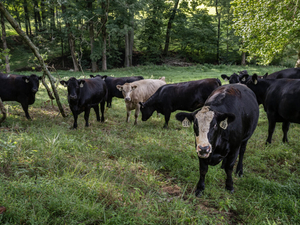
Fernandez, a dairy farmworker in Western New York, said his employer has invested in large fans, cooling systems, and irrigation to help cows adapt to the hotter summers and blistering winters. But the farm does not have drinkable water for workers.
“Just like they take care of their system, their business, their production, they should also take care of their workers,” said Fernandez, a leader with the farmworkers advocacy group Alianza Agrícola. He said he has asked his managers, “If both the cows and the workers are important to the business, why not give priority to both?”
In the absence of action by the state, New York City has taken its own steps. At the end of June, Mayor Zohran Mamdani signed an executive order directing city agencies to create and implement plans to prevent heat-related illness, the first initiative tackling the issue in city history.
Around 1.4 million New York City workers currently endure prolonged periods of time outdoors, the city estimated.
But most of the state’s outdoor agricultural workers work elsewhere. Assemblymember Bronson said he was unaware of another city in the state that has taken New York City’s approach. A state Department of Labor spokesperson told New York Focus the agency does not have information on whether other cities have enacted policies on worker and heat protection. They instead pointed to workplace guidance and best practices the state developed as part of its 2024 Extreme Heat Action Plan, whose recommendations are not binding.
Gabriella Szpunt, a lead organizer at New York’s United Farm Workers, a labor union advocating for farm workers, called the Extreme Heat Action plan a “goodwill gesture” but said that “there needs to be something with teeth.”
Adriana and Dolores both said the state should require employers to provide a designated, cooler area for breaks and mealtimes, and to allow workers to take breaks or go home when it’s too hot, without fear of punishment.
In the meantime, workers will continue to protect themselves by showing up with jugs of water, wide-brimmed hats, breathable clothes, and sunscreen.
“We know we can’t do anything about the high temperatures,” Dolores said. “I simply want the people in the government to see the agricultural work that we do, which is really tough.”
Albany