As Waymo expands fleet, some wheelchair users will be left at curb, says advocate
Sep 01, 2026 | 7:59 am ET
Description
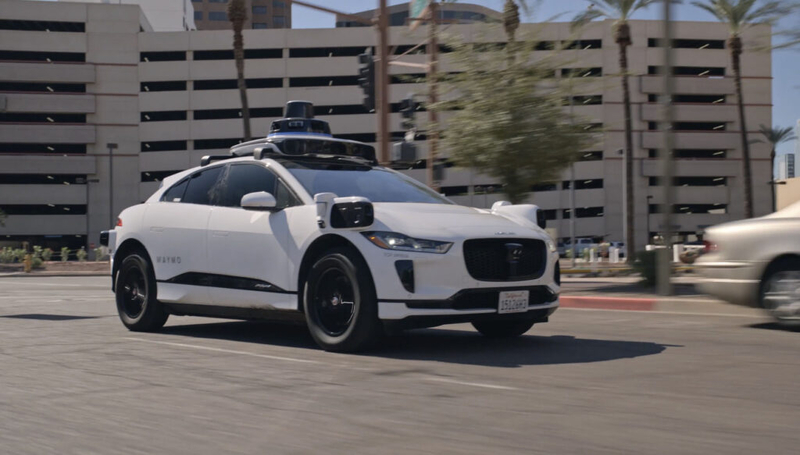
If Waymo and other autonomous vehicles take over the roadways, the already meager transportation options for disabled passengers will be further diminished, warns a disability rights advocate. (Photo: Waymo)
Kelsey Brickl can’t get a ride from the airport to the Las Vegas Strip.
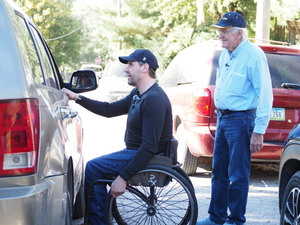
Brickl is a non-ambulatory wheelchair user who cannot ride in a conventional passenger vehicle. Her medically prescribed power wheelchair weighs 388 lbs.
The concierge team at the hotel where Brickl initially planned to stay this fall attempted to assist her but struggled to find suitable options. According to Brickl, one private transportation company quoted the concierge $373 each way, then hung up on Brickl when she questioned the price disparity between a power wheelchair accessible vehicle and a standard SUV. Another company could only accommodate wheelchairs up to 300 lbs, and that still would have been $254 one way.
Brickl and her husband decided to switch from a standard room at one hotel to a suite at another because they could add on a $1,000 “VIP arrival experience” that promises transportation to and from the airport. Now, the resort is tasked with finding an option that works.
“Yes, it’s an uncomfortable workaround, but we are paying for it, not asking for it for free,” she told the Nevada Current.
“It shouldn’t need to be this complicated,” she added, but that’s the reality of traveling as a power wheelchair user.
While autonomous vehicle companies pitch their fleets as safer, more accessible transportation options, Brickl, a national disability rights advocate, warns that the industry’s largest player appears to have zero interest in accommodating people with the biggest mobility challenges.
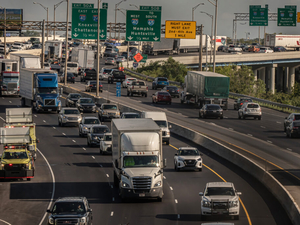
The Nevada Transportation Authority (NTA) on Aug. 21 unanimously approved Waymo’s application as an autonomous vehicle network company (AVNC), paving the way for it to begin operating up to 1,000 fully autonomous vehicles for one year.
Brickl wants the NTA to pause the rollout of Waymo’s fleet until the company can demonstrate how they plan to accommodate wheelchair users like her.
“They can’t fit in Waymo,” she says. “You can’t fold them up. You can’t store them in a trunk. And the people who need these wheelchairs can’t slide onto a seat; they cannot use any other wheelchairs.”
Brickl late last month requested the NTA add her to Waymo’s docket and reconsider its recent approval.
A spokesperson for the NTA, in an emailed statement to the Nevada Current, said “there is no mechanism for a person who is not a party of record to challenge the NTA’s decision with the agency directly once it has acted on an application. Any challenge to the agency’s decision would have to be brought through a judicial petition.”
Brickl, who is based in New York City, told the Current the NTA is being disingenuous and has created “deliberate and circular” barriers. She says Nevada law does have intervention by a person with a direct and substantial interest.
“Given my disabilities, I cannot realistically initiate and conduct emergency judicial litigation in Nevada simply to force the NTA to consider disability access within its own approval process,” Brickl said.
And she shouldn’t have to, she argues.
“The NTA’s deliberate procedural obstruction does not extinguish its obligations under federal law or make the underlying approval nondiscriminatory.”
Disabled people “already have civil rights,” Brickl emphasized. “I just want them enforced. I’m not trying to get any special treatment or anything like that.”
Autonomous accommodations
Nevada state law requires AVNCs to adopt policies to prohibit discrimination against passengers based on disability, among other protected classes. AVNCs that cannot provide an accessible vehicle “must direct the passenger to an alternative provider or means of transportation that is wheelchair accessible, if available.”
Teri Williams, spokesperson for the NTA, said the agency “does require that this is addressed as a compliance item prior to issuance of the final permit.” But she did not elaborate further.
A Waymo spokesperson did not directly answer the Current’s questions about what their accessibility plan will entail, but said in a statement that “accessibility is a fundamental part of Waymo’s mission.”
The statement continued, “We will comply with applicable Nevada accessibility requirements. We are also actively assessing how we can provide an even more accessible service in Las Vegas above and beyond these requirements.”
Brickl believes Waymo needs to be more transparent about its plan. “Who do they intend on actually deferring these people to? Does that service actually accommodate these complex power wheelchairs?”
Representatives of the company have for years attempted to put the blame to vehicle manufacturers.
“We are a technology company focused on building a driver, not a vehicle,” one rep told New Mobility in 2022.
In July of this year, NOTUS quoted a Waymo spokesperson telling a District of Columbia Council committee that the company has “not been able to identify an electric vehicle platform that is fully wheelchair-accessible while also meeting the very unique specifications that we need to retrofit that vehicle with our technology.”
Brickl says she doesn’t have a problem with the existence of autonomous vehicles, commercial or otherwise, at large. Questions about AV safety and their potential to displace jobs dominate conversations about Waymo, Zoox and similar companies.
“Those are legitimate conversations,” she said, “but I always think of it as those are conversations for people other than me to have because those are other people’s areas of expertise.”
She added, “What I have a problem with is any fleet of vehicles that endangers existing access for people who have medically necessary Group 3 power wheelchairs.”
Brickl argues that Waymo poses an existential threat to existing wheelchair accessible infrastructure that is already “very fragile.” If Waymo and other autonomous vehicles take over the roadways, the already meager transportation options for disabled passengers will be further diminished.
She points to her ongoing experience trying to secure transportation for her upcoming trip, saying it “underscores why bringing Waymo into Las Vegas is risking an already incredibly fragile ecosystem for people in complex wheelchairs.”
Not just Waymo
Waymo is not the only AV company that received approval from the NTA last month. Two others — Tesla and Aviari — were also given the greenlight.
Aviari, a subsidiary of Uber, was approved to operate a 1,000 AV fleet. Tesla, which operates a transportation service that utilizes underground tunnels known as the Vegas Loop, was approved to operate a fleet of 5,000.
Brickl believes Aviari also warrants scrutiny in Nevada — “I have found no evidence that Aviari’s autonomous vehicles will accommodate (complex) power wheelchairs.”
She continues, “Uber does, however, already operate an established WAV (wheelchair accessible vehicle) network in several major American cities, with accessible booking infrastructure, vehicle providers, and operational experience for passengers who remain seated in non-folding manual or power wheelchairs.”
That doesn’t guarantee Aviari will be accessible for all, but Brickl says it does distinguish the company from Waymo.
Tesla, meanwhile, has previously said that it is developing a purpose-built wheelchair-accessible autonomous vehicle, though specifics, including a timeline, remain unknown.
Up until now, the only AV company showing any meaningful sign of putting commitment to Group 3 power wheelchair compatibility on the record is Tesla,” says Brickl. “Waymo hasn’t been taking responsibility for wheelchair access. They’re also the chosen rideshare of numerous institutions in Vegas, like the Raiders, so the stakes are higher.”
Brickl, who has taken on Waymo in other states, added that beyond the material differences she sees between the AVNCs, it also comes down to a personal capacity.
Brickl says her campaign against Waymo really began when she started noticing the company using language like “mobility” and “accessibility” in its marketing and promotional materials.
“Waymo has kind of co-opted it and said, ‘Oh, our cars are really great for blind people.’ I’m, like, ‘Okay. I’m sure that’s great, but what about who you’re deliberately excluding?’”
Las Vegas, NV