Who Trump’s immigration crackdown is really hurting
Aug 30, 2026 | 7:00 am ET

Description
An Immigration and Customs Enforcement officer's badge and weapon are seen during a vehicle checkpoint on Georgia Ave. in Washington, D.C., on Aug. 30, 2025. (Photo by Kevin Dietsch/Getty Images)
This story was originally published in Down from DC, a Substack newsletter by Phoebe Zerwick and Natalie Jennings. It’s reprinted here with permission.
One of the biggest stories of President Trump’s second term is his often violent crackdown on immigration. According to CBS News, enforcement surged this summer, with an average of 1,500 people taken into custody daily in July, including at routine check-ins at immigration offices, airports and traffic stops. And more than half of those detained last month had no criminal history, which means no pending charges or past convictions, Austin Kocher, a researcher at Syracuse University, reported this week.
We’ve been tracking how the crackdown has played out in our state since we first started publishing a year ago. As regular readers know, I am not a neutral observer. While we haven’t seen large-scale public raids here since Operation Charlotte’s Web last fall, the enforcement efforts haven’t stopped. But they are being carried out more quietly. According to an analysis by NC Local, data through March shows that enforcement picked back up earlier this year, with more than 6,300 immigrants detained during Trump’s second term.

Down from DC recently spoke with Helen Parsonage, an immigration attorney based in Winston-Salem, to better understand the nitty gritty of immigration law and its impact on immigrant communities and workplaces in NC.
Helen moved to the United States more than 30 years ago from England with her husband, a biochemist, and landed in Winston-Salem in 1991. When her boys started school, she began working as a paralegal with a local immigration firm and soon went to law school at night, motivated by her own experience navigating our complicated immigration system. She now represents many of the North Carolinians caught up in the crackdown.
She had intended to wind down her practice this year, but when Trump was re-elected, she knew that an escalation in immigration enforcement was coming.
“And those who know me, particularly those who live with me, will confirm that I’m stubborn and hard-headed and I was not going to quit,” Parsonage said. “So now I’m working full-time, probably more hours than I was before, because I’m pigheaded and I’m not going to walk away.”
The conversation below, edited here for length and clarity.
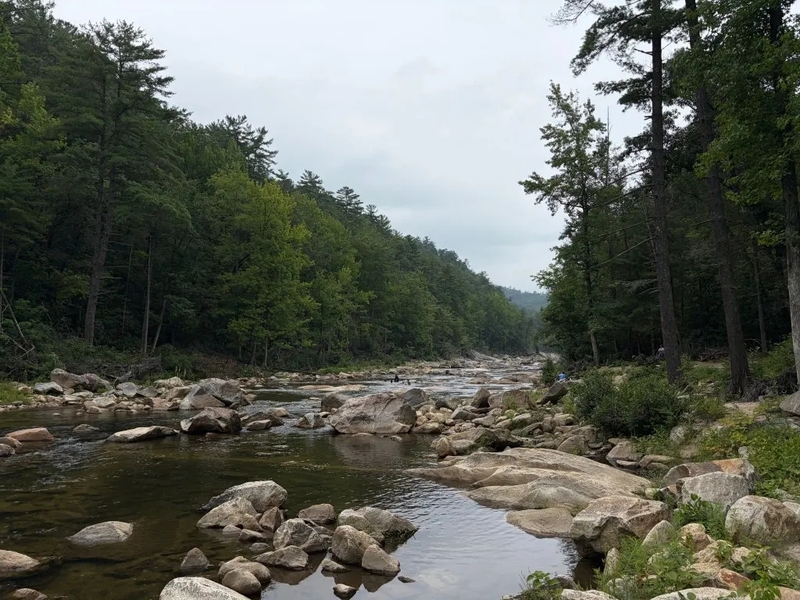
Phoebe Zerwick: At the end of last month, immigration agents arrested 13 people at a swimming hole in the Pisgah forest that’s popular with families. According to news reports, it was the first ever coordinated raid involving the Forest Service and local sheriffs, at least in North Carolina. Are you representing anyone detained there and what do you make of the raid?
Helen Parsonage: I’ve spoken to a couple of folks about the Pisgah Forest incident. I’ve always been a great fan of the National Park Service and the National Forests. So it was particularly disappointing to see folks from the National Forest Service participating in this when I never really thought of their role as anything even tangentially related.
I spoke to one young man who had no criminal history. I think several people there were picked up because they had an old deportation order that may have been on appeal or they may have been going for check-ins. I have not heard anything to indicate that anybody in those 13 people were “the worst of the worst.” No rapists, murderers or anything like that.
I really don’t know why this raid was conducted except as a scare tactic, because this is one place where you might think you were safe. ICE likes to find easy targets. This was an easy target.
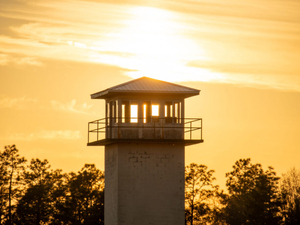
Phoebe Zerwick: There’s a closed down private prison in the northeast corner of the state called Rivers Correctional. We first reported on negotiations between the owners and ICE to reopen for immigration detention. The New York Times just confirmed that the prison will reopen this year for around 1,400 detainees.
I’m curious about several things. First of all, whether having a local detention center will increase arrests in North Carolina and, also, whether or not in some ways a nearby facility might make it easier for the families of those detained who now have to travel all the way to Georgia or further to see loved ones.
Helen Parsonage: Well, it’s clearly not meant to substitute for taking people to Georgia. This is all part of the increased capacity. And if it’s got space for 1,400 immigrants, I guarantee you it’ll be over capacity fairly quickly. It’s also very convenient for parts of Virginia, so I imagine it will serve that area as well. I’m concerned about these older facilities being reopened almost certainly without proper upgrades and improvement. Profit margin is the driving force — these are for profit prisons so every corner they can cut increases their profit margin. Rivers has been closed, I think, for a significant period of time and I think there were some concerns about its state of repair when it closed down. So I’m not optimistic that the upfit will have been anything other than the minimum.
Phoebe Zerwick: What do you hear from your clients who are in some of these privately run detention centers about the conditions?
Helen Parsonage: There are things like lack of privacy. Most of these places are dorm-type.
But the two things I hear most about are food and medical. The food is substandard even by jail or prison standards. The bologna sandwich is ubiquitous. There is insufficient food, particularly given that most of the folks they detain are adult men who have the highest calorie need and they’re not getting those. I hear a lot of concerns about lack of respect for dietary restrictions, whether religious or cultural. I have a client in detention right now who does not eat beef for religious reasons. So if there is beef in the meal, they just take it out. There’s no substitute. You may just get the bread bun.
And then access to medical care. Everybody’s hearing the extremes, but the clients I’m thinking of, one needs a special diet because he has a medical condition that makes it hard for him to absorb nutrients. This lady who does not eat beef is insulin-dependent. They’re just not taking care. Every time I see the clients, they look a little thinner.
Phoebe Zerwick: And remind us, have these two individuals committed crimes?
Helen Parsonage: No.
Phoebe Zerwick: What are they detained for?
Helen Parsonage: One was living in New Bern, North Carolina, and had a pending affirmative asylum claim. He had a work permit, a driver’s license. He was working as an imam in the local mosque and was getting medical treatment from a clinic there. He was the victim many years ago in his home country of numerous gunshot wounds. He was picked up on false allegations following an argument and rather than allowing him to face his accuser and potentially get the charges dismissed, he was whisked away to Georgia where he has been ever since. His special diet has been discontinued. He’s in pretty poor health. It’s hard to keep his spirits up. That’s half my job these days – trying to help keep people’s spirits up while they’re in detention and encouraging them that there may be light at the end of the tunnel.
The other lady was a green card holder for years. She traveled outside the United States to visit her father who was dying. It was the end of his life and those things don’t run on schedule. So she ended up outside the United States for seven months, which is over the six month presumptive. When she got back, they accused her of abandoning her green card. Now in past decades it would be like getting a traffic ticket, saying “Okay show up to the court on such and such a day.” But this time they have her in detention.
Phoebe Zerwick: People fleeing persecution and violence can come to this county and apply for asylum. Can you explain what the new asylum rules mean and how that’s playing out in North Carolina?
Helen Parsonage: Let me tell you how it used to work. If you came to the United States seeking asylum, you would file your asylum application with the asylum office, which is part of U.S. Customs and Immigration Service and has nothing to do with the court system or the deportation system.
You would be interviewed by an asylum officer, a non-adversarial interview, potentially with an interpreter and your attorney, if you have one. The asylum officer’s role has traditionally been to ask the right questions so that somebody who’s got a valid asylum claim could provide the information that the officer needed to approve and grant asylum. If the asylum officer felt there was insufficient information or there were inconsistencies, or if the person had filed their asylum claim late, the officer could refer the case to an immigration judge, which is an adversarial hearing: there’s a prosecutor there, cross-examining, trying to find inconsistencies.
What this administration has just done is said that the asylum office can send people to the deportation court without conducting an interview. So the asylum officers are more than happy to shift their backlog of cases over to the immigration court. I am not sure how the immigration court system feels about that. They’re already backlogged. This is just taking one silo of cases and moving them somewhere else. Under this administration, we’re seeing court asylum grant rates of about 6 or 7 percent. Which is a staggering drop. [Before] it varied from court to court and judge to judge, but the national average was closer to 40.
The asylum seekers I represent cover the full range of humanity because they’re from different backgrounds, different cultures, different education levels, everything from somebody who only has a second grade education all the way through to professionals in the medical and legal profession in their home countries. I can tell you that asylum seekers have a pretty low criminal rate. Immigrants have a lower rate of committing crime than the native-born American population anyway. But it’s even lower among asylum seekers.
Phoebe Zerwick: Until last month’s raid in the Pisgah Forest, we hadn’t seen large-scale public raids since the wave of arrests last fall in Charlotte and Raleigh. Still, the numbers of detentions are up and they seem to be happening way more quietly, out of public view. What are you seeing in North Carolina in terms of where people are getting arrested and what they’re being arrested for?
Helen Parsonage: I think the change in leadership at the Department of Homeland Security had something to do with that, the departure of Greg Bovino and his theatrics. People were not happy with what they were seeing, so I think that it is quieter.
There’s a number of different ways they’re trying to meet their numbers. One is that they are trying to pick up individuals at their check-ins. These typically are people who have a pending case or something on appeal who are doing check-ins with ICE. In North Carolina, everybody goes to Charlotte for their check-ins. What I’m seeing is most of them are people who’ve got maybe a final order that is on appeal, mostly men. They are also picking up people at traffic stops. Getting yourself into one of our county jails is a really good way to have ICE come across you and detain you. Regardless of what happens in the criminal case, even if the charges are dropped or they’re found not guilty, they’re still taking folks, which didn’t used to happen. A misdemeanor larceny is something that gets charged a lot of times based on either a misunderstanding or a falling out. It can be whatever, people call the police. They’re often dismissed or not guilty. But once somebody is in jail, it’s almost impossible to get released because ICE is taking people directly to Georgia. ICE likes easy targets. County jails are easy for them because people are being held there.
I have not heard of any incidents at Charlotte airport, though I’m advising clients to be very cautious about going to airports because TSA is clearly sharing passenger lists with ICE and some airlines are cooperating and others are not. So, you want to figure out which airline you’re going to fly with if you absolutely have to fly.
Phoebe Zerwick: The legislature here in North Carolina passed new laws earlier this year requiring local law enforcement and some state law enforcement to cooperate with ICE. How is that playing out in North Carolina?
Helen Parsonage: All of this is anecdotal, but from my experience the one way in which we’ve seen it is magistrates at the jails giving bond and ICE being alerted that people are there. The bond form that the magistrates fill out now has a question about immigration status. That is not a legal assessment that most of our magistrates are equipped to make. They’re getting it wrong both ways.
Phoebe Zerwick: With all those public raids in North Carolina and of course in Minneapolis, a lot of people were appalled by what they were seeing, and a lot of people in North Carolina trained to be ICE observers, myself included. I’m curious about what the legal ramifications are for American citizens who document what ICE agents are doing.
Helen Parsonage I think there’s two separate questions there. What are the legal ramifications, what are the practical ramifications?
From a legal standpoint, it’s fairly clear. Do not physically interfere with ICE officers or police officers, but it’s well established that you can video and film them.
That said, some of the officers do not take kindly to being videoed and we’ve all seen occasions where they will do everything from snatching the phone to slamming observers to the ground, pepper spraying.
Are there personal risks? Yes. So that’s something everybody has to figure out for themselves and we’ve seen the extremes that they will go to with people observing.
Phoebe Zerwick: And are there legal risks for employers who prevent immigration agents from entering workplaces?
Helen Parsonage: So, they can’t come into private spaces without a warrant. So I’ve been advising employers to put “employees only” signs up, to have a clear divide. I tell them, if it’s an area I can’t go into then ICE can’t. So I can go into a restaurant and sit but I can’t just willy-nilly wander back into the office or into the kitchen. Restaurants and public places like that do have the right to refuse service to anybody they choose. And I’ve seen some rather gratifying videos of ICE officers being politely but firmly required to leave restaurants and cafes and had service refused them. And that’s something that can be done and it’s growing as people are seeing that that can work.
Phoebe Zerwick: And what about churches? Can churches still offer sanctuary?
Helen Parsonage: Sanctuary is an interesting word because sanctuary as a legal concept has not existed since 1515. It’s a moral concept and it is one that even in those cases that we had here in North Carolina of individuals in sanctuary as we called it, it relied on kind of a gentleman’s agreement between DHS or between immigration services and the community that they would not force their way into a church to snatch somebody out. The optics are not good. I think that’s why they’re still not doing it. That would be a bridge too far for most people. It doesn’t stop them waiting outside, of course, but I’ve not seen them do that.
Phoebe Zerwick: An issue that’s gotten a lot of attention recently is the decision by the U.S. Supreme Court to uphold the president’s decision to rescind temporary protected status for Haitians and Syrians, which has consequences for immigrants from more than a dozen counties. How is that playing out in North Carolina?
Helen Parsonage: Well, what it’s really hurting are businesses. Obviously, it’s hurting the individuals. All of a sudden, after many years, their work permits have just been cut off. You’ve gone from being in lawful status to having no lawful status. It shows you the hypocrisy of this administration because it’s always about people should do it the right way and people should get their legal status and what they’re doing is actually turning tens of thousands of lawful residents of the United States into undocumented immigrants. A lot of them have been established professionals. I know individuals who are working in our finance system and banking, individuals who are working in optometrist’s offices, people who are working in schools, people who’ve been working in hospitals and not just as nurses but as physicians and physicians assistants and social workers.
Everybody thinks when they talk about mass deportations and picking people up that we’re going to lose construction workers and agricultural workers and we certainly are in some places. But we’re also losing school teachers, doctors, lawyers, professionals, finance folks, all kinds. I’m having clinics call me up saying that they’re losing qualified staff and so it’s impacting patient care.
Phoebe Zerwick: This is a time of enormous confusion and fear. Back last fall, immigrant families were afraid to send their kids to school. What’s your sense of what they’re going through with all of this uncertainty?
Helen Parsonage: Folks are very afraid of being detained or having a loved one detained. They’re particularly afraid for somebody if they’ve got any kind of medical condition because everybody’s reading about folks who are not getting medical treatment and, in several horrific cases, have passed away in immigration detention through neglect.
I think a lot of folks are looking for reassurance. They’re hunkering down. Everybody’s a little more cautious about where they go. But it’s a very resilient community, so I don’t want to give the impression that they’re cowering in fear somewhere. These are folks, many of whom have been through much worse in their home countries or to get here. Many of them have lived with being undocumented for many years or decades even. They don’t need me to tell them how to cope with this. I can try and help them if the worst happens. I can do small things to protect people just in terms of legal strategy to try and minimize the risks. But most of these folks have lived with uncertainty for most of their lives.
This story was originally published in Down from DC, a Substack newsletter by Phoebe Zerwick and Natalie Jennings. It’s reprinted here with permission.
Raleigh, NC