Kansas City’s habit of dismissing the voters who say no
Aug 29, 2026 | 6:55 am ET
Description
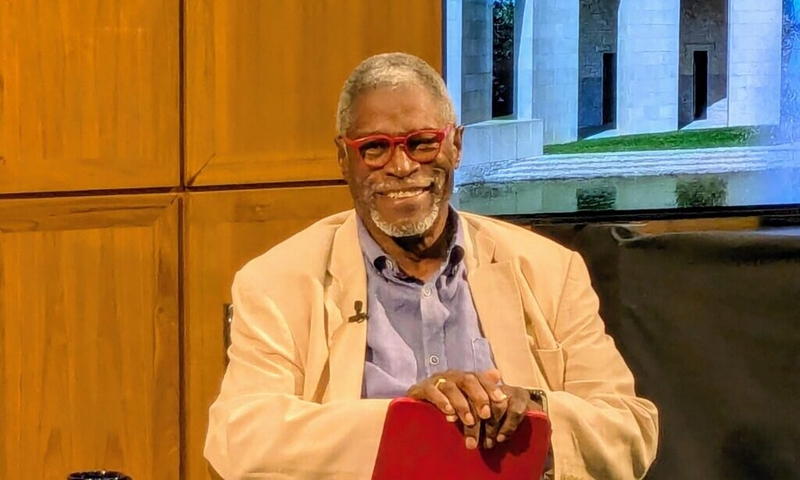
Sly James, mayor of Kansas City, after speaking about leadership, political activism and public investments last year at the Dole Institute of Politics at University of Kansas in Lawrence (Tim Carpenter/Kansas Reflector).
Kansas City leaders can seem contemptuous of the voters they answer to. The Royals stadium deal, pushed through without a public vote, is the latest example. That hostility goes back more than a decade — and former Mayor Sly James’ recent column is the latest reminder.
James begins an Aug. 23 essay by chastising those he calls CAVE people — citizens against virtually everything — a slight he has used since at least 2012. Readers aren’t told what they’re against or why they’re wrong. James just waves them off. It seems to be his preferred approach to public policy: dismiss, distort and dominate.
He seems unaware that his insult is one of Missouri’s nicknames — we’re the Cave State. The irony is compounded because the state’s better-known nickname, the Show-Me State, is exactly the type of discourse James is dismissing.
James then turns to his real task: buttering up the Kansas City Streetcar Authority and assailing streetcar skeptics. This, too, goes back to 2014, when he smeared opponents of extending the streetcar south along the trolley trail into Brookside and Waldo. James was also dismissive of his own advisory board, which had not yet even met when the city filed its petition to create the taxing district.
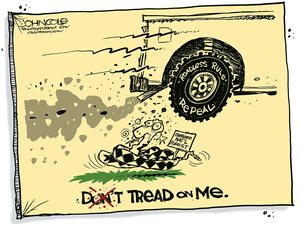
Even before 60% of voters rejected the initial streetcar district in August 2014, then-Councilman Russ Johnson said, “[T]he streetcar is going to be expanded whether we like it or not, because I know 50 people that will figure out how to draw a boundary to get it passed.”
To dismiss and dominate is strong-arm politics: “I’m right, you’re wrong.” But to distort facts requires skill, and James’ column gets several things wrong.
First, James cites Kansas City’s “vision and momentum” as the reason it was “selected for Google Fiber’s flagship experiment.” But Kansas City, Missouri, wasn’t chosen. It lost. Google chose Kansas City, Kansas. A vice president for Google said, “Kansas City [Kansas] has great infrastructure and Kansas has a great business-friendly environment for us to deploy a service in.”
Second, James refers to KC as “a booming metropolis.” But from April 2020 through July 2025, Kansas City, Missouri’s population grew 2.6%. That’s slower than Overland Park (+3.3%), Lenexa (+5.4%), Olathe (+6.2%), Lee’s Summit (+6.3%) and North Kansas City (+25.7%). Kansas City’s growth is behind the national average (3.1%), yet ahead of Missouri’s (1.9%). Far from booming, we aren’t even keeping up.
Third, James claims, “Sales tax receipts generated within the Transportation Development District surged by more than 65% following the line’s opening — far outpacing citywide growth.” He appears to be citing a 2019 article by the head of the KC Streetcar Authority. The authority’s own materials say sales tax receipts grew 58% from 2014 through 2016, versus 16% citywide. Nobody explains why the numbers differ. James doesn’t even tell us what years his data covers
James wants readers to believe the streetcar is driving economic growth. But the figures aren’t just a decade old — they’re misleading.
The downtown TDD is a tiny district that has received all manner of taxpayer subsidies. One or two successful venues could swing the TDD’s sales tax receipts without producing a noticeable change in citywide collections — and without proving the streetcar caused the increase.
For a substantive analysis of the streetcar’s economic development effect, read this comparison of property valuations within the TDD and the county. The TDD’s total market value grew at the same rate as the county in each year between 2014 and 2023, meaning zero economic benefit by the metric that’s hardest to cherry-pick.
Fourth, James calls the streetcar’s zero-fare policy “forward thinking” and an example of economic equity. Yet the bus system, which serves low-income riders citywide, just reinstated a $2 fare. The streetcar, a slow and expensive Main Street party bus, is free. Where is the equity in that?
Fifth, he makes claims about the streetcar’s role in winning the NFL draft, the World Cup and NCAA events. He says others call it the “best in the nation.” This is impossible to verify, and it echoes James’ claim that Kansas City lost the 2016 Republican National Convention to Cleveland because it had too few hotel rooms. Yet Kansas City had roughly 10,000 more hotel rooms than metropolitan Cleveland and nearly identical downtown inventory.
James ends by arguing that expanding the streetcar routes east and west will build a “unified, inclusive city” for generations to come. But when Kansas City voted on that same eastward extension along Linwood Boulevard in 2014, neighborhoods along the route rejected it. Freedom, Inc. called it “a regressive tax scheme,” and the pastor of Our Lady of Perpetual Help, whose parish sat on the route, warned the assessment would be “a huge and unfair burden on the poor.”
None of this makes James uniquely careless with the truth, but it does make him the latest example of how Kansas City leaders tend to operate. The city has real strengths and substantial challenges, and no single project, stadium or streetcar will solve them. City Hall seems more interested in hardball politics — dismiss, distort, dominate — than in understanding problems and crafting solutions that gather support.
And it appears to be habit forming.

Jefferson City, MO